Table of Contents
- Why Baby Equipment Rental for Grandparents Just Makes Sense
- Essential Baby Gear for Grandparents House (and What to Skip)
- How Baby Equipment Rental Works: Step by Step
- Baby Equipment Rental Cost: What Grandparents Should Budget
- How to Choose a Baby Gear Rental Company You Can Trust
- Grandparent-Specific Logistics: Coordinating with Parents and Older Homes
- Baby Equipment Rental for Grandparents in Northeast Florida
- Conclusion
Last Updated: May 25, 2026
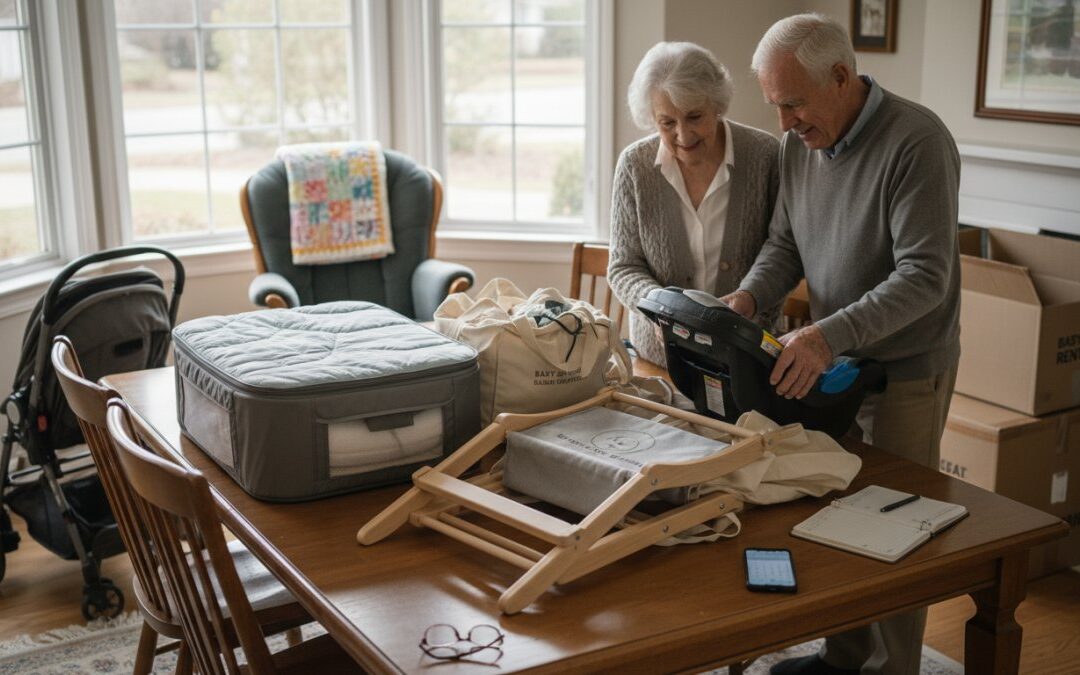
Baby equipment rental for grandparents is one of the smartest travel decisions a grandparent can make before a grandchild’s visit. At First Coast Baby Rentals, we’ve helped dozens of grandparents across Northeast Florida set up safe, comfortable spaces for their grandchildren without hauling gear across state lines or spending a small fortune at a big-box store. Below, we’ll show you exactly what to rent, how the process works, what it costs, and how to coordinate everything with mom and dad so the visit goes smoothly from day one.
Here’s what most guides get wrong: they treat baby equipment rental as a convenience for traveling parents. For grandparents, it’s something more fundamental. It’s about being prepared without committing to gear you’ll use a handful of times a year. A crib that sits in a closet for 50 weeks isn’t a smart investment. A rental that arrives clean, assembled, and ready to go absolutely is.
Why Baby Equipment Rental for Grandparents Just Makes Sense
Baby equipment rental for grandparents makes sense for one simple reason: grandchildren visit, they don’t live there. Buying a full nursery setup for occasional visits locks money into depreciating gear that spends most of its life unused. Renting gives you everything you need, exactly when you need it, without the storage headache.
Many grandparents also worry about whether gear they bought years ago still meets current safety standards. This is a legitimate concern. According to the Consumer Product Safety Commission’s guidance on infant product recalls, baby gear recalls are more common than most people realize, and older equipment may not meet updated federal safety standards. Renting from a reputable provider means you’re always getting gear that’s been inspected, sanitized, and confirmed safe.
Renting vs. Buying: The Honest Cost-Benefit Breakdown
Buying a crib, high chair, stroller, and play yard outright can run well into the hundreds of dollars, even for mid-range brands. Renting those same items for a week or two costs a fraction of that. For grandparents who host two or three times a year, the math still tends to favor renting, because storage, maintenance, and the risk of owning recalled or outdated gear all add hidden costs to the "buy once" approach.
The honest answer: buying makes sense only if grandchildren visit frequently for extended stays of a month or more. For most grandparents, renting is the smarter financial and logistical choice.
| Scenario | Rent or Buy? | Why |
|---|---|---|
| 1-2 visits per year, 1-2 weeks each | Rent | Lower total cost, no storage needed |
| 3+ visits per year, 2+ weeks each | Consider buying select items | Frequent use justifies investment |
| Extended stays (1+ month) | Buy | Long rental periods exceed purchase cost |
| Uncertain visit schedule | Rent | Flexibility without commitment |
Short Visits vs. Extended Stays: What Changes
Short visits of a week or less are the clearest case for renting. You need a crib, maybe a high chair, and you’re done. Extended stays of three to four weeks shift the calculation slightly, but renting still wins on convenience. Good providers offer flexible rental durations and will extend your rental if plans change, which is exactly the kind of flexibility that buying gear can never offer.
If a grandchild’s visit gets extended due to weather, travel delays, or a change in plans, ask your rental provider about extending the rental period. First Coast Baby Rentals accommodates these requests, so you’re never left scrambling for gear mid-visit.
Essential Baby Gear for Grandparents House (and What to Skip)
The essential baby gear for a grandparent’s house comes down to three categories: sleep, eating, and safe play. Everything else is optional. Getting these three right means the child is safe, comfortable, and well-rested, which means the grandparents are too.
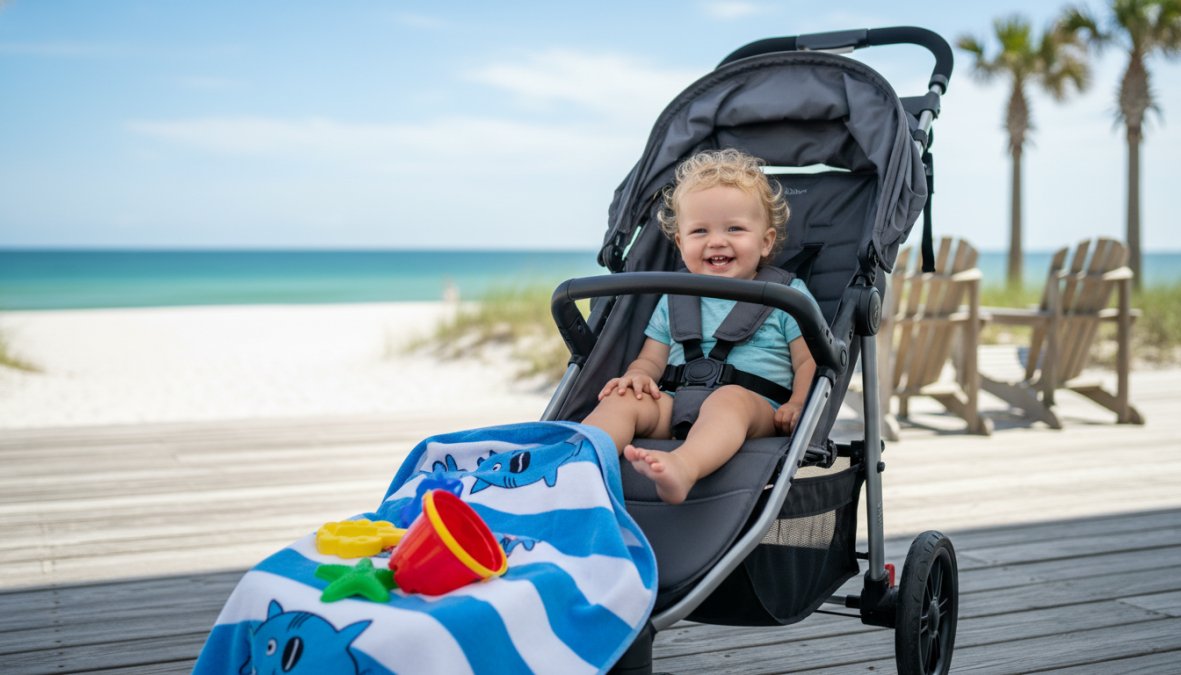
Start with what the child absolutely cannot do without. A safe sleep surface, a place to eat, and a contained play area. Build from there based on the child’s age and the length of the visit.
Must-Have Items: Crib, High Chair, and Play Yard
Crib rental is the top priority for any visit involving an infant or toddler. Safe sleep guidelines from the American Academy of Pediatrics safe sleep recommendations are clear: babies need a firm, flat surface with no loose bedding, bumpers, or soft objects. A properly certified rental crib meets these standards. A twenty-year-old family heirloom probably doesn’t.
High chair rental becomes essential the moment a child is eating solid foods, typically around six months. Look for a high chair with a five-point harness and a removable, dishwasher-safe tray. These details matter more than the brand.
Play yard rental (also called a pack-n-play) serves double duty as a safe daytime nap space and a contained play area. For grandparents with open floor plans or stairs, a play yard is one of the most practical items you can have on hand.
What to skip: infant swings, bouncers, and specialty gadgets are nice at home but rarely worth renting for a short visit. Focus on the fundamentals.
Nice-to-Have Items: Stroller, Bassinet, and Beach Gear
A stroller rental is worth adding if you plan to get outside, walk neighborhoods, or visit local attractions. In Saint Augustine, where the historic district and beach access make outdoor time a given, a stroller transforms a visit from house-bound to genuinely active.
A bassinet is worth renting for newborns who aren’t yet ready for a full crib. It keeps the baby close during the first weeks of life and is easier to move between rooms.
Beach gear, including beach wagons and shade tents, is a Northeast Florida specific consideration. If the visit involves time at Vilano Beach, St. Augustine Beach, or Fernandina Beach, a beach wagon makes the logistics of hauling gear across sand dramatically easier.
How Baby Equipment Rental Works: Step by Step
The baby gear rental process is straightforward, and a good provider makes it nearly effortless. Here’s what to expect from start to finish:
- Choose your items. Browse the provider’s inventory online and select what you need based on the child’s age and the length of the visit. Most providers list availability by zip code, so confirm your area is covered first.
- Select your dates. Choose your delivery date and pickup date. Build in a day of buffer on each end so you’re not scrambling if arrival or departure shifts.
- Confirm delivery details. Provide the delivery address and any access instructions. For vacation rentals or homes with gated entries, this step matters.
- Receive and inspect the gear. A quality provider delivers, sets up, and walks you through each item. You shouldn’t be assembling a crib alone with an instruction manual.
- Use the gear. Enjoy the visit without worrying about logistics.
- Schedule pickup. The provider retrieves everything. No disassembly, no packing, no trips to a donation center.
The single biggest advantage of baby equipment rental over buying is that setup and breakdown are handled for you. For grandparents who may not be comfortable assembling complex gear, this is not a small thing.
Baby Equipment Rental Cost: What Grandparents Should Budget
Baby equipment rental cost is the question grandparents ask first, and most guides answer it with a shrug. This section gives you the honest framework: what a typical rental actually costs, how it compares to buying secondhand, and the specific visit patterns where each option wins.
What a Typical Rental Package Costs
Most reputable baby gear rental providers structure pricing around a weekly rate per item, with multi-item bundles reducing the per-item cost. While exact rates vary by provider and region, the market has settled into a fairly consistent range for common items:
- Crib or portable crib: Weekly rates for a standard rental crib typically fall in the range of $20-$45 per week depending on the provider and model. Premium brands like SNOO or Stokke command higher rates.
- High chair: Generally one of the most affordable individual rentals, often in the $15-$25 per week range.
- Play yard (Pack-n-Play): Similar to high chair pricing, often bundled with a crib rental at a discount.
- Full-size stroller: Standard umbrella or jogging strollers typically rent for $25-$50 per week. Premium models (UPPAbaby Vista, BOB Revolution) often run $50-$80 per week.
- Beach wagon: A Northeast Florida-specific item, often $30-$50 per week and frequently bundled with beach shade tents.
A practical starter bundle, crib, high chair, and play yard, for a one-week visit will typically run $60-$100 total from a quality local provider, with delivery, setup, sanitization, and pickup included. Add a stroller and you’re looking at $90-$150 for the week.
Always ask whether delivery, setup, and sanitization are bundled into the quoted rate or billed separately. A transparent provider includes all three. A provider who itemizes these as add-ons can effectively double the apparent rental price.
The Real Rent-vs-Buy Decision Framework for Grandparents
This is the calculation most guides skip. Here is how to actually think through it:
Step 1: Estimate your annual rental spend.
Multiply your expected number of visits per year by the average visit length in weeks, then multiply by your estimated weekly rental cost. Example: 3 visits × 1.5 weeks × $90 per visit = $405 per year in rentals.
Step 2: Price the equivalent gear secondhand.
A used crib in good condition from Facebook Marketplace or a local consignment shop typically sells for $40-$100. A used high chair runs $20-$60. A used play yard, $30-$70. A full secondhand starter set, crib, high chair, play yard, can often be assembled for $100-$200 if you’re patient and selective.
Step 3: Apply the safety discount.
Secondhand gear carries risks that rental gear does not. You cannot always verify a secondhand item’s full history: whether it was in a vehicle accident (relevant for car seats), whether it was recalled, or whether it has hidden structural wear. Rental providers inspect, sanitize, and replace gear on a defined cycle. That assurance has real value, factor it in.
Step 4: Add the storage and maintenance cost.
A crib stored in a spare bedroom or garage for 48 weeks a year isn’t free. It occupies space, collects dust, and may degrade in humidity (a real factor in coastal Florida). If you’re in a smaller home or a condo, storage cost is not trivial.
The resulting decision table looks like this:
| Visit Pattern | Recommended Approach | Reasoning |
|---|---|---|
| 1-2 visits/year, 1-2 weeks each | Rent every time | Annual rental cost stays well below secondhand purchase + storage overhead |
| 2-3 visits/year, 2+ weeks each | Rent, or buy select items | High chair and play yard may justify purchase; crib still favors rental due to safety standards |
| 4+ visits/year, multi-week stays | Buy select items, rent the rest | Frequent use justifies owning a high chair and play yard; rent the crib to stay current on safety standards |
| Extended stays of 4+ weeks | Buy most items | Long rental durations approach or exceed purchase cost; storage becomes worthwhile |
| Uncertain or irregular schedule | Always rent | Flexibility has real value; don’t buy gear for visits that may not materialize |
The One Item Grandparents Should Almost Never Buy Secondhand
Car seats are the exception to every cost-saving instinct. A car seat has a manufacturer expiration date (typically 6-10 years from manufacture, printed on the seat), and any seat involved in a moderate or severe collision should be replaced even if it looks undamaged. You cannot verify a secondhand car seat’s collision history. Renting a car seat from a provider who can confirm it has never been in a collision and is within its expiration window is the only safe approach for grandparents who don’t already own one.
For all other gear, the framework above gives you a defensible answer. For car seats, the answer is always: rent from a verified provider or use a new seat.
Avoid providers who cannot confirm a car seat’s collision history or expiration date. According to [CPSC guidelines on car seat safety](https://www.cpsc.gov), expired or post-collision car seats may not perform as designed in a crash, regardless of visible condition.
For most grandparents hosting one to three visits per year, annual rental costs stay well below the combined cost of purchasing, storing, and eventually disposing of equivalent gear, especially once safety verification and delivery convenience are factored in. The math only flips for grandparents with four or more multi-week visits per year.
How to Choose a Baby Gear Rental Company You Can Trust
Most guides tell you to look for a company that cleans its gear and delivers on time. That is the floor, not the ceiling. For grandparents specifically, the right provider needs to clear a higher bar, because you are not just renting equipment, you are trusting a company to make your home safe for someone else’s child. Here is how to actually vet a provider.
The Five Questions to Ask Before You Book
These questions separate providers who have thought seriously about safety from those who are running a logistics operation with a cleaning checklist bolted on.
1. "What is your sanitization process, and what products do you use?"
A credible provider can describe their cleaning protocol in specific terms: what surfaces are cleaned, what sanitizing agents are used, and whether soft goods (crib sheets, high chair straps) are laundered between rentals or replaced. Vague answers like "we clean everything thoroughly" are a red flag. Look for references to hospital-grade or EPA-registered disinfectants, and ask whether fabric components are washed or replaced between uses.
2. "How do you track recalls, and what happens if an item is recalled while I have it?"
Baby gear recalls happen regularly. A responsible provider monitors the CPSC recall database actively and has a defined protocol for pulling recalled items from inventory immediately. Ask what their process is. If they don’t have a clear answer, they are not tracking recalls systematically.
3. "How old is this specific item, and how many rental cycles has it completed?"
Gear wears out. A crib that has been rented 40 times may have hardware that has been assembled and disassembled so many times that the structural integrity is compromised. A quality provider rotates inventory on a defined cycle and can tell you approximately how old a given item is. If they can’t answer this, they don’t know.
4. "Can you confirm this car seat has never been in a collision and is within its expiration date?"
This question alone will filter out a significant number of providers. Car seat expiration dates are printed on the seat itself, so there is no excuse for a provider not to know. Collision history requires a documented intake process. If a provider cannot confirm both, do not rent a car seat from them.
5. "What is your process if something goes wrong during the rental, a broken part, a missing component, or a safety concern?"
A local provider with a genuine service commitment will have a direct answer: a phone number that reaches a person, a response time commitment, and a clear replacement policy. A platform-based or out-of-area provider may route you through a support ticket system with a 24-48 hour response window. For a safety issue with an infant in the home, that is not acceptable.
Grandparent-Specific Trust Signals
Beyond the standard safety checklist, grandparents should look for signals that a provider understands their specific situation, not just the mechanics of gear rental.
They offer setup and walkthrough, not just delivery. A provider who drops gear at the door and leaves is not the right choice for grandparents who may be unfamiliar with current crib assembly standards or five-point harness adjustments. The right provider sets up every item and explains how it works before leaving. This is especially important for grandparents who haven’t used infant gear in decades, the standards and mechanisms have changed significantly.
They are reachable by phone. This sounds basic, but many rental platforms operate primarily through apps and chat interfaces. Grandparents who encounter an issue at 7 a.m. on a Saturday need to reach a person, not submit a ticket. Verify that the provider has a direct phone number and that someone answers it during reasonable hours.
They understand coordination with parents. The best providers are accustomed to situations where the grandparent is booking but the parents have specific gear requirements. A provider who can accommodate brand preferences, confirm compatibility with items parents are bringing, and communicate the rental details to both parties is a genuine partner in the visit, not just a logistics vendor.
They know your specific area. A national platform may list your zip code as serviceable but subcontract delivery to a third party who has never been to your neighborhood. A local provider knows the difference between delivering to a historic downtown home with narrow doorways and delivering to a beachfront condo with elevator access. That local knowledge reduces the chance of a delivery problem on the day the grandchildren arrive.
Red Flags That Should End the Conversation
- Sanitization is described as a courtesy rather than a standard process
- No ability to confirm whether specific items have been recalled
- Car seat rental offered with no mention of expiration dates or collision history
- Delivery and setup billed as separate add-ons after an initial quote
- No direct phone number, support is exclusively through email or chat
- Reviews that mention late deliveries, missing components, or unresponsive customer service
The right provider for grandparents is not necessarily the cheapest or the largest. It is the one who can answer specific questions about specific items, sets up gear completely before leaving, and is reachable by phone when something unexpected happens. For a visit involving an infant or toddler, that level of service is not a luxury, it is the baseline.
Grandparent-Specific Logistics: Coordinating with Parents and Older Homes
This is the section most guides skip entirely. The mechanics of renting gear are simple. The human and structural logistics of setting it up in a grandparent’s home are where things get complicated.
How to Coordinate the Rental with Mom and Dad
Parents have strong opinions about baby gear. This is not a criticism; it’s a fact. They’ve researched car seat safety, they have a preferred crib brand, and they know exactly how the high chair tray releases. Getting them involved in the rental decision avoids conflict and ensures the child’s routine stays consistent.
A practical approach:
- Ask parents to share their preferred brands or models before booking
- Confirm whether the child has any specific sleep setup requirements (white noise machines, specific sheet textures, etc.)
- Share the rental confirmation with parents so they know what gear will be on hand
- Ask if there are items they plan to bring that would duplicate what you’re renting
This coordination also prevents the awkward situation where grandparents rent a crib and parents arrive with a travel bassinet, leaving both items competing for space in a small bedroom.
Safety Checklist for Setting Up Baby Gear in an Older Home
Older homes present specific challenges that newer construction typically doesn’t. Before the gear arrives, walk through this checklist:
- Identify the room where the crib will go. Confirm there are no drafts from windows, heating vents blowing directly on the sleep area, or cords from blinds within reach.
- Check that the floor is level where the crib or play yard will be placed.
- Confirm there are no loose rugs or uneven thresholds near the high chair.
- Install outlet covers in any room where the child will spend time.
- Secure any freestanding furniture (bookshelves, dressers) to the wall in rooms the child will access.
- Identify the nearest hospital and urgent care location. Saint Augustine has several accessible options.
- Confirm smoke and carbon monoxide detectors are working in all rooms.
- Remove any decorative items within reach that could be a choking hazard.
The Safe Kids Worldwide home safety checklist for grandparents is a thorough resource that covers room-by-room hazards many grandparents don’t think to check.
Baby Equipment Rental for Grandparents in Northeast Florida
Northeast Florida is genuinely one of the best regions for grandparent visits. Saint Augustine, the oldest city in the country, offers historic walks, beach access, and a pace of life that suits multi-generational travel. Jacksonville Beach, Ponte Vedra, Fernandina Beach, and Amelia Island extend the options considerably, all within an easy drive.
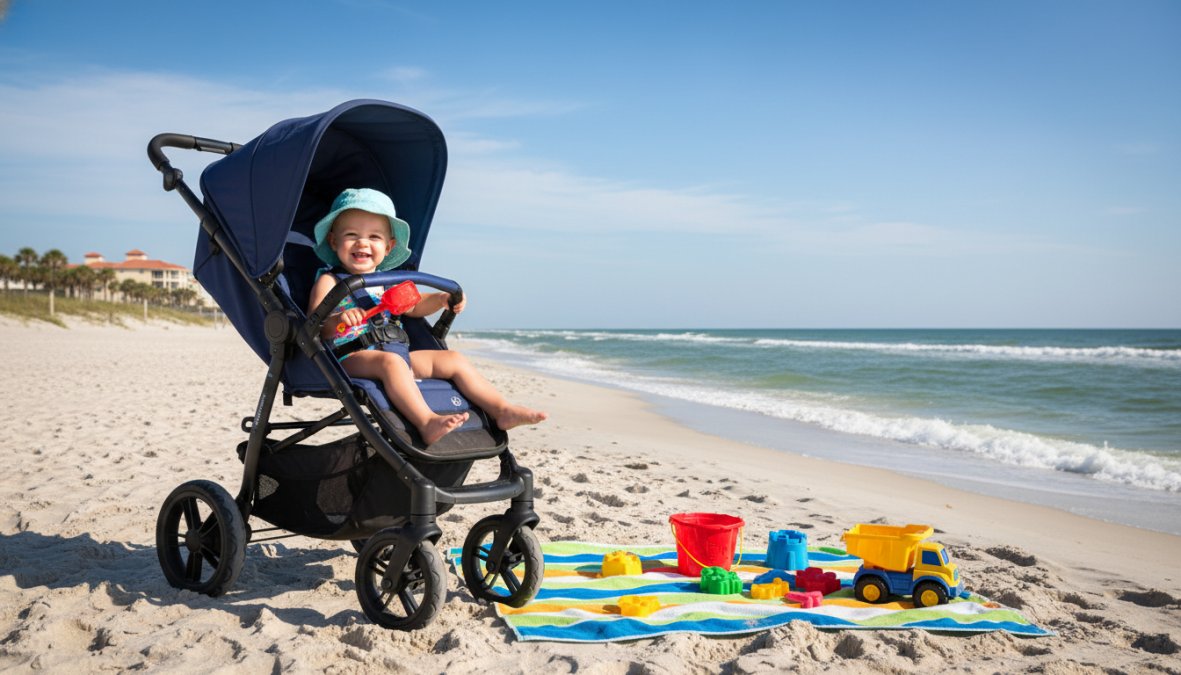
First Coast Baby Rentals serves this entire stretch of the First Coast, delivering to Saint Augustine, St. Augustine Beach, Vilano Beach, Ponte Vedra, Jacksonville Beach, Jacksonville, Fernandina Beach, Amelia Island, Nocatee, and surrounding areas. If you’re flying into Jacksonville Airport with a grandchild in tow, car seat rental near Jacksonville Airport is available so you’re covered from the moment you land.
The local advantage matters here. A local provider knows the vacation rental landscape, the beach access points, and the specific logistics of delivering to a historic home in downtown Saint Augustine versus a beachfront condo on Amelia Island. Generic national platforms don’t have that context.
For grandparents hosting in this region, baby equipment rental for grandparents through a local specialist means gear that arrives on time, set up correctly, and ready for a visit that’s actually enjoyable rather than logistically exhausting.
Frequently Asked Questions
Is it safe to rent baby equipment for grandchildren?
Yes, when you choose a reputable provider, baby equipment rental for grandparents is very safe. Look for companies that sanitize and inspect every item before each delivery, use only equipment that meets current child safety standards, and replace any gear showing signs of wear. Reputable local providers like First Coast Baby Rentals deliver clean, often brand-new equipment directly to your location, removing the guesswork around safety entirely.
What baby items should grandparents rent versus buy?
For occasional or vacation visits, renting essential baby gear for a grandparent's house almost always makes more financial sense than buying. Items like cribs, play yards, high chairs, and strollers are expensive to purchase, take up significant storage space, and can become outdated or unsafe over time. Renting ensures you always have current, sanitized equipment without the long-term commitment, especially for visits lasting a few days to a few weeks.
How much does baby equipment rental cost for a grandparent visit?
Baby equipment rental cost varies by item and rental duration. Generally, a crib or play yard might rent for roughly $15-$30 per day or less when booked weekly. Strollers, high chairs, and bassinets are typically in a similar range. Bundling multiple items with one provider often reduces the per-item cost. For a short grandchild visit of three to seven days, total rental costs are almost always far lower than purchasing the same gear outright.
How far in advance should I book baby equipment rentals?
Booking at least one to two weeks in advance is ideal, especially during busy travel seasons in Northeast Florida. That said, quality providers can often accommodate last-minute reservations. When coordinating with parents, confirm the grandchild's arrival date early so you can lock in the rental duration, specific items needed, and delivery window. Early booking also gives you time to communicate any special setup requirements, such as crib placement in a particular room.
How does baby equipment rental work for short visits or grandparent stays?
The process is straightforward. You select the baby gear you need, choose your rental duration, and schedule a delivery window. A local provider delivers, sets up, and later picks up all equipment directly from your home or vacation rental. For grandparent visits specifically, this means no storage hassles between visits, no outdated gear, and no heavy items to transport. Many providers serving Northeast Florida also allow rental extensions if plans change.
Hosting grandchildren should be one of the most joyful experiences life offers, not a scramble to find a safe crib or a last-minute trip to a big-box store. First Coast Baby Rentals delivers sanitized, inspected, often brand-new baby gear directly to your home or vacation rental across Northeast Florida, sets it up for you, and picks it up when the visit ends. Reserve your gear with First Coast Baby Rentals and spend your time making memories instead of assembling furniture.
This article was written using GrandRanker