Table of Contents
- Why Baby Equipment Rental Near Me Is the Smarter Way to Travel
- What Baby Equipment Can You Rent for Your Vacation?
- Baby Equipment Rental Cost: What to Expect and What You Get
- Sanitization Standards for Baby Equipment Rentals That Matter
- How Baby Equipment Rental Near Me Works: Step by Step
- Traveling with Baby Gear Tips for Northeast Florida Vacations
- Where We Deliver: Northeast Florida Service Areas
- Conclusion
Last Updated: May 17, 2026
Packing for a trip with a baby is its own Olympic event. If you’ve ever searched for baby equipment rental near me while standing in your living room surrounded by a mountain of gear you’re dreading hauling through an airport, you already know the problem. First Coast Baby Rentals has helped hundreds of Northeast Florida families skip that chaos entirely, delivering sanitized, inspection-ready gear directly to vacation rentals across the region so parents can actually enjoy the trip.
Here’s what most travel guides get wrong: they treat baby gear as a packing problem. It’s actually a logistics problem. And the smartest solution isn’t packing lighter. It’s not packing that gear at all.
Below, we’ll walk you through exactly what to rent, how the process works, what it costs, and why safety standards matter more than most parents realize when choosing a rental provider.
Why Baby Equipment Rental Near Me Is the Smarter Way to Travel
Renting baby gear locally at your destination is the most practical way to travel with infants and toddlers without sacrificing comfort or safety. A quality baby equipment rental near me service delivers gear directly to your vacation rental, eliminates airline baggage fees, and removes the physical strain of hauling bulky items through airports and parking lots.
The math is simple. Airlines charge significant fees for oversized or checked items. A full-size crib, stroller, and car seat can easily push you into paying for multiple extra bags, not counting the time spent disassembling, packing, and reassembling everything at your destination. Rental removes all of that friction.
Renting vs. Bringing Your Own Gear: An Honest Comparison
Most parents default to bringing their own gear because it feels safer. They know the equipment. They trust it. That instinct is understandable, but it doesn’t always hold up under scrutiny.
| Factor | Bringing Your Own | Renting Locally |
|---|---|---|
| Airline fees | Often applies | None |
| Setup time | 30-60 min at destination | Done for you |
| Gear condition | Wear from travel | Sanitized, inspected |
| Flexibility | Fixed by what you packed | Extend rental if needed |
| Airport hassle | High | None |
| Last-minute changes | Difficult | Often accommodated |
Bringing your own gear makes sense when you’re driving a short distance, traveling with a very specific medical device, or when your child has strong attachment to one particular item. For flights and longer trips, especially to beach destinations like Saint Augustine or Amelia Island, renting locally wins on nearly every dimension.
The one thing nobody tells you: gear that survives a checked baggage carousel often arrives dented, dirty, or with parts loosened. A rental that arrives clean and pre-assembled is genuinely a better starting point.
If your child has a specific sleep association with one comfort item (a particular sleep sack, a favorite stuffed animal), pack that and rent everything else. You get the familiarity where it matters and the convenience everywhere else.
What Baby Equipment Can You Rent for Your Vacation?
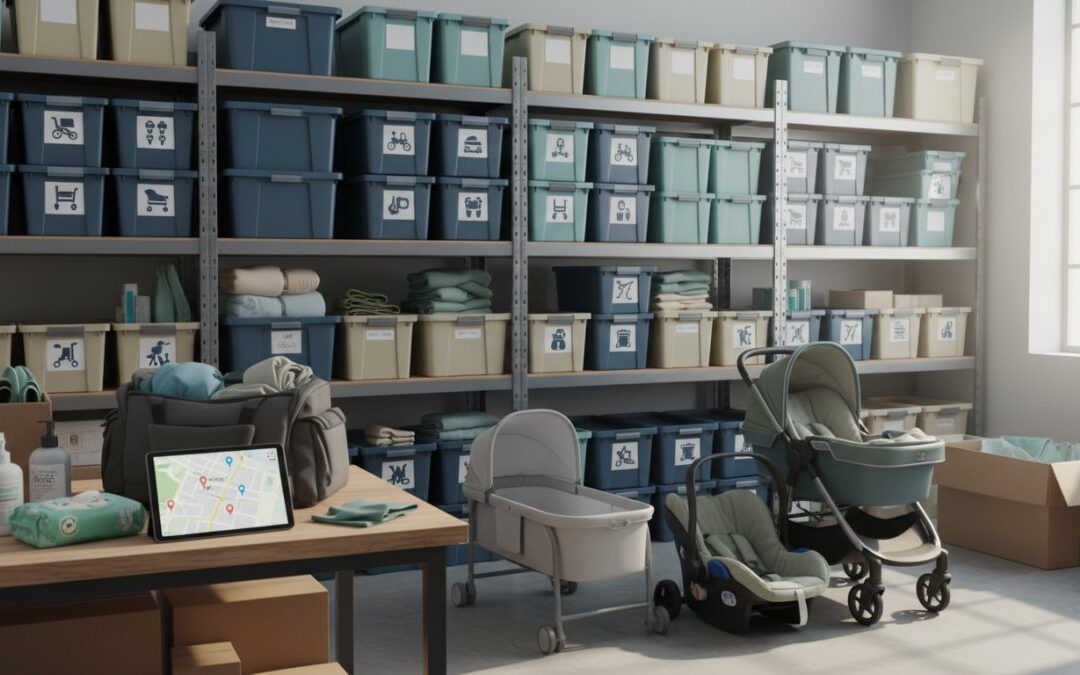
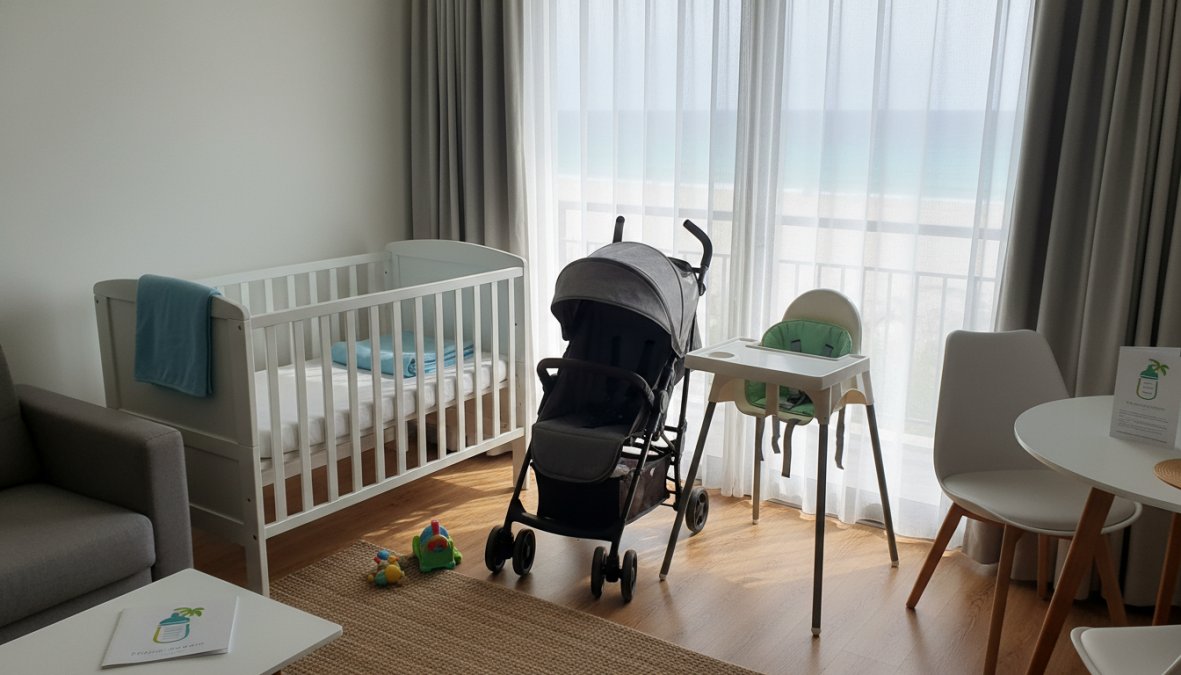
Baby gear rental covers far more than a basic crib and stroller. The full inventory available through quality providers in Northeast Florida spans everything from sleep essentials to feeding gear to outdoor equipment, meaning families can arrive with just a diaper bag and still have a fully equipped setup waiting at the door.
(/blog/rent-baby-car-seat-jacksonville) for Your Vacation?]
Cribs, Pack and Plays, and Sleep Gear
Sleep is the foundation of any successful family vacation. If the baby doesn’t sleep, nobody sleeps, and the trip unravels fast.
Rental options for sleep gear typically include full-size cribs, pack and plays (also called pack ‘n plays), and specialty items like the Snoo smart bassinet, which is available for rental in Saint Augustine, Ponte Vedra, Jacksonville, and Amelia Island. The Snoo is a particularly smart rental choice: it retails at a price point that makes buying impractical for a single trip, but renting it for a week is entirely reasonable.
What to look for in a sleep gear rental:
- Firm, flat mattress surface meeting current safety standards
- No soft bedding, bumpers, or incline inserts
- Slat spacing within safe limits (no wider than 2 3/8 inches)
- Proof of sanitization between uses
According to the American Academy of Pediatrics safe sleep guidelines, infants should always sleep on a firm, flat surface without soft objects in the sleep area. A reputable rental provider will meet these standards by default.
Strollers, Wagons, and Car Seats
Car seats are the most safety-critical item in any baby gear rental. They’re also the most frequently misused. A car seat that has been in a prior accident, is past its expiration date, or was incorrectly installed is not safe regardless of how clean it looks.
Premium stroller brands available for rental in Northeast Florida include UPPAbaby, BOB, City Mini, Nuna, and Doona. Each serves a different use case:
- BOB stroller rental (Saint Augustine, Jacksonville Beach, Fernandina Beach): Best for beach paths, boardwalks, and uneven terrain
- UPPAbaby rental (Saint Augustine, Jacksonville Beach): Full-featured city stroller, excellent for resort areas
- Doona rental (Saint Augustine, Fernandina): Converts between car seat and stroller, ideal for frequent car-to-destination transitions
- City Mini rental (Ponte Vedra, Saint Augustine, Amelia Island): Lightweight, one-hand fold, great for compact storage
Beach wagons are a separate category worth noting. For families spending time on Saint Augustine Beach or Fernandina Beach, a wagon rental handles gear hauling that no stroller can match.
Car seat rental is available at Jacksonville Airport and throughout Jacksonville, making it practical to land, pick up a car seat at the rental desk, and head straight to your accommodation without a detour.
High Chairs, Bouncers, Swings, and More
The gear that makes daily life manageable at home doesn’t disappear as a need when you travel. High chairs, bouncers, and swings are available for rental across the region, including high chair rental in Saint Augustine, Amelia Island, and Ponte Vedra.
Bouncers and swings serve a specific purpose on vacation: they give parents a safe, contained spot to set the baby down while they unpack, cook, or simply take a breath. Pack and play rental in Jacksonville Beach and Amelia Island often includes a bassinet insert for younger infants, making it a versatile multi-function rental.
The most-rented combination for beach vacations in Northeast Florida is a crib or pack and play, a beach wagon, a high chair, and a stroller. That four-item setup covers sleep, outdoor mobility, feeding, and transport without a single checked bag.
Baby Equipment Rental Cost: What to Expect and What You Get
Baby equipment rental cost is one of the first questions parents ask, and the honest answer is: it depends on what you rent, how long you need it, and which provider you use. But the structure of rental pricing is consistent enough that you can build a realistic budget before you ever open a booking page.
How Rental Pricing Is Typically Structured
Most quality providers price gear in two tiers: standard items and premium items.
Standard items (pack and plays, basic high chairs, bouncers, umbrella strollers) carry lower daily and weekly rates. These are high-volume items that are easy to sanitize and replace, so providers can keep costs accessible.
Premium items (Snoo smart bassinet, UPPAbaby strollers, BOB jogging strollers, Doona car seat/stroller combos) carry higher rates that reflect their retail cost. A Snoo retails above $1,000 new. Renting one for a week at a fraction of that cost is straightforwardly the better financial decision for a single trip.
Weekly rates almost always offer significantly better value than daily rates. If your trip is five nights or longer, the weekly rate is almost always the right choice, most providers structure pricing so that the weekly rate is equivalent to four or five daily rates, effectively giving you one or two days free.
The Airline Fee Comparison That Actually Matters
The most common objection to renting is: "I already own this gear, so renting feels like paying twice." That framing ignores what it actually costs to bring your own gear on a flight.
Major U.S. airlines charge for checked bags, and oversized or overweight items carry additional fees on top of standard checked bag rates. A full-size crib, a stroller, and a car seat are all items that may trigger oversize or overweight fees depending on how they’re packed. On a round-trip flight for two adults, the combined baggage cost for that gear can easily approach or exceed the cost of renting the same items locally for a week.
Beyond the fees, there’s the damage factor. Checked baggage handling is not gentle. Stroller frames get bent. Car seat shells crack. Crib hardware loosens. If your gear arrives damaged, you’re either using compromised equipment or scrambling to replace it at destination retail prices, which are always higher than rental rates.
| Cost Factor | Bringing Your Own Gear | Renting Locally |
|---|---|---|
| Airline oversize/overweight fees | Likely applies to crib, car seat, stroller | None |
| Risk of damage in transit | Real, baggage handling is rough | None, gear arrives pre-inspected |
| Setup time at destination | 30-60 min per item | Done before you arrive |
| Gear condition on arrival | Variable | Sanitized, inspection-certified |
| Flexibility if trip extends | None, you have what you packed | Rental extension often available |
| Return logistics | Repack, reassemble, check in at airport | Provider picks up at checkout |
What the Rental Fee Actually Includes
A quality rental provider’s fee is not just the gear itself. It typically includes:
- Delivery to your vacation rental address, not a pickup location, your actual door
- Professional setup, cribs assembled and ready, strollers adjusted, car seats installed or staged
- Sanitization certification, each item cleaned and inspected before delivery
- Pickup at checkout, you leave with nothing to repack or return
What to watch for in pricing: some providers list a base rental rate and add delivery fees separately. Others include delivery within a defined radius and charge for outlying areas. Before booking, confirm whether delivery, setup, and pickup are included in the quoted rate or itemized separately. A provider that bundles all three into a single transparent rate is easier to budget around.
Flexibility Has Real Dollar Value
One underappreciated cost advantage of renting: flexibility. If a storm delays your departure, if the trip goes so well you extend by two nights, or if you realize on arrival that you need an item you didn’t book, a quality local provider can often accommodate changes. That kind of adaptability is worth factoring into any cost comparison, it’s insurance against the rigidity of having packed your own gear with no backup options.
If you’re on the fence about whether renting is worth it, add up your round-trip checked bag fees for oversized items, then compare that number to a weekly rental rate for the same gear. For most families flying into Jacksonville Airport, the math resolves quickly in favor of renting.
The true cost of bringing your own gear is not zero, it’s airline fees, transit damage risk, setup time, and the inflexibility of being locked into what you packed. Rental pricing, when compared against those real costs, is competitive for any trip involving a flight.
Sanitization Standards for Baby Equipment Rentals That Matter
Sanitization standards for baby equipment rentals are not uniform across providers, and the gap between a vague "cleaned between uses" policy and a documented multi-step process is significant when the gear is going directly into contact with your infant. This is the section most rental sites skip entirely, and the one parents should read most carefully.
What a Real Sanitization Process Looks Like
A credible baby gear rental provider follows a two-phase process that mirrors the distinction the CDC draws between cleaning and disinfecting: cleaning removes visible soil and organic material; disinfecting kills pathogens that cleaning alone doesn’t eliminate. Both steps are required for gear that contacts infants.
For hard surfaces (crib frames, high chair trays, stroller frames, car seat shells): Hospital-grade disinfectant applied after visible soil is removed. Hard plastic and metal components should be wiped down thoroughly, with attention to joints, buckles, and adjustment mechanisms where debris accumulates.
For soft goods (stroller seat fabric, bouncer padding, swing inserts, high chair straps): Steam cleaning is the industry benchmark. Steam penetrates fabric fibers and kills bacteria and dust mites without chemical residue, which matters for items that contact infant skin. A provider that only wipes down hard surfaces and skips steam treatment on soft goods is not fully sanitizing the product.
For mattresses and sleep surfaces: Waterproof mattress covers should be replaced or sanitized between every rental. The sleep surface itself should be inspected for firmness, a mattress that has softened or deformed over time is a safety issue independent of cleanliness.
When evaluating a provider, ask directly: "Can you describe your sanitization process for soft goods?" A confident, specific answer (steam cleaning, drying protocol, inspection checklist) is a good sign. A vague answer ("we clean everything thoroughly") is not.
Safety Certification: What CPSC Standards Actually Mean for Rental Gear
The Consumer Product Safety Commission (CPSC) sets mandatory federal safety standards for infant and toddler products sold in the United States. For rental providers, compliance with these standards is not optional, it’s the legal baseline. But knowing what those standards require helps parents ask better questions.
Cribs: Federal crib safety standards prohibit drop-side designs entirely. All full-size cribs must have fixed sides, slat spacing no wider than 2 3/8 inches, and a firm, flat mattress that fits snugly with no gap larger than two fingers between the mattress edge and crib side. A rental crib that meets these standards will have documentation or a visible compliance label.
Car seats: Car seats have a manufacturer-printed expiration date, typically six to ten years from the date of manufacture. After that date, the plastic shell may have degraded in ways not visible to the eye, and the seat should not be used. Any car seat involved in a collision, even a minor one, must be replaced, regardless of visible damage. A reputable rental provider tracks the manufacture date and accident history of every car seat in their inventory. Ask for both before accepting a car seat rental.
Strollers: All locking mechanisms (wheel locks, seat recline locks, fold latches) should be tested before use. Harness straps should be intact, adjustable, and free of fraying. A five-point harness that can’t be tightened properly is a safety failure regardless of how clean the stroller looks.
Bouncers and swings: The CPSC has issued recalls on specific bouncer and inclined sleeper models due to infant fatality risks. A responsible rental provider removes recalled items from inventory immediately. You can verify any product’s recall status at the CPSC recall database.
Insurance and Liability Coverage: What It Actually Means for You
This is the content gap almost no rental site addresses directly, and it’s worth understanding before you hand your infant a piece of rented equipment.
A properly operated baby gear rental business carries general liability insurance that covers the equipment during the rental period. In practical terms, this means that if a product defect, not user misuse, but an actual product failure, causes harm, the rental company’s insurance is the first line of financial coverage. This is meaningfully different from borrowing gear from a friend or buying secondhand, where no such coverage exists.
What liability insurance does NOT typically cover:
- Damage caused by misuse (a stroller pushed off a curb, a crib rail forced out of position)
- Normal wear and tear
- Items lost or stolen during the rental period
What to ask any provider before booking:
- "Are your rentals covered by liability insurance?" A confident yes with the ability to name their insurer is a good sign. Deflection or vagueness is not.
- "What happens if an item is damaged during my rental?" Understand the damage policy before you need it.
- "Are your delivery staff background-checked?" The person assembling a crib in your vacation rental bedroom should be someone the company has vetted. This is a reasonable question and a reputable provider will answer it directly.
The Inspection Checklist Approach
The most trustworthy rental providers use a written inspection checklist for every item before every delivery. This serves two purposes: it catches safety issues before gear reaches a family, and it creates a documented record that the item was in good condition at delivery. If a provider can show you their inspection checklist, or describe its contents specifically, that’s a meaningful signal of operational seriousness.
For sleep gear specifically, the checklist should include mattress firmness, slat spacing, hardware tightness, and confirmation that no recalled components are present. For car seats, it should include expiration date verification and accident history confirmation.
Never accept a car seat rental without asking two questions: What is the manufacture date? Has this seat been in any prior collision? A provider that can’t answer both questions confidently should not be trusted with this particular item.
Sanitization and safety certification are not marketing language, they’re operational practices that either exist in documented form or they don’t. The difference between a provider that steam cleans soft goods, tracks car seat expiration dates, and carries liability insurance versus one that doesn’t is not visible in a booking photo. Ask the questions directly before you confirm your reservation.
How Baby Equipment Rental Near Me Works: Step by Step
The process for booking baby equipment rental near me is straightforward with a quality provider. Total time from first search to confirmed reservation typically runs under 15 minutes.
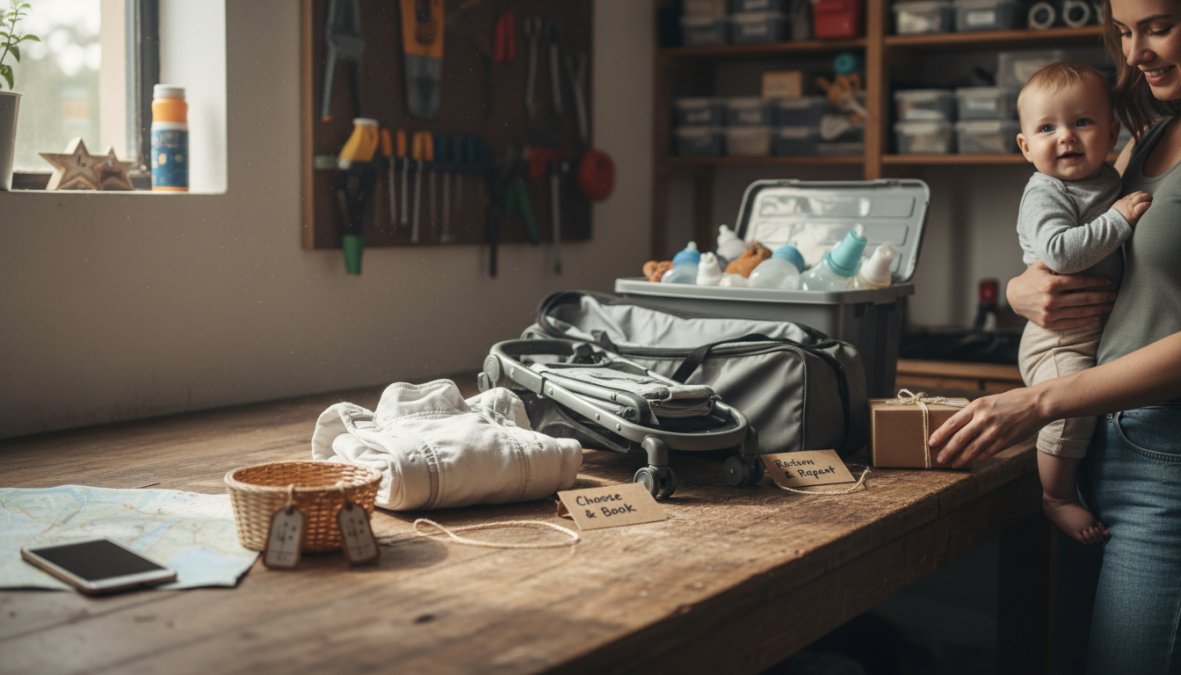
Step 1: Browse available inventory. Review what’s available for your travel dates and destination. Most providers list gear by category (sleep, transport, feeding).
Step 2: Select your rental dates. Enter your arrival and departure dates. Availability is date-specific, so booking early matters, especially for peak summer weeks in Saint Augustine and Amelia Island.
Step 3: Provide your delivery address. This is your vacation rental address, not a hotel lobby or parking lot. Most providers deliver directly to the rental property.
Step 4: Confirm and reserve. Payment is typically collected at booking. Reputable providers accommodate last-minute reservations when inventory allows.
Step 5: Receive delivery and setup. Gear arrives before or at your check-in time. Cribs are assembled, strollers are unfolded, and everything is ready to use.
Step 6: Enjoy your trip. At checkout, the provider returns to collect the gear. You leave with nothing to pack.
Booking too late during peak season (June through August in Northeast Florida) can mean limited inventory on premium items like Snoo rentals or specific stroller brands. Reserve at least two weeks in advance for summer trips to Saint Augustine Beach or Fernandina Beach.
Traveling with Baby Gear Tips for Northeast Florida Vacations
Traveling with baby gear tips tend to focus on airports and airplanes, but the real challenges often start after you land. Northeast Florida’s beach destinations have specific characteristics that affect which gear works best.
The region’s beaches are generally firm-packed near the water line, which means jogging strollers and beach wagons roll well. Boardwalks in Saint Augustine and Fernandina are stroller-friendly. The heat and humidity from May through September mean shade-equipped strollers and UV-protective gear matter more than they would in a cooler climate.
A few tips that apply directly to First Coast destinations:
- Bring a portable fan for the crib. Vacation rentals vary in AC quality. A small clip-on fan improves sleep comfort significantly in humid conditions.
- Request early delivery if possible. Arriving to a fully set-up crib is far better than waiting for delivery after a long travel day with a tired baby.
- Confirm parking access for the delivery vehicle. Some Saint Augustine historic district properties have limited street access. Alert your provider in advance.
Destination Packing List: Saint Augustine, Amelia Island, and Jacksonville Beach
This packing list assumes you’re renting the major gear items (crib, stroller, high chair, car seat) and focuses on what to bring yourself.
Rent (don’t pack):
- Crib or pack and play with fitted sheet
- Stroller (BOB for beach paths, UPPAbaby or City Mini for town)
- High chair
- Car seat (if flying into Jacksonville Airport)
- Beach wagon
- Bouncer or swing
Bring from home:
- 2-3 fitted crib sheets (rental cribs include one; extras are yours to manage)
- Baby monitor
- White noise machine or app
- Baby carrier/wrap (compact, easy to pack)
- Sun hat and UV swimwear
- Portable first aid kit
- Familiar comfort item (specific stuffed animal, sleep sack)
- 3-day supply of diapers (restock locally)
According to AAA’s family travel planning resources, families who pre-plan gear logistics report significantly lower travel stress than those who improvise at the destination. Renting locally is the most direct way to pre-plan that logistics layer.
Where We Deliver: Northeast Florida Service Areas
First Coast Baby Rentals serves the full stretch of Northeast Florida’s coast and surrounding communities. Baby equipment rental near me is available across a wide delivery footprint that covers the region’s most popular family vacation destinations.
Current delivery areas include:
- Saint Augustine and Saint Augustine Beach
- Vilano Beach
- Ponte Vedra Beach and Nocatee
- Jacksonville Beach and Atlantic Beach
- Jacksonville (including Jacksonville Airport for car seat rental)
- Fernandina Beach
- Amelia Island
This coverage means whether you’re staying in a historic Saint Augustine vacation rental, a Ponte Vedra resort, or a beachfront property on Amelia Island, delivery is available. Crib rental in Nocatee, stroller rental in Jacksonville Beach, and high chair rental on Amelia Island are all within the standard service area.
Last-minute reservations are accommodated when inventory allows, which makes this service practical even for families who didn’t plan ahead. The goal is simple: gear arrives before you need it, and it disappears before you have to think about it again.
Hauling a crib through an airport while managing a car seat, a diaper bag, and a toddler is exactly as miserable as it sounds. First Coast Baby Rentals eliminates that entire layer of travel stress by delivering sanitized, inspection-ready gear directly to your vacation rental across Northeast Florida. Every item is cleaned and inspected before delivery, accommodations for last-minute reservations are available, and rentals can be extended if your trip runs long. Reserve your gear before your travel dates fill the calendar.
Frequently Asked Questions
Is it safe to rent baby equipment?
Yes, renting baby equipment from a quality provider is safe when you choose a service that sanitizes, steam cleans, and inspects every item before each delivery. Reputable rental services like First Coast Baby Rentals use brand-new or like-new gear, check for recalls, and follow current safety certification standards. Always confirm that the provider is insured and that their staff are background-checked before placing your reservation.
How does baby equipment rental work?
Baby equipment rental near me typically works in a few simple steps: browse available gear online, select your items and rental dates, enter your destination zip code or vacation rental address, and confirm your reservation. A provider then delivers, sets up, and later picks up the equipment directly at your vacation rental. First Coast Baby Rentals accommodates last-minute reservations and even allows rental extensions for weather-related delays.
Is renting baby gear cheaper than bringing my own?
In many cases, yes. When you factor in airline checked-bag fees, the risk of damage to your own gear in transit, and the sheer hassle of hauling bulky items, renting baby equipment for your vacation often comes out ahead financially and practically. Baby equipment rental cost varies by item and duration, but renting a crib or stroller for a week is typically far less than the combined cost of baggage fees and the stress of traveling with oversized gear.
What items can I rent for my baby when traveling?
Most baby gear rental services offer a wide range of travel essentials including cribs, pack and plays, strollers, car seats, high chairs, bouncers, swings, beach wagons, and toys. Premium providers may also carry specialty items like Snoo smart sleepers, UPPAbaby, BOB, Doona, Nuna, and City Mini strollers. Traveling with baby gear tips always include booking these items early, especially during peak vacation season in major resort areas like Saint Augustine and Amelia Island.
How do I ensure rented baby gear is clean and sanitized?
Ask your rental provider directly about their sanitization standards for baby equipment rentals. Look for services that steam clean, disinfect, and physically inspect every item between uses. First Coast Baby Rentals sanitizes and inspects all gear before every single delivery, and many items are brand new. Avoid providers who cannot clearly explain their cleaning process or who cannot confirm that equipment is checked against current safety recall lists.
This article was written using GrandRanker