Table of Contents
- Beach Trip Essentials for Toddlers: What You Really Need
- Sun Protection for Toddlers at the Beach
- Beach Gear for Toddlers: Shelter, Comfort, and Safety
- Swim Diapers, Clothing, and Diapering Essentials
- Beach Hacks for Toddlers: Smart Tips to Make Your Day Easier
- Beach Wagon for Toddlers: Transport Made Simple
- Toddler Temperament Management at the Beach
- Safety, First Aid, and Beach Awareness
Last Updated: July 28, 2026
Beach Trip Essentials for Toddlers: What You Really Need
Getting a toddler to the beach sounds simple until you’re standing in your St Augustine rental realizing you forgot sunscreen or a swim diaper. Most families overpack by 40%, but still forget the one thing that would make their day easier. Here’s what you actually need: sun protection that prevents damage, gear that prevents meltdowns, and systems that make beach days enjoyable instead of stressful. The good news? You don’t need to buy everything. Many families traveling to Northeast Florida beaches like St Augustine Beach, Vilano, Amelia Island, or Jacksonville Beach find that renting high-quality gear beats hauling it through the airport.
Sun Protection for Toddlers at the Beach
Sun damage happens fast with toddlers. Their skin is thinner, melanin production is lower, and they spend hours in direct UV exposure. This is non-negotiable.
Start with mineral-based sunscreen containing zinc oxide and titanium dioxide rather than chemical absorbers. It blocks 98% of harmful UVB rays and is water-resistant for up to 80 minutes. Reef-safe formulas matter too, especially near marine ecosystems along the First Coast.
Pair sunscreen with UPF clothing designed for water play. Long-sleeve rash guards with front zippers make dressing and undressing easier when your toddler is wet and wiggly. The fabric blocks 98% of UV radiation and quick-dries fast.
Sunscreen Application Tips
Apply sunscreen 15 minutes before heading to the water so it sets properly. Reapply every 80 minutes or immediately after your toddler gets out of the water, even if it claims "water-resistant." Rub it in thoroughly, paying special attention to ears, the part in their hair, tops of feet, and the back of the neck.
Bring sunscreen in a small, easy-to-access bag near your beach setup, not buried in a larger tote. Reframe application as a game: "Let’s put on your sun armor before we build the sandcastle." Small language shifts work surprisingly well with toddlers.
UPF Clothing and Rash Guards
Rash guards protect from sun and provide a thin layer between your toddler’s skin and sand. The zippered design means you’re not wrestling a wet shirt over your child’s head. Pair it with UPF swim shorts or leggings for full-body coverage.
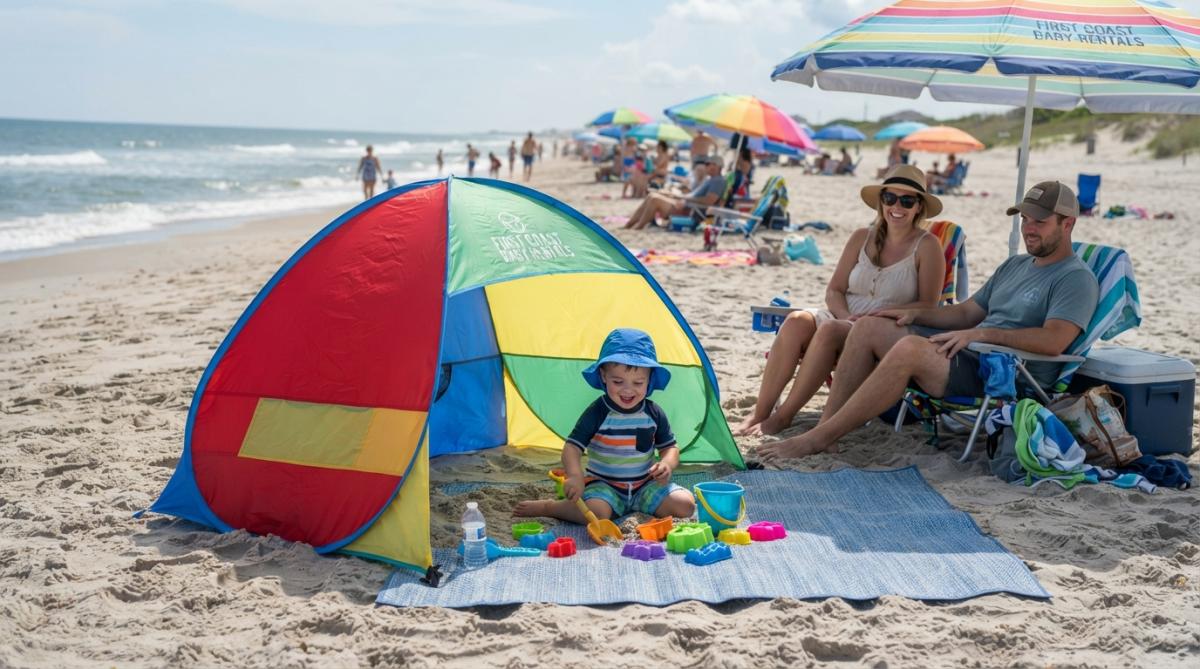
A pop-up UPF 50+ tent provides active sun protection, blocks over 99% of UVA and UVB rays, and sets up in seconds. It includes ventilation and mosquito netting, which matters on humid Northeast Florida beach days. Four stakes keep it secure in sand.
Bring a lightweight beach cover-up for your toddler to slip on between water sessions. This prevents constant sun exposure while playing on the sand.
Beach Gear for Toddlers: Shelter, Comfort, and Safety
Beyond sunscreen, you need shelter, comfort items, and safety gear that works in real beach conditions.
Shade Solutions and Portable Tents
A pop-up UPF tent pops up in seconds, folds into a carry bag, and provides serious UV protection without requiring a full umbrella system. The mesh window prevents that stuffy feeling that makes toddlers cranky. On hot days at Jacksonville Beach or St Augustine Beach, your toddler will actually want to hang out in it for snack breaks.
If you’re renting a beach house in Ponte Vedra or Fernandina, a portable high chair with a canopy solves the "where do we feed our toddler" problem. It folds into a carry bag, has a removable dishwasher-safe tray, and stays stable on sand.
Water Shoes and Protective Footwear
Hot sand burns. Sharp shells and rocks cut. Toddlers don’t watch where they step. Water shoes are essential.
Closed-toe water sandals with non-marking rubber soles offer excellent traction and protection against sharp objects while allowing water to drain freely. They’re machine washable and quick-drying. Yes, they cost more than flip-flops, but they prevent the "my feet hurt" meltdowns that derail beach days.
Never let your toddler walk on hot sand barefoot. Test it with your own hand first, if it’s too hot for your palm, it’s too hot for tiny feet.
Swim Diapers, Clothing, and Diapering Essentials
Swim diapers are non-negotiable if your toddler is in the water. Regular diapers absorb water like sponges and fail spectacularly. Reusable swim diapers are more sustainable and genuinely more comfortable for your toddler.
Quality reusable swim diapers are made from waterproof recycled polyester with soft mesh. They’re designed to contain solids while letting water flow through, so your toddler doesn’t feel waterlogged. Adjustable snaps grow with your child from 7 to 60 pounds, meaning one diaper lasts through multiple stages. Quick-drying materials mean less sitting in damp fabric.
Pack at least three swim diapers for a full beach day, or bring a small wet bag to rinse and hang-dry them between uses. A wet bag keeps damp diapers and wet clothes from soaking everything else in your beach bag.
Bring extra regular diapers too. Sand gets everywhere, and you’ll want to do a quick rinse-off and diaper change before heading back to your rental. Pack them in a sealed container to keep them dry. Baby powder or cornstarch helps remove sand from skin before diaper changes, which prevents irritation.
Beach Hacks for Toddlers: Smart Tips to Make Your Day Easier
The difference between a great beach day and a miserable one often comes down to small systems that prevent common problems.
Managing Sand and Keeping Gear Clean
Waterproof blankets keep sand from coating everything. Lay one in your beach setup zone as your "clean zone" for changing clothes, eating snacks, and resting. A mesh bag designed for beach toys lets sand drain while you carry everything. When packing up, rinse toys in the ocean or a beach shower before bagging them.
Bring a small spray bottle filled with fresh water. Use it to rinse sand off your toddler’s feet, legs, and hands before getting back in the car. This prevents sand from grinding into car seats and strollers and rinses salt water off, which prevents that itchy, sticky feeling during the drive home.
Hydration and Snack Strategies
Toddlers dehydrate fast in sun and heat. They’re so focused on playing that they forget to drink. Bring more water than you think you need, at least 16 ounces per hour of beach time. Use a spill-proof cup with a lid and straw. Keep it in a small cooler with ice packs so water stays cold.
Snacks prevent meltdowns. Pack shelf-stable options: goldfish crackers, dried fruit, fruit pouches, granola bars. Bring wet wipes in a sealed container to clean hands before eating. Salty snacks paired with water help your toddler retain hydration better than snacks alone.
Pack snacks in individual containers or ziplock bags so you’re not opening a large bag repeatedly and letting sand blow in. A small beach wagon makes transporting coolers, snacks, and gear infinitely easier than carrying everything.
Beach Wagon for Toddlers: Transport Made Simple
A beach wagon isn’t a luxury, it’s a back-saver. Instead of juggling a cooler, tent, toys, and a toddler, you load the wagon once and pull it across the sand.
Look for a wagon with wide wheels that don’t sink into sand, a removable canopy for sun protection, and a comfortable handle. Some wagons have seats where your toddler can ride when they’re tired, which is genuinely useful for the walk back to your rental.
If you’re staying in Jacksonville, St Augustine, Amelia Island, or surrounding areas, First Coast Baby Rentals offers beach wagon rentals delivered directly to your vacation rental. You don’t pack a wagon through the airport or figure out storage, it shows up ready to use, and they pick it up when you leave.
Toddler Temperament Management at the Beach
Your toddler’s mood is the real limiting factor, not the gear.
Toddlers get overstimulated at the beach. Loud waves, bright sun, unfamiliar environment, sand in places sand shouldn’t be, it’s a lot. They also get tired faster because playing in sand is physically demanding.
Start with realistic time expectations. Two to three hours is a solid beach session for a toddler under three. Four hours is ambitious. Plan your beach time around your toddler’s best mood window, usually mid-morning after breakfast but before the afternoon slump. Avoid late afternoon when toddlers are tired and cranky.
Build in rest breaks. Your toddler doesn’t need to play constantly. Sit under your shade tent, read a book, let them nap for 30 minutes. A portable sound machine can help your toddler actually sleep on a beach blanket despite noise and stimulation.
Watch for overstimulation signals: whining, clinginess, refusing to play, or sudden aggression. These mean it’s time to leave, not push through. A meltdown at the beach is harder to manage than leaving early and having a successful outing.
Safety, First Aid, and Beach Awareness
Water safety is non-negotiable. Even shallow water is dangerous for toddlers. Never take your eyes off your toddler in or near water, not for a second.
Consider a US Coast Guard-approved life jacket for your toddler. It allows full range of motion while providing reliable flotation. This isn’t about your toddler’s swimming ability, it’s about giving you peace of mind and your toddler an extra safety layer.
Pack a basic first aid kit: bandages, antibiotic ointment, pain reliever for toddlers, hydrocortisone cream for rashes, tweezers for splinters. Sand fleas and small shells can cause minor cuts. Sunburn and heat rash happen despite precautions. Having supplies on hand means you can treat small issues before they escalate.
Watch for signs of heat exhaustion: excessive sweating, weakness, dizziness, or confusion. If your toddler seems overheated, move them to shade immediately, apply cool water, and offer fluids. If symptoms don’t improve within 15 minutes, seek medical attention.
Rip currents exist along the First Coast. If you’re at a beach with lifeguards, ask about current conditions. If you’re at a quieter beach without lifeguards, stay in shallow water where you can stand comfortably and maintain contact with your toddler.
| Essential Item | Why It Matters | Best Option |
|---|---|---|
| UPF Rash Guard | Protects from sun without constant reapplication | Front zipper design |
| Swim Diaper | Prevents accidents in water | Reusable, quick-drying |
| Water Shoes | Protects feet from hot sand and sharp objects | Closed-toe with drainage |
| Shade Tent | Provides UV protection and rest space | Pop-up UPF 50+ |
| Beach Wagon | Reduces carrying burden across sand | Rental via First Coast |
| Sunscreen SPF 50+ | Mineral-based, reef-safe protection | Zinc oxide formula |
| Life Jacket | Extra water safety layer | USCG-approved |
The real essentials for beach trip with toddler aren’t fancy, they’re practical systems that prevent common problems: sun protection, sand management, hydration, and realistic time expectations.
Beach days with toddlers in Northeast Florida are some of the best memories you’ll make. But without the right gear and systems, they can turn into stressful, uncomfortable experiences that leave everyone exhausted.
First Coast Baby Rentals understands that traveling light is the whole point of a vacation. Instead of packing a beach wagon, shade tent, portable high chair, or extra gear through the airport, rent it locally. Everything arrives sanitized, inspected, and ready to use, delivered directly to your rental in St Augustine, Jacksonville, Jacksonville Beach, Amelia Island, Ponte Vedra, Fernandina, Vilano, or surrounding areas. Setup is handled for you. If weather changes and you need to extend your rental, they work with you. Book or inquire with First Coast Baby Rentals to travel light and vacation right on the First Coast.
American Academy of Pediatrics sun safety guidelines for children
CDC heat exhaustion and heat stroke prevention for families
Skin Cancer Foundation recommendations for UV protection in children
Frequently Asked Questions
What are the most important beach trip essentials for toddlers?
The core beach trip essentials for toddlers include reef-safe sunscreen (SPF 50+), a UPF rash guard or swim shirt, swim diapers, a portable beach tent for shade, water shoes, hydration (water or diluted juice), snacks, a first aid kit, and a beach wagon to transport everything. Don't forget a hooded towel, wet bag for damp items, and extra dry clothes. Having these items ensures your toddler stays protected, comfortable, and happy during your beach day.
How often should I reapply sunscreen on my toddler at the beach?
Reapply sunscreen every two hours, or immediately after your toddler swims, sweats heavily, or towels off. Use mineral sunscreen formulas with zinc oxide or titanium dioxide for sensitive skin, they're gentler and reef-safe. Apply a generous amount (about a shot glass full for the whole body) and don't miss ears, the back of the neck, tops of feet, and the part line. Many parents set a phone reminder to stay on track with reapplication throughout the day.
What's the best way to keep sand off my toddler and gear during a beach trip?
Use a sand-free beach towel or waterproof blanket as your base, and rinse your toddler's feet in a bucket or with a portable rinse before leaving the beach. Pack a mesh bag to air-dry wet items without trapping sand. Keep a change of dry clothes in a separate waterproof bag. Pro tip: bring baby powder or cornstarch, a light dusting helps sand brush off more easily. Store sandy toys in mesh bags that let water drain. These beach hacks save you hours of cleanup later.
Can I rent beach gear instead of buying everything for a toddler beach trip?
Absolutely! Renting beach gear is a smart option if you're traveling light or visiting for a short time. Many families in Northeast Florida use rental services to access high-quality beach wagons, shade tents, portable high chairs, and other essentials without packing them. First Coast Baby Rentals delivers sanitized, like-new equipment directly to your vacation rental in St. Augustine, Jacksonville, Ponte Vedra, Fernandina, Amelia Island, and surrounding areas, setup included. This approach lets you travel with just carry-ons and enjoy your vacation without the hassle of hauling gear.
This article was written using GrandRanker