
Table of Contents
- Car Seat Alternatives for Travel With Infant: What Actually Works
- Why Standard Car Seats Are Tough for Traveling Families
- FAA-Approved Car Seat Alternatives for Flying
- Traveling With Infant Without Car Seat: Ground Transportation Options
- Renting Car Seats at Your Destination: A Smart Alternative
- Safety Standards and Legal Requirements You Need to Know
- Comparison: Which Alternative Works for Your Family?
- Practical Tips for Gate-Checking and Airport Travel
Last Updated: June 29, 2026
Car Seat Alternatives for Travel With Infant: What Actually Works
When packing for a family trip to the First Coast, the question of car seat alternatives for travel with infant becomes real fast. Do you lug your standard car seat through the airport, gate-check it, or look for something lighter? At First Coast Baby Rentals, we’ve helped hundreds of traveling families navigate this dilemma, and the answer depends entirely on where you’re going and how you’re getting there.
This guide breaks down realistic alternatives, what actually works in practice, and how to choose what fits your family’s travel style.
The American Academy of Pediatrics guidelines on car seat safety
Why Standard Car Seats Are Tough for Traveling Families
Lugging a standard infant car seat through an airport is no joke. Most full-size seats weigh 10-15 pounds plus another 5-10 for the base, totaling 20+ pounds of awkward plastic through security lines while managing a stroller, diaper bag, and possibly a toddler.
The real problem is bulk. Standard seats don’t fit neatly in overhead bins, and gate-checking means depending on the airline to handle your most important safety gear. For families renting a car at Jacksonville Airport or using Ubers in St Augustine, a full-size seat becomes impractical.
If you’re flying into Jacksonville and renting a car for just a few days, [renting a car seat at your destination](https://www.rentals.firstcoastbabyrentals.com) often costs less than checking yours, and you avoid the airport hassle entirely.
FAA-Approved Car Seat Alternatives for Flying
If you’re flying, your options are limited by FAA regulations. The FAA approves specific seats and harnesses for use on aircraft.
Lightweight Convertible Seats for Air Travel
The Cosco Scenera NEXT is the gold standard for budget-conscious air travelers. It weighs less than 8 pounds, folds compactly, costs around $60, and is FAA-approved. It installs with just a seat belt, no LATCH system needed.
The Maxi-Cosi Romi sits between budget and comfort at under 8 pounds with better padding than the Scenera, costing around $150. It’s FAA-approved and machine-washable.
The WAYB Pico is the premium option for serious travelers. At 8 pounds with aerospace-grade aluminum, it folds to backpack-size and costs around $495. If you’re flying monthly, the investment makes sense.
| Seat | Weight | FAA Approved | Price | Best For |
|---|---|---|---|---|
| Cosco Scenera NEXT | 7.8 lbs | Yes | ~$60 | Budget travelers, occasional flyers |
| Maxi-Cosi Romi | 7.5 lbs | Yes | ~$150 | Comfort-conscious travelers |
| WAYB Pico | 8 lbs | Yes | ~$495 | Frequent flyers, premium preference |
| Doona Car Seat & Stroller | 10.5 lbs | Yes | ~$550 | Parents wanting seat + stroller combo |
Premium Travel-Specific Infant Seats
The Doona Car Seat & Stroller converts an infant seat into a stroller with folding wheels underneath. At around $550, you’re essentially buying two products. FAA-approved and weighing about 10.5 pounds, it’s useful if you want to minimize gear. The downside: it’s heavier than dedicated travel seats, and the stroller function is limited compared to full strollers.
For infants, lightweight convertible seats (Scenera, Romi) are the practical choice for flying. They’re affordable, portable, and meet all safety standards.
Harness Systems for Airplane Seating
The CARES Flight Harness is the only FAA-approved harness alternative to a car seat, weighing just 1 pound. However, it’s only approved for children 22-44 pounds, making it useless for infants.
FAA guidance on child safety devices in aircraft
Traveling With Infant Without Car Seat: Ground Transportation Options
Once on the ground in Northeast Florida, you don’t need an FAA-approved seat, just something practical for rental cars and ride-shares.
Portable Booster and Vest Solutions
The RideSafer Travel Vest is a wearable safety vest for children 3 and up, weighing only 1.5 pounds and costing around $169. The BubbleBum Inflatable Booster is even more portable at $35 but works for kids 4 and up.
For infants, these alternatives don’t exist. You need either a car seat or to hold your baby, but holding an infant in a moving vehicle isn’t safe. A sudden stop at just 30 mph can generate forces that rip a baby from your arms.
Never rely on holding your infant in a moving vehicle. A proper car seat is non-negotiable for safety.
Renting Car Seats at Your Destination: A Smart Alternative
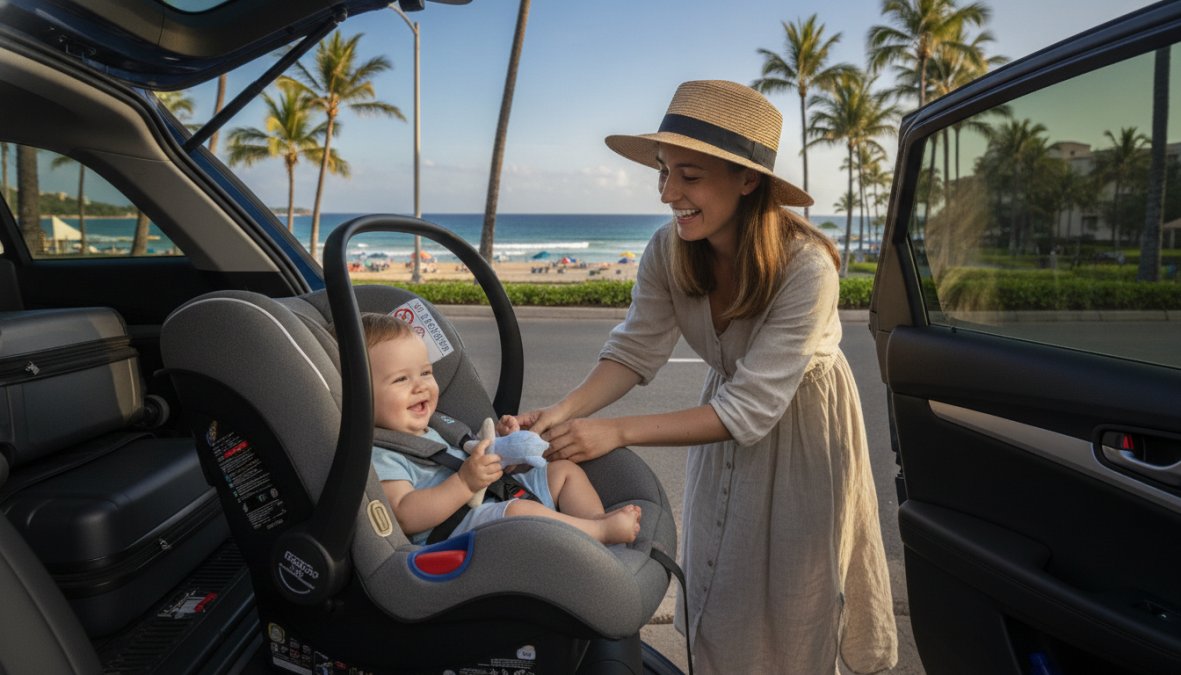
Instead of flying with a car seat, you can rent one when you arrive.
How Rental Services Work in Northeast Florida
When you arrive at Jacksonville Airport or drive into St Augustine, rental companies can deliver a car seat directly to your hotel or vacation rental. Services like First Coast Baby Rentals handle the entire process: delivery, setup in your rental car if needed, and pickup when you leave.
Book online before you arrive, confirm your dates and location, and the seat shows up on schedule. Most companies deliver to St Augustine, Jacksonville Beach, Ponte Vedra, Fernandina, Amelia Island, and surrounding areas.
Benefits of Renting vs. Traveling With Your Own Seat
A car seat takes up luggage space and adds weight. Airlines charge $35-50 for extra checked luggage. A rental car seat costs less, arrives clean and inspected, and you don’t worry about damage in transit or airline loss.
For families staying a week or more, renting makes even more sense. You have a dedicated seat that stays in your rental car, no packing and unpacking required.
Book your rental car seat when you book your rental car. Many vacation rental platforms now integrate with car seat rental services, making it a one-step process.
Safety Standards and Legal Requirements You Need to Know
Any car seat used in a vehicle must meet FMVSS 213 (Federal Motor Vehicle Safety Standard 213). For air travel, the FAA has a separate approval process. If you’re flying with a car seat, verify it’s on the FAA’s approved list before you pack it.
Internationally, rules vary significantly. European seats use different standards than US seats. Research your destination’s requirements before traveling.
For infants, rear-facing is the law in most US states until age 2 or weight 30+ pounds. Some "travel alternatives" are forward-facing only and aren’t legal for infants in most states.
NHTSA guidelines on car seat installation and safety
Comparison: Which Alternative Works for Your Family?
The right choice depends on your specific travel scenario.
Quick Decision Guide by Travel Type
Flying to Jacksonville, renting a car, staying 3-5 days:
Rent a car seat at your destination. Cost: $30-50. Best option.
Flying with a 6-month-old, staying 2 weeks:
Bring a lightweight convertible seat (Cosco Scenera or Maxi-Cosi Romi). Gate-check it. Cost: $60-150 one-time.
Frequent traveler flying monthly with an infant:
Invest in a premium travel seat like the WAYB Pico or Doona. Cost: $495-550 one-time. Pays for itself in rental savings after 10+ trips.
Using Ubers and taxis in St Augustine:
Rent a car seat for your stay. For infants, renting is safer and easier than managing a car seat in and out of multiple vehicles.
Road trip driving through Northeast Florida with an infant:
Bring your own car seat or rent one that stays in your vehicle the whole trip.
| Travel Scenario | Best Option | Why |
|---|---|---|
| Flying + 3-5 day rental car | Rent at destination | Saves luggage space, cheaper than checked bag fee |
| Flying + 2+ week stay | Lightweight travel seat | Need it for the whole trip, pays off over time |
| Monthly business flights | Premium travel seat | Investment-grade, used constantly |
| Ride-share in city | Rent for stay | Easier than managing seat in/out of vehicles |
| Road trip | Own or rent | Stays in one vehicle entire trip |
Practical Tips for Gate-Checking and Airport Travel
If you’re bringing a car seat on a flight, gate-checking is your best option. You carry it to the gate, hand it to the flight attendant, and it’s loaded last, arriving first when you land.
Gate-checking avoids checked baggage fees and reduces damage risk. The seat goes in a protective gate-check bag, which most airlines provide for free.
Arrive at the gate with your seat ready, ask the gate agent to gate-check it, and get a tag. When you land, pick it up at the gate before heading to baggage claim.
On full flights, gate-checking isn’t always guaranteed. Arrive early and ask proactively.
If using a car seat on the plane, install it in your assigned seat before takeoff. It takes 5-10 minutes. If you’re not using the seat on the plane, gate-check it and hold your baby during the flight. This is legal and common, though the American Academy of Pediatrics recommends using a seat or harness for safety.
Gate-checking is free, protects your seat, and gets it to you immediately when you land. It’s the best approach if you’re traveling with a car seat on an aircraft.
When planning a family trip to Northeast Florida, the car seat question doesn’t have to be stressful. For most vacationing families, renting a car seat at your destination is the smartest move. It eliminates luggage hassle, ensures a clean and properly installed seat, and costs less than checking your own. First Coast Baby Rentals delivers to St Augustine, Jacksonville Airport, Jacksonville, St Augustine Beach, Vilano, Ponte Vedra, Fernandina, Amelia Island, Jacksonville Beach, and surrounding areas. Book your rental car seat before your trip and focus on making memories with your family on the First Coast.
Frequently Asked Questions
Is it safe to travel with an infant without a car seat?
It depends on the context. For air travel, infants can sit in a parent's lap without a car seat, it's legal but not recommended by safety experts. For ground transportation (cars, taxis, rideshares), infants always need a proper car seat or approved alternative. Never skip a car seat in a vehicle; it's both a legal requirement and critical for your baby's safety. When traveling, renting a car seat at your destination eliminates the hassle of flying with one.
What are the best FAA-approved car seat alternatives for infants?
The most practical FAA-approved options for infants are lightweight convertible seats like the Cosco Scenera NEXT (under 8 lbs) or premium travel-specific infant seats designed for portability. Infant carriers that meet FAA standards can also work on planes. However, infants under 22 lbs have limited harness-only alternatives, most compact solutions are for older children. For Northeast Florida families, renting a seat at your destination is often easier than checking or carrying one through the airport.
Can I use a baby carrier or wrap instead of a car seat while traveling?
Baby carriers and wraps are safe for walking, shopping, and general movement, but never in a vehicle. They don't provide the crash protection a car seat does. On airplanes, babies can sit in your lap, but a car seat or approved harness is safer. For rental cars, taxis, and rideshares at your destination, you'll need a proper car seat or approved alternative. This is where renting makes sense: get a clean, inspected seat delivered to your vacation rental without the travel hassle.
Should I rent a car seat at my destination or bring my own?
Renting is often the smarter choice for traveling families. You avoid lugging a bulky seat through airports, checking fees, and potential damage. A rental service delivers a spotless, sanitized, and often brand-new seat directly to your vacation home, ready to use. This is especially convenient in Northeast Florida, where services deliver to St. Augustine, Jacksonville, Amelia Island, and surrounding areas. Bringing your own makes sense only if you're driving locally or making frequent short trips where portability isn't an issue.
What's the difference between a travel car seat and a regular car seat?
Travel car seats prioritize portability and lightweight design, often under 8 lbs, making them easier to carry through airports and install in rental vehicles. Regular car seats are heavier and bulkier but offer the same safety standards. Travel seats are FAA-approved and compact enough to fit on airplane seats. For families visiting Northeast Florida beaches and attractions, a travel seat works well for rental cars, but renting a seat locally eliminates the need to travel with one at all.
This article was written using GrandRanker