
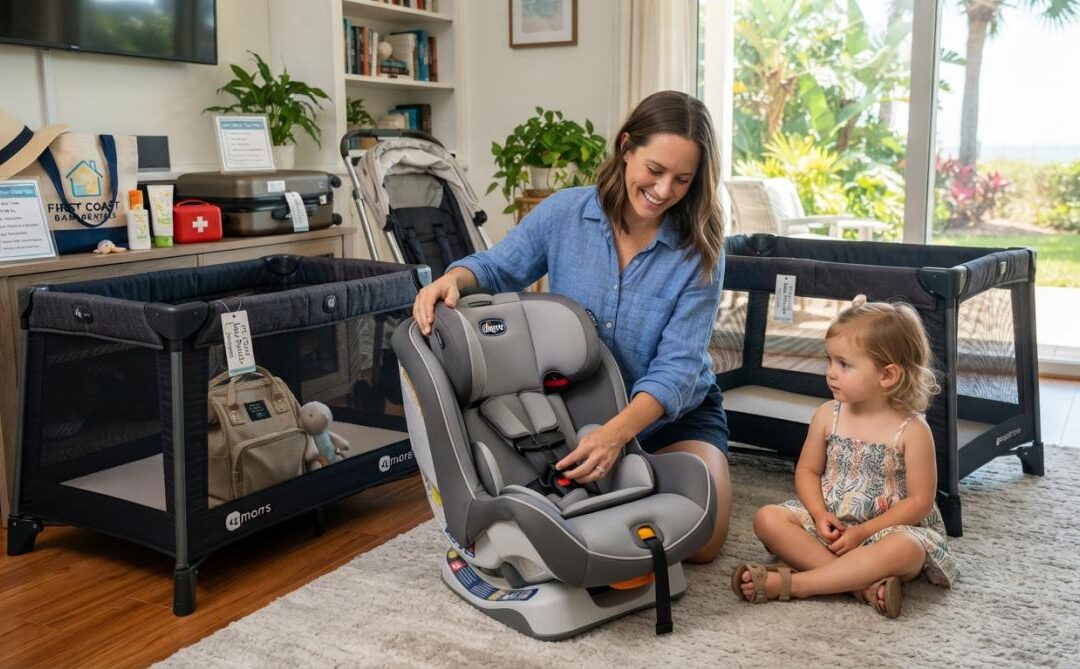
Table of Contents
- Child Safety Travel Tips for Toddlers: Where to Start
- Car Seat Safety for Toddlers Travel: Installation and Setup
- Flying with a Toddler Safety: Airport to Arrival
- Hotel Safety for Toddlers: Childproofing Your Room
- Toddler Travel Essentials Checklist: What to Pack
- Child Safety Travel Tips Beyond Flying: Road Trips and Ground Transport
- Post-Travel Health Monitoring and Wellness
- Common Travel Safety Mistakes to Avoid
Last Updated: July 29, 2026
Child Safety Travel Tips for Toddlers: Where to Start
Traveling with a toddler can feel overwhelming, but the right child safety travel tips make all the difference between a stressful trip and one you actually enjoy. At First Coast Baby Rentals, we’ve helped hundreds of Northeast Florida families navigate travel with little ones, and we know that safety concerns often top the list of parent worries. The good news? Most travel safety challenges have straightforward solutions once you know what to prioritize.
This guide covers essential child safety travel tips that actually work in real-world situations, whether you’re flying into Jacksonville Airport, driving to St. Augustine Beach, or exploring Amelia Island with your family. We’ll walk you through car seat installation, airport security with a toddler, hotel room childproofing, and the practical gear that makes travel less chaotic.
| Travel Phase | Key Safety Focus |
|---|---|
| Pre-travel planning | Medical records, documents, first-aid kit |
| Car travel | Proper car seat installation |
| Airport/flying | TSA screening, in-flight safety |
| Hotel arrival | Room hazards, outlet covers |
| Ground transport | Supervision, potty breaks |
| Post-travel | Health monitoring, rest recovery |
Car Seat Safety for Toddlers Travel: Installation and Setup
The most critical safety decision you’ll make for traveling toddlers is getting the car seat right. A properly installed rear-facing car seat is your toddler’s best protection in a vehicle.
Choosing the Right Seat for Your Trip
You have two main options: bring your own car seat or rent one locally. Bringing your own means you control the condition and know exactly how it’s installed. Renting locally saves luggage space and eliminates airport baggage hassle. If you’re flying into Jacksonville and staying in the Jacksonville Beach area or heading to Ponte Vedra, renting a car seat locally through First Coast Baby Rentals means you get a properly sanitized, inspected seat delivered directly to your rental home.
The American Academy of Pediatrics recommends rear-facing for as long as possible, ideally until your toddler reaches the height and weight limits of the seat.
If you’re renting a car seat, ask the rental service to deliver it already set up at your vacation rental. This saves you 30-45 minutes of installation time.
Installation Tips at Your Destination
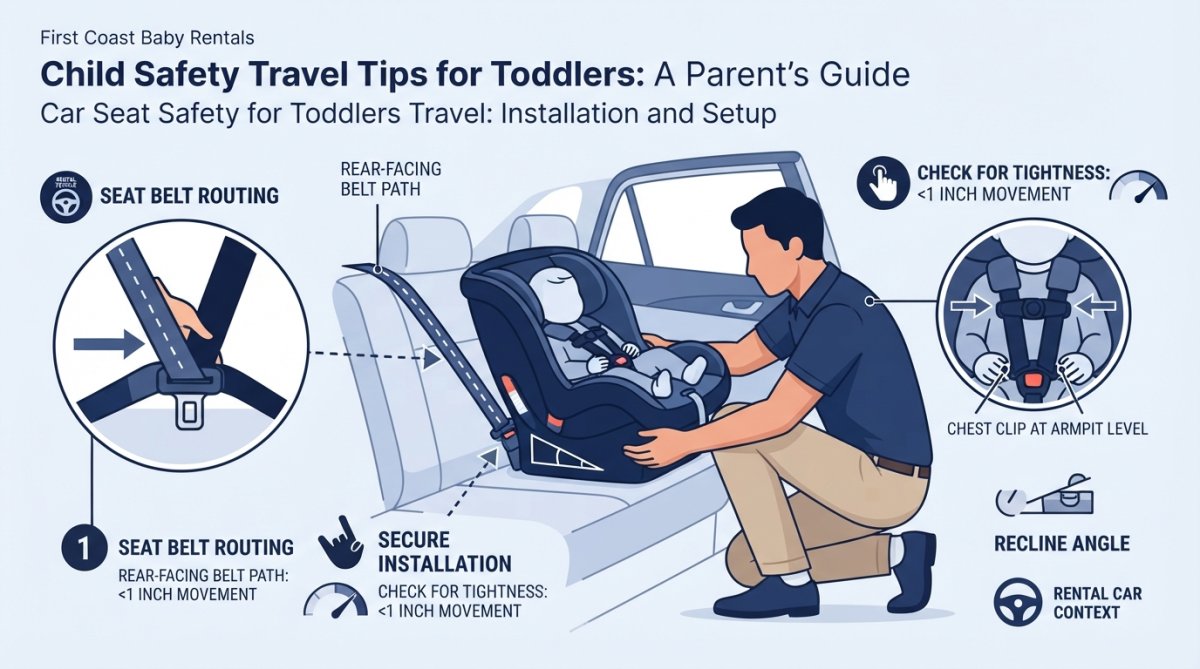
Installation mistakes are common, even among experienced parents. The most frequent error is not tightening the seat belt or LATCH connector enough. Your car seat should not move more than an inch side-to-side or front-to-back when you grab it firmly.
Here’s the step-by-step process for a rental car:
- Locate the LATCH anchors – Check your rental car’s manual or look under the seat for small metal anchors.
- Thread the car seat connectors – Attach the car seat’s LATCH connectors to the vehicle’s anchors, pulling firmly until you hear a click.
- Tighten the seat belt – If using the seat belt method, thread it through the designated path on the car seat and pull it tight.
- Recline the seat correctly – Rear-facing seats need a slight recline (about 45 degrees) to keep your toddler’s airway open.
- Test the installation – Grab the seat at the base and try moving it side to side and front to back. If it shifts significantly, tighten the connections again.
Many rental car companies in the Jacksonville and St. Augustine area have staff who can verify your installation is correct. Don’t hesitate to ask for help.
Never place a rear-facing car seat in the front passenger seat of a vehicle with an active airbag. Always use the back seat.
Flying with a Toddler Safety: Airport to Arrival
Air travel with toddlers involves multiple safety checkpoints, from TSA screening to in-flight procedures. Understanding what to expect makes the process less stressful.
TSA Screening and Security Checkpoints
The TSA allows children through security checkpoints with their parents or guardians. Children 2 and older need their own boarding pass.
Before you reach the checkpoint:
- Have your ID, boarding passes, and travel documents ready
- Wear shoes that are easy to remove
- Place liquids, gels, and electronics in an easily accessible part of your carry-on bag
- Expect to remove your toddler from the stroller and carry them through the metal detector
At the checkpoint:
- Inform TSA officers that you’re traveling with a child
- You can bring breast milk, formula, and juice for your toddler through security without it counting toward the 3.4-ounce liquid limit
- Medications and medical devices are also exempt
- Your toddler may keep shoes on if they’re difficult to remove
Pack a small snack and a drink for your toddler to consume right after security. This prevents meltdowns caused by stress and hunger.
In-Flight Safety and Comfort
Once you’re on the plane, your toddler’s safety depends on proper restraint and awareness of cabin procedures.
Seating and restraint:
- Lap children (under 2) are not required to have a seat, but the FAA recommends purchasing a seat and using an approved car seat for better safety
- If your toddler has their own seat, use an FAA-approved car seat or child safety harness designed for aircraft
- Secure your toddler before takeoff and keep them restrained during turbulence and landing
During the flight:
- Keep your toddler hydrated, airplane air is dry
- Bring a pacifier or bottle for takeoff and landing to help equalize ear pressure
- Walk the aisles periodically to let your toddler move around safely
- Keep your toddler within arm’s reach at all times
Emergency procedures:
- Listen to the safety demonstration
- Identify the nearest exit and count the rows to it
- In the unlikely event of an emergency, follow crew instructions immediately
Hotel Safety for Toddlers: Childproofing Your Room
Your hotel or vacation rental room isn’t designed with toddlers in mind. Outlets, sharp corners, heavy furniture, and unsecured cords create hazards. Spending 30 minutes childproofing when you arrive saves hours of stress and prevents injuries.
Essential Portable Safety Gear
Focus on items that address the most common hotel hazards:
- Outlet covers or plug adapters
- Door stopper or door lock
- Cord wraps or clips
- Furniture straps
- Bed rail or pool noodle
- First-aid kit with bandages, antibiotic ointment, pain reliever, and medications
Many families traveling to St. Augustine, Jacksonville Beach, or Amelia Island find it easier to rent a crib and safety gear locally rather than packing it. First Coast Baby Rentals delivers sanitized, inspected equipment directly to your vacation rental, so you arrive to a childproofed space ready for your family.
Take photos of your hotel room before childproofing. When you leave, you’ll remember exactly what to remove and restore to its original state.
Room-by-Room Safety Checklist
Bedroom:
- Check the crib for recalls and proper mattress fit
- Ensure the crib mattress is firm and fitted sheets are secure
- Remove pillows, blankets, and bumper pads
- Test the door lock so your toddler can’t wander at night
- Keep a nightlight plugged in for safe navigation
Bathroom:
- Lock the bathroom door or use a door stop to prevent access
- Secure the toilet lid with a lock if your toddler will use the bathroom
- Keep all medications, cleaning supplies, and toiletries out of reach
- Test water temperature before your toddler uses the shower or tub
Main living area:
- Secure all cords from lamps, TVs, and electronics
- Check for sharp table corners and pad them if possible
- Move breakable items to high shelves
- Ensure windows and sliding doors have locks your toddler can’t operate
- Keep the balcony or patio door locked if you’re on an upper floor
Toddler Travel Essentials Checklist: What to Pack
Packing smart means bringing what you actually need without overstuffing your luggage. Focus on health, safety, and comfort items that are harder to find at your destination.
Health and Medical Documents
Before you travel, gather these documents and store them in a waterproof folder or digital backup:
- Birth certificate or passport
- Insurance card and policy information
- Vaccination records
- Medical history summary with allergies and medications
- Pediatrician contact information
- Emergency contacts
- Prescription medications (bring enough for your entire trip plus a few extra days)
If you’re traveling to Northeast Florida and your toddler gets sick, most Jacksonville, St. Augustine, and Amelia Island areas have pediatric urgent care clinics that accept walk-ins.
First-Aid and Emergency Supplies
A small, portable first-aid kit covers most minor injuries and illnesses:
- Adhesive bandages in various sizes
- Antibiotic ointment
- Hydrocortisone cream for itching
- Pain reliever (acetaminophen or ibuprofen, dosed for your toddler’s weight)
- Antihistamine for allergic reactions
- Antidiarrheal medication
- Thermometer (digital is fastest)
- Tweezers for splinters
- Gauze pads and medical tape
- Ice pack
- Saline nasal drops for congestion
- Sunscreen (SPF 30+) and insect repellent
Beyond first-aid, pack these essentials:
- Extra clothes (more than you think you’ll need)
- Diapers and wipes
- Diaper rash cream
- Hand sanitizer and wet wipes
- Daily medications
- Comfort items (favorite stuffed animal, blanket, or pacifier)
- Recent photo of your toddler (in case they get lost)
Child Safety Travel Tips Beyond Flying: Road Trips and Ground Transport
Road trips, trains, and buses present their own safety challenges and require different strategies.
Road Trip Safety Essentials
Car travel is statistically safer than flying, but proper preparation matters. Car seat installation is just as critical on a highway as it is in a rental car at your destination.
Before you drive:
- Have your vehicle inspected for mechanical issues
- Check tire pressure and tread depth
- Ensure your car seat is properly installed before you leave home
- Plan your route and identify rest stops
During the drive:
- Take breaks every 2 hours to let your toddler move around
- Never leave your toddler alone in the car
- Keep your toddler restrained in their car seat at all times
- Pack snacks and water to prevent hunger-related meltdowns
- Maintain a comfortable temperature in the vehicle
Managing potty breaks:
- Identify family-friendly rest stops along your route before you travel
- Use pull-ups or diapers if your toddler is potty training
- When you stop, supervise your toddler closely in rest stop bathrooms
- Bring a portable potty seat or seat reducer
- Hand sanitizer and wet wipes are essential after bathroom stops
If you’re driving from Jacksonville to St. Augustine or exploring the beaches around Vilano and Fernandina, the drive is short enough that most toddlers handle it well.
Never use a car seat as a substitute for a crib or bed. Once you reach your destination, transfer your sleeping toddler to a proper crib or bed to reduce SIDS risk.
Managing Potty Breaks and Diaper Changes
Potty breaks and diaper changes during travel require planning to keep your toddler safe and comfortable.
Diaper changes in public:
- Use a portable changing pad to create a clean surface
- Bring a waterproof bag for soiled diapers
- Wash your hands and your toddler’s hands after every diaper change
- If you’re traveling with a partner, take turns so one adult can supervise
Potty training during travel:
- If your toddler is newly potty trained, consider using pull-ups during travel
- Bring a portable potty seat or seat reducer
- Keep a change of clothes easily accessible
- Praise your toddler for trying, even if accidents happen
Hand washing and hygiene:
- Carry hand sanitizer and wet wipes
- Teach your toddler to wash hands after using the bathroom and before eating
- Avoid touching your face or eating until you’ve washed your hands
Post-Travel Health Monitoring and Wellness
The days and weeks after travel are when many toddlers develop illness symptoms. Parents often miss early signs because they’re focused on unpacking and returning to routine.
What to watch for in the first week:
- Fever, cough, or congestion
- Diarrhea or vomiting
- Rashes or skin irritation
- Behavioral changes
- Ear infections
If your toddler develops symptoms:
- Take their temperature and monitor for 24-48 hours
- Contact your pediatrician if fever persists, symptoms worsen, or your toddler seems unusually lethargic
- Keep your toddler hydrated
- Avoid new foods or activities that might complicate diagnosis
Resuming routine:
- Return to your normal sleep schedule gradually, shifting bedtime by 15-30 minutes per day if you crossed time zones
- Reintroduce your home environment slowly
- Maintain familiar routines to help your toddler readjust
- Give yourself grace, you’ve just traveled with a toddler
Common Travel Safety Mistakes to Avoid
Parents make predictable mistakes when traveling with toddlers. Knowing what to avoid helps you sidestep unnecessary stress and danger.
Mistake 1: Improper car seat installation
Grab the seat at the base and try moving it side to side and front to back. If it shifts more than an inch, it’s not tight enough.
Mistake 2: Packing too much gear
Rent what you can locally. Car seats, cribs, strollers, and beach gear are all available through services in Northeast Florida.
Mistake 3: Skipping the childproofing step
Spend 30 minutes securing outlets, cords, and furniture before your toddler explores.
Mistake 4: Ignoring sleep schedules
Maintain bedtimes and nap times as closely as possible. A well-rested toddler is a safer, happier toddler.
Mistake 5: Forgetting medications or medical documents
Pack everything and bring copies of all documents. If your toddler gets sick, you’ll be grateful you did.
Mistake 6: Letting your guard down in "safe" environments
Hotels, beaches, and family-friendly attractions feel safe, but they’re still unfamiliar environments. Keep your toddler within arm’s reach in crowds.
Mistake 7: Traveling while your toddler is sick
If your toddler has a fever, active diarrhea, or a contagious illness, postponing travel is usually the safer choice.
Frequently Asked Questions
What are the most important child safety travel tips for flying with a toddler?
The top priorities are securing a rear-facing car seat for ground transport, preparing your toddler for TSA screening by removing shoes and having travel documents ready, and bringing a first-aid kit with essential medications. Keep emergency contacts and pediatrician information accessible. Arrive early to avoid rushing, which increases stress and safety oversights. Pack familiar comfort items to reduce anxiety during the flight itself.
How do I ensure my toddler's safety in a hotel room when traveling?
Start by doing a thorough childproofing check: secure furniture to walls, cover electrical outlets, lock bathroom doors, and remove hazardous items. Use portable door locks and outlet covers, these are lightweight, affordable safety gear that fit in carry-on baggage. Keep your child supervised at all times, especially near balconies and windows. Request a crib or portable pack n play from your hotel, or rent sanitized equipment delivered directly to your room for peace of mind.
What should a toddler travel essentials checklist include for safety?
Your checklist must include vaccination records, medical insurance information, a copy of your pediatrician's contact details, and any prescription medications in original labeled containers. Pack a first-aid kit with bandages, pain reliever, anti-diarrhea medication, and any allergy medications. Include copies of your child's birth certificate and ID. Don't forget hydration supplies, healthy snacks, and a portable thermometer. Keep these items in a clearly labeled bag that travels with you, not in checked luggage.
How do I handle car seat safety when renting a car or using rideshare services?
If flying, you can either bring your own rear-facing car seat or rent one at your destination, many rental companies offer them, though quality varies. For rideshare services, check local regulations; some areas require car seats for toddlers. When installing, ensure the seat belt is routed correctly and the seat doesn't move more than an inch side-to-side. If you're staying in Northeast Florida, First Coast Baby Rentals delivers sanitized, inspected car seats directly to Jacksonville airport, your hotel, or vacation rental, eliminating the hassle of installation and ensuring your child travels safely from arrival.
This article was written using GrandRanker