Table of Contents
- How Baby Equipment Rental for Vacation Homes Works
- Is It Safe to Rent Baby Gear? Sanitization and Safety Standards Explained
- Baby Gear Rental Services: What’s Available in Northeast Florida
- Renting vs. Buying Cheap Gear: Which Makes More Sense for Your Trip?
- What to Rent vs. What to Bring: A Vacation Checklist for Traveling Parents
- Baby Equipment Rental Cost: What to Expect and How to Budget
- How to Reserve Baby Equipment Rental for Your Vacation Home in Northeast Florida
- Conclusion
Last Updated: May 24, 2026
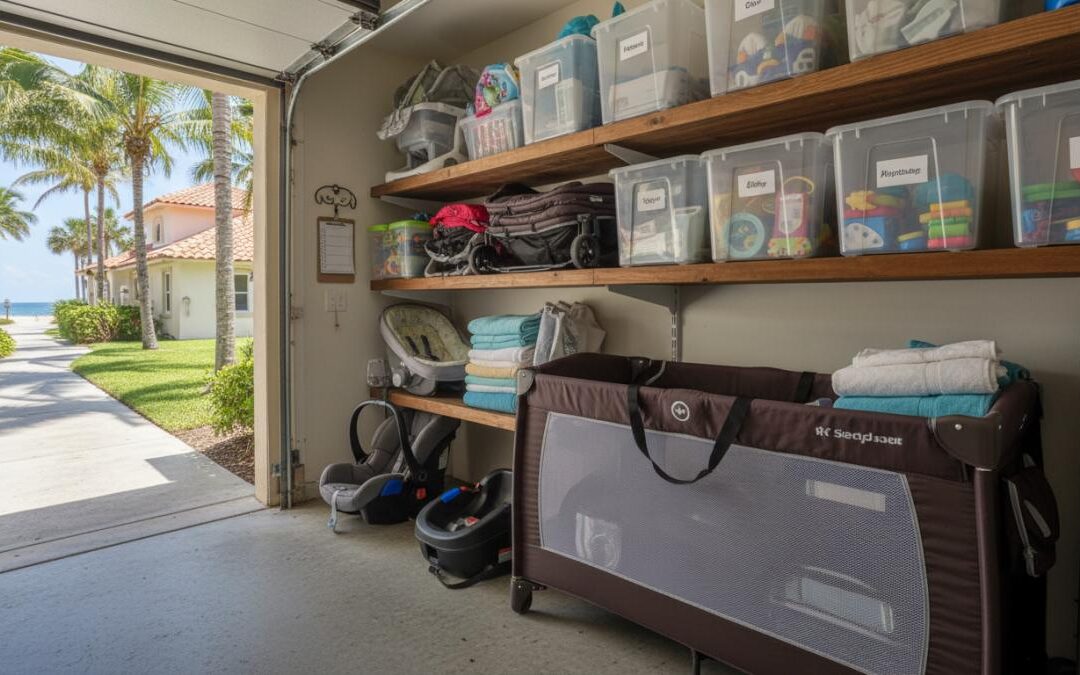
Packing for a vacation with a baby is one of those experiences that turns a simple trip into a logistical puzzle. Baby equipment rental for vacation homes solves that problem directly: instead of hauling a full-size crib, stroller, and high chair through airports and loading docks, you arrive light and find everything already set up at your rental. First Coast Baby Rentals has helped hundreds of families do exactly this across Northeast Florida, delivering sanitized, high-quality gear directly to Airbnb and Vrbo properties so parents can actually enjoy their vacation.
Here’s what most guides on this topic get wrong: they treat baby gear rental as a luxury convenience. It’s not. For families flying into Jacksonville or driving to Saint Augustine for a week at the beach, renting is often the smarter, safer, and more comfortable choice compared to packing secondhand gear or buying cheap equipment that gets tossed after the trip. Below, we’ll walk through exactly how the process works, what gear is available, how safety standards hold up, and how to book everything before your trip.
According to AAP safe sleep guidelines for infants, babies should sleep on a firm, flat surface in their own designated sleep space. A full-size rental crib with a certified mattress meets that standard in a way that a hotel pack-and-play or a borrowed portable crib often does not. That distinction matters more than most traveling parents realize before their first trip.
How Baby Equipment Rental for Vacation Homes Works
Baby equipment rental for vacation homes is a concierge-style service where a local provider delivers, sets up, and later retrieves baby gear directly at your vacation rental property. There is no warehouse pickup, no assembly confusion, and no equipment crammed into your rental car.
The basic flow is straightforward: browse a rental catalog, select the items you need, choose a delivery window, and provide your vacation rental address. A delivery team handles the rest. When your rental period ends, they return during your pickup window and remove everything.
What most guides on this topic never explain is the part that actually causes stress for parents: coordinating delivery with a vacation rental property you’ve never visited, managed by a host you’ve never met, using a check-in system you only received instructions for 48 hours ago. Here is how to handle that friction point specifically.
The Airbnb and Vrbo Coordination Problem, and How to Solve It
Vacation rentals are not hotels. There is no front desk to accept a delivery, no bellhop to let someone into the room, and no standardized check-in time. Airbnb and Vrbo properties use a range of access methods, keyboxes, smart locks with rotating codes, on-site property managers, or hosts who live nearby and meet guests in person. Each of these creates a different coordination scenario for your gear provider.
Scenario 1: Keybox or smart lock with a code.
This is the most common setup and the easiest to coordinate. When you book your gear, share the lockbox code or smart lock code with your provider along with your check-in time. A reputable local provider can schedule delivery during the window between the previous guest’s checkout and your arrival, set everything up inside the property, and lock up behind themselves, so the crib is made and the high chair is assembled before you walk through the door. Confirm with your Airbnb or Vrbo host that they are comfortable with a third-party vendor accessing the property for setup. Most hosts agree readily when you explain it is a baby gear delivery service; framing it as a service for their guests rather than an unknown visitor helps.
Scenario 2: Property managed by a local management company.
Many vacation rentals in Northeast Florida, particularly larger homes in Ponte Vedra, Amelia Island, and Fernandina Beach, are managed by professional property management companies rather than individual hosts. In this case, contact the management company directly (their number is usually in your booking confirmation) and ask them to coordinate access for your gear provider. Property managers deal with vendor access regularly for cleaning crews, maintenance, and pool services. A baby gear delivery is a familiar type of request. Ask the management company for a direct contact name and number, and pass that to your gear provider at the time of booking.
Scenario 3: Host-managed property with no early access.
Some hosts do not allow access before your official check-in time, even for vendors. In this case, schedule your gear delivery for the first hour of your check-in window. You or another adult in your party can be present to let the delivery team in. This adds a small coordination step but is still far simpler than hauling gear through an airport. Communicate your check-in time precisely, most local providers build their delivery routes around confirmed windows and can guarantee arrival within a one- to two-hour slot.
Scenario 4: Condo buildings with security desks or elevator access requirements.
Beach condos in Saint Augustine Beach, Jacksonville Beach, and Vilano Beach sometimes require vendors to check in with a front desk or security station before accessing units. When you book, ask your provider whether they have experience with the specific building or complex. Providers who serve a region regularly often know the access procedures for popular condo buildings. If not, call the building’s front desk yourself, explain that a baby gear delivery service will be arriving, and ask what they need, usually a name, a vehicle description, and a unit number.
When you book your gear rental, send your provider a single message that includes: (1) your vacation rental address and unit number, (2) your check-in date and time, (3) your access method (keybox code, smart lock code, or host contact), and (4) any building-specific instructions. Providers who serve Airbnb and Vrbo guests regularly have a checklist for this, but giving them everything upfront in one message eliminates back-and-forth and reduces the chance of a scheduling gap.
What to Tell Your Airbnb or Vrbo Host Before Booking Gear
Most hosts are supportive of baby gear deliveries, but a brief message through the Airbnb or Vrbo platform before your trip removes any ambiguity. A simple note works well:
"We’re traveling with a young child and have arranged for a local baby gear rental company to deliver a crib and a few other items before our arrival. They are a licensed local business and will handle setup and removal. Would you be comfortable sharing access instructions with them, or is there a property manager I should contact?"
This message accomplishes three things: it signals that you are a responsible guest, it gives the host a chance to flag any access restrictions before your trip rather than on arrival day, and it opens the conversation about whether a property manager is the right point of contact.
Delivery and Setup at Your Vacation Rental
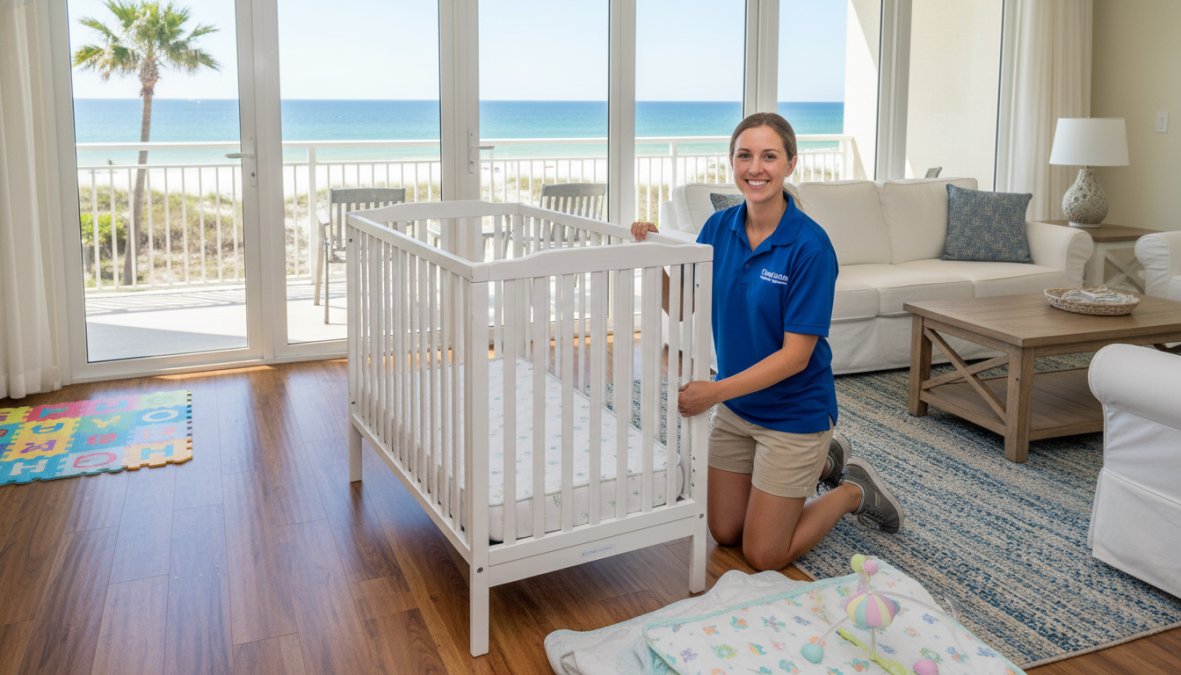
Delivery is not just drop-off. A professional setup means the crib is assembled, the mattress sheet is on, the high chair tray is locked in, and the stroller is unfolded and ready. First Coast Baby Rentals handles delivery and full setup at vacation properties throughout the Saint Augustine area, Jacksonville Beach, Ponte Vedra, Amelia Island, Fernandina Beach, Nocatee, Vilano Beach, and surrounding Northeast Florida communities.
Families flying into Jacksonville Airport can also arrange car seat rental for the drive from the airport, which eliminates one of the most stressful parts of traveling with a young child.
Pickup Window and Extending Your Rental Period
Pickup works the same way: you agree on a window, and the team retrieves the gear without you needing to be present. One practical advantage that often surprises families: rental periods can be extended. If a tropical storm rolls through Saint Augustine mid-week and you decide to stay an extra few days, extending your rental is typically a simple call or message rather than a complicated rebooking process. First Coast Baby Rentals builds this flexibility in specifically for Florida’s unpredictable weather.
The coordination step most parents overlook is not booking the gear, it is making sure the gear can actually get into the property before they arrive. Solve that with one message to your host and one message to your provider, and the rest of the process runs itself.
Is It Safe to Rent Baby Gear? Sanitization and Safety Standards Explained
Renting baby gear is safe when the provider follows documented inspection and sanitization protocols before every delivery. The key phrase is before every delivery, not once when the item is purchased, and not only when visible soiling is present. A reputable provider treats every rental turnover as a full reset.
Parent anxiety about rented baby gear is legitimate and worth addressing directly. The concern is not irrational: gear that has been used by multiple families, stored in a warehouse, and transported in a delivery vehicle could carry bacteria, allergens, or residue from cleaning products that are not safe for infant skin. The answer to that concern is not reassurance, it is a specific, transparent protocol. Here is what a responsible sanitization process actually looks like, step by step.
Step 1: Structural Inspection Before Cleaning Begins
Before any cleaning happens, every item is inspected for physical integrity. This matters because a structurally compromised item should not be cleaned and re-rented, it should be retired. The inspection covers:
- Cribs: Slat spacing is checked against current federal standards (slats must be no more than 2-3/8 inches apart). Corner posts, mattress support hardware, and drop-side mechanisms (which are now federally banned on new cribs) are checked. Any crib with cracked wood, loose hardware, or non-compliant slat spacing is removed from inventory.
- Car seats: The harness webbing is inspected for fraying, cuts, or stiffness that could indicate UV degradation. The chest clip, buckle release, and LATCH connectors are tested for proper function. The shell is inspected for cracks. The manufacture date is confirmed, most car seat manufacturers set a useful life of six to ten years from manufacture, and seats approaching or past that window are retired. Any seat involved in a collision, even a minor one, is permanently removed from service.
- Strollers: Frame joints, wheel locks, harness buckles, and canopy attachments are checked. Folding mechanisms are tested to confirm they engage and release correctly.
- High chairs: Tray latch mechanisms, harness straps, and base stability are tested before cleaning.
Step 2: Fabric and Soft Component Cleaning
Fabric components, crib sheets, car seat padding, stroller seat liners, high chair harness straps, and bouncer covers, are removed and machine washed separately from hard components. The wash protocol for a responsible provider uses fragrance-free, dye-free detergent formulated for infant use. Fragrance-free matters specifically because synthetic fragrances are among the more common contact irritants for infant skin, and a baby spending hours in a car seat or sleeping in a crib is in prolonged contact with those fabrics.
Wash temperature is set to the highest temperature the fabric manufacturer recommends to maximize pathogen reduction without damaging the material. Items are dried fully before reassembly, residual moisture in padding or foam creates conditions for mold growth, which is a more serious hygiene concern than surface bacteria.
For items where fabric components cannot be fully removed, some stroller harness systems, for example, those areas are cleaned with a diluted baby-safe disinfectant solution and allowed to air dry completely before the item is packed for delivery.
Step 3: Hard Surface Disinfection
Hard surfaces, crib frames, high chair trays, stroller frames, car seat shells, and bouncer bases, are wiped down with a disinfectant solution that is effective against common household pathogens but does not leave a residue that would be harmful if a baby mouths the surface. Many providers use hospital-grade disinfectant wipes or sprays for this step, followed by a clean-water wipe-down to remove any residue before the item dries.
High chair trays receive particular attention because they are food-contact surfaces. The tray, tray edges, and any crevices around the tray latch are cleaned and rinsed.
Step 4: Mattress Protocol
Crib mattresses are one of the highest-anxiety items for parents renting baby gear, and for good reason, a baby spends more time on a mattress than on any other piece of rental equipment. The protocol for a responsible provider:
- The waterproof cover is inspected for any punctures, tears, or delamination. A compromised waterproof cover allows moisture and biological material to reach the foam core, which cannot be effectively sanitized. Any mattress with a damaged cover is retired.
- The cover surface is disinfected and wiped clean.
- A fresh, laundered fitted sheet is applied before delivery.
Many providers, including First Coast Baby Rentals, stock mattresses that are new or near-new, which removes the multi-family history concern entirely for families who want the highest confidence level.
Step 5: Recall Compliance Check
Every item is cross-referenced against the CPSC recall database before each rental period. According to CPSC product safety recall database, baby and juvenile product recalls are issued regularly throughout the year, and a recall can be issued for an item that was compliant at the time of purchase. A provider who checked for recalls at purchase but not before each rental could unknowingly deliver a recalled item. The check should happen at every turnover, not just at acquisition.
Never accept rental gear from a provider who cannot describe their sanitization process in specific terms or confirm when each item was last inspected against current recall lists. Vague answers like “we clean everything thoroughly” are not a protocol, they are a liability. Ask specifically: What detergent do you use on fabric components? How do you handle mattresses between rentals? When was this item last checked against the CPSC recall database?
What to Ask Any Baby Gear Rental Provider Before You Book
The sanitization questions worth asking directly:
- What detergent do you use on fabric components, and is it fragrance-free?
- How do you handle mattresses between rentals, do you inspect the waterproof cover each time?
- Do you check items against the CPSC recall database before each rental, or only at purchase?
- For car seats: what is the manufacture date of the seat I’ll be receiving, and has it been in any collision?
- Are any items in my order new or near-new?
A provider with a real protocol will answer these questions without hesitation. A provider who becomes evasive or cannot give specific answers is telling you something important about their process.
Car seat safety deserves a final specific note. Car seats have expiration dates printed on the seat itself, typically on a sticker on the base or shell. A seat that has been in a collision, even a low-speed impact with no visible damage, must be retired under the guidelines of most major car seat manufacturers, because the structural integrity of the shell and harness anchor points cannot be visually confirmed after impact. Any provider renting car seats in Jacksonville, at Jacksonville Airport, or in Saint Augustine should be able to confirm the manufacture date and attest that the seat has not been in a collision. If they cannot, do not accept the seat.
Baby Gear Rental Services: What’s Available in Northeast Florida
The rental catalog for Northeast Florida families covers nearly every piece of gear a traveling parent would need for a beach vacation or extended stay.
Sleep Gear: Full-Size Cribs, Pack n Plays, and Snoo Rentals
Sleep gear is the most requested category for good reason. A full-size crib with a firm mattress provides the safest sleep environment for infants and is far more comfortable for toddlers than a cramped pack-and-play. Families staying in larger vacation homes near Ponte Vedra or Amelia Island often request two cribs for siblings at different stages.
Snoo rentals are available in Saint Augustine, Ponte Vedra, Jacksonville, and Amelia Island. The Snoo is a responsive bassinet that uses motion and sound to settle infants, and renting one for a week-long trip rather than traveling with one (or buying a second unit) makes practical sense for families who rely on it at home.
Pack n Plays remain a popular option for shorter trips or families who need a second sleep space for a toddler rather than a full crib.
Strollers, Car Seats, High Chairs, and Beach Gear
The stroller selection covers a range of needs. UPPAbaby rentals are available in Saint Augustine and Jacksonville Beach for families who want a full-featured travel system. BOB stroller rentals in Saint Augustine and Fernandina Beach serve families who plan to walk beach paths or trails. City Mini rentals in Ponte Vedra and Amelia Island are popular for their lightweight fold. Nuna and Doona rentals round out the catalog for families who want an integrated car seat and stroller solution.
High chair rental in Saint Augustine, Amelia Island, and Ponte Vedra covers standard full-size high chairs as well as clip-on options for vacation homes with bar-height seating.
Beach gear includes wagons, beach tents, and shade solutions. A beach wagon rental in Saint Augustine or Fernandina Beach means you can haul everything from the parking lot to the shoreline without breaking your back or your budget.
Renting vs. Buying Cheap Gear: Which Makes More Sense for Your Trip?
The honest answer is that buying cheap gear for a single trip is almost never the better choice, and the math is not close.
A budget-priced pack-and-play from a big-box store typically costs more than a week’s rental for the same item. After the trip, you’re left with gear you need to store, donate, or discard. If you fly, you’ve also paid to check it or wrestled it through an airport. The "savings" disappear quickly.
More importantly, cheap gear is often cheap for a reason. Budget cribs and travel strollers frequently use lower-grade materials, have less stable frames, and may not meet current safety standards. As documented in Consumer Reports guide to baby product safety, lower-priced baby products show higher rates of safety complaints and structural failures than mid-range and premium options.
| Option | Upfront Cost | Ongoing Hassle | Safety Certainty | Best For |
|---|---|---|---|---|
| Rent from local provider | Rental fee only | None | High (inspected) | Most families |
| Buy cheap gear for trip | Purchase price | Storage/disposal | Variable | Almost no one |
| Pack gear from home | Airline fees + effort | High | High | Short drives only |
| Borrow from friends | Free | Coordination | Unknown | If source is trusted |
Renting from a vetted local provider wins on convenience, safety, and total cost for the vast majority of families flying into Northeast Florida or making a beach trip from out of state.
What to Rent vs. What to Bring: A Vacation Checklist for Traveling Parents
The most practical framework is simple: bring what is small, personal, and irreplaceable. Rent what is bulky, regulated, or location-specific.
Rent these items:
- Full-size crib or pack-and-play
- Car seat (especially for airport arrivals in Jacksonville)
- Stroller
- High chair
- Bouncer or swing
- Beach wagon
- Beach shade tent
Bring these items:
- Baby monitor (familiar device, no setup learning curve)
- Sound machine (small, personal preference)
- Baby carrier or wrap (fits in a carry-on)
- Bottles, pacifiers, and feeding supplies
- Medications and first aid kit
- Favorite comfort items and sleep toys
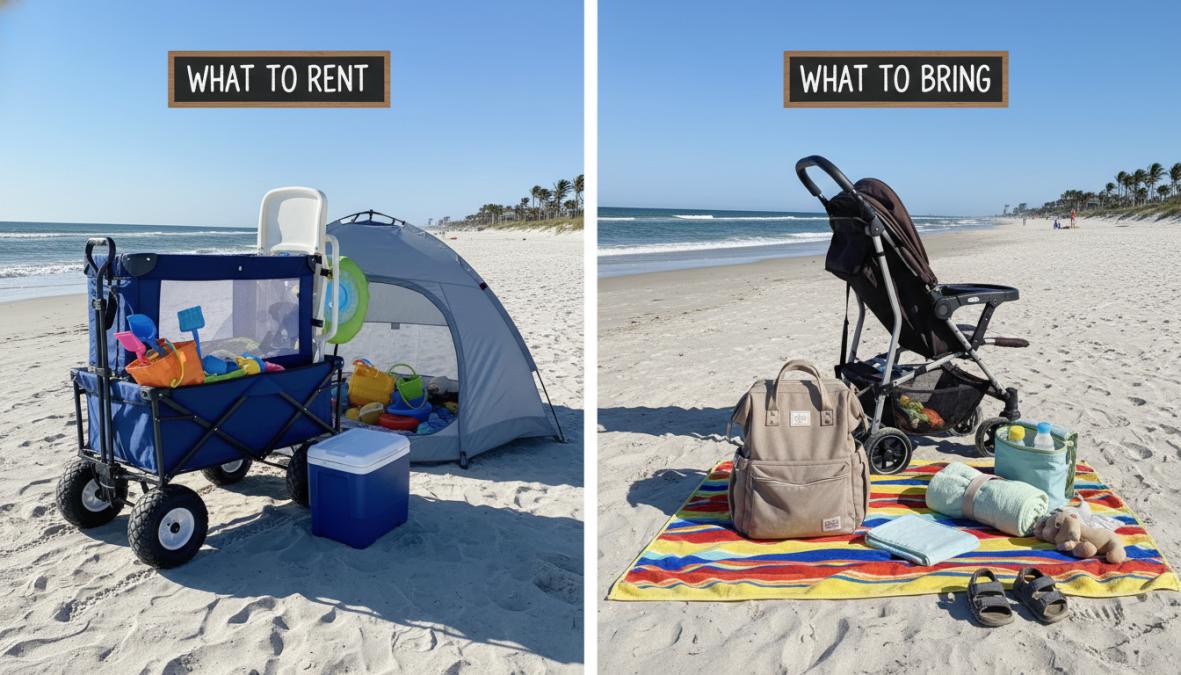
The checklist above reflects what families in Saint Augustine and along the First Coast consistently find works best. The items in the "rent" column are the ones that cause the most stress at airport security, take up the most cargo space, and are most subject to airline damage. The items in the "bring" column are the ones where familiarity matters most for a baby’s comfort and routine.
The single best travel hack for families with infants is renting the sleep gear. A baby who sleeps well in a proper crib sleeps better on vacation, which means parents sleep better too. Everything else is secondary.
Baby Equipment Rental Cost: What to Expect and How to Budget
Baby equipment rental cost varies by item type, rental duration, and provider, but the general structure is a per-item daily or weekly rate with a delivery fee.
Sleep gear like full-size cribs and Snoos typically carries the highest weekly rate given the size and value of the equipment. Strollers and car seats fall in the mid-range. Beach gear and smaller items like bouncers tend to be the most affordable.
Most families renting for a week find that bundling multiple items from a single provider costs less than renting items individually or from multiple sources. A provider like First Coast Baby Rentals covering gear delivery to Saint Augustine, Ponte Vedra, Amelia Island, and surrounding areas can consolidate everything into one delivery, one pickup, and one invoice.
A few cost considerations worth planning for:
- Delivery fee: Usually a flat fee based on distance or zone. Confirm whether setup is included.
- Rental period: Defined in days. Know your check-in and check-out dates before booking.
- Extension fee: If you extend your stay, confirm the per-day rate for extending the rental period.
- Last-minute booking: Some providers accommodate last-minute reservations, though availability varies by season. Northeast Florida’s peak beach season means popular items like Snoos and UPPAbaby strollers book out quickly.
According to AAA travel cost research for family vacations, families consistently underestimate the cost of traveling with young children, particularly for gear-related expenses. Budgeting for rental equipment upfront is more accurate than assuming you’ll "figure it out" on arrival.
How to Reserve Baby Equipment Rental for Your Vacation Home in Northeast Florida
Reserving baby gear for a vacation home rental takes about five minutes once you know what you need.
Step 1: Confirm your rental dates and property address.
You need the exact check-in date, check-out date, and vacation rental address. If your Airbnb or Vrbo has a keybox or specific check-in instructions, have those ready.
Step 2: Review the rental catalog and select your items.
Decide which items you need based on your baby’s age, the length of your stay, and your planned activities. A week at Saint Augustine Beach with a six-month-old typically needs a crib, high chair, stroller, and beach wagon at minimum.
Step 3: Choose your delivery and pickup windows.
Coordinate with your vacation rental’s check-in time. Ideally, gear arrives before or shortly after you do.
Step 4: Confirm delivery area.
First Coast Baby Rentals serves Saint Augustine, Saint Augustine Beach, Vilano Beach, Ponte Vedra, Jacksonville Beach, Jacksonville, Jacksonville Airport, Fernandina Beach, Amelia Island, Nocatee, and surrounding Northeast Florida communities. Confirm your address falls within the service area at booking.
Step 5: Reserve your gear.
Complete your reservation through the booking link. For last-minute trips, call or message directly to confirm availability before assuming items are open.
Step 6: Communicate any property access details.
If your vacation rental requires coordination with a property manager for entry, share that information with your provider at booking so setup can happen smoothly.
The entire process is designed to be hassle-free for traveling parents. The goal is simple: you arrive at your Saint Augustine or Ponte Vedra vacation home and everything is already set up, sanitized, and ready.
Coordinating baby gear for a beach vacation is genuinely one of the harder parts of traveling with little ones, and most families only figure out the right system after one stressful trip of overpacking or underpreparing. First Coast Baby Rentals removes that friction entirely: gear is delivered, set up, inspected, and sanitized before you arrive, with the flexibility to extend your rental if your plans change. Reserve your gear before your next Northeast Florida trip and spend your energy on the vacation itself, not the logistics.
Frequently Asked Questions
Is it worth renting baby equipment for a vacation?
For most traveling parents, baby equipment rental for vacation homes is absolutely worth it. Renting eliminates the hassle of checking bulky gear at the airport, avoids airline fees, and ensures you arrive with everything your baby needs already set up at your destination. Quality rental providers deliver sanitized, inspected gear directly to your vacation rental, so you can travel light and vacation right without sacrificing your child's comfort or safety.
Can baby equipment rental companies deliver directly to vacation homes like Airbnbs or Vrbos?
Yes, reputable baby gear rental services are specifically designed to deliver to vacation rentals, including Airbnb and Vrbo properties. You simply provide the address and a preferred delivery window, and the provider coordinates directly with you or the property host. Gear is set up before you arrive when possible. In Northeast Florida, First Coast Baby Rentals delivers and sets up equipment at your vacation rental across Saint Augustine, Amelia Island, Ponte Vedra, and surrounding areas.
Is it safe to rent baby gear like cribs and car seats?
Safety is the top concern for any traveling parent considering baby gear rental services. Trustworthy providers thoroughly sanitize and inspect every item before each delivery, retire gear that shows wear or recalls, and only offer equipment that meets current safety standards. First Coast Baby Rentals delivers items that are spotless, often brand-new, and fully inspected. Always confirm that any rental provider follows strict sanitization protocols and replaces gear that no longer meets safety guidelines.
How far in advance should I book baby equipment rental for my vacation?
Booking as early as possible is recommended, especially during peak travel seasons in Northeast Florida. That said, some providers, including First Coast Baby Rentals, can accommodate last-minute reservations when availability allows. To guarantee your preferred items like a full-size crib, UPPAbaby stroller, or Snoo rental, aim to reserve your gear at least one to two weeks before your arrival date. Early booking also gives you more flexibility to customize your rental catalog.
What baby equipment should I rent for a vacation rental?
The most commonly rented items include full-size cribs or Pack n Plays for sleep, high chairs for mealtimes, strollers for outings, and car seats for airport pickups or local travel. Beach-going families in Northeast Florida often add beach wagons, bouncers, and swings to their order. A good rule of thumb: rent anything large, heavy, or difficult to travel with, and bring only everyday essentials like feeding supplies, clothing, and favorite comfort items from home.
This article was written using GrandRanker