
Table of Contents
- Essential Grandparents Hosting Grandchildren Gear: Where to Start
- Sleep Solutions: Portable Cribs, Playards, and Baby Monitors
- Feeding Gear and High Chair Recommendations for Grandparents
- Babyproofing for Grandparents: Room-by-Room Safety Checklist
- Grandparent Car Seat Safety Rules Every Family Should Know
- Activities for Grandkids at Grandparents House: Bonding Through Play
- Grandparents Hosting Grandchildren Gear: Smart Storage and Tech Support
- Conclusion
Last Updated: May 26, 2026
Hosting grandchildren is one of the most rewarding things a grandparent can do, but it requires the right grandparents hosting grandchildren gear to keep little ones safe, comfortable, and happy. First Coast Baby Rentals has helped countless families across Northeast Florida prepare their homes and vacation rentals for grandkids of every age, and the single biggest mistake we see is grandparents either over-buying gear they rarely use or skipping critical safety items entirely. Below, we’ll show you exactly what to prioritize, what to skip, and how to set up a grandparent-ready home without breaking the bank or filling every corner with equipment.
The throughline here is simple: smart grandparents hosting grandchildren gear decisions come down to matching equipment to the child’s developmental stage, the duration of the visit, and the space you have available. Get that right, and everything else follows.
Essential Grandparents Hosting Grandchildren Gear: Where to Start
Most guides dump a 40-item checklist on you and call it a day. That approach is wrong. Start with the three categories that affect safety and sleep above everything else: a safe sleep surface, a feeding station, and basic childproofing supplies. Everything else is secondary.
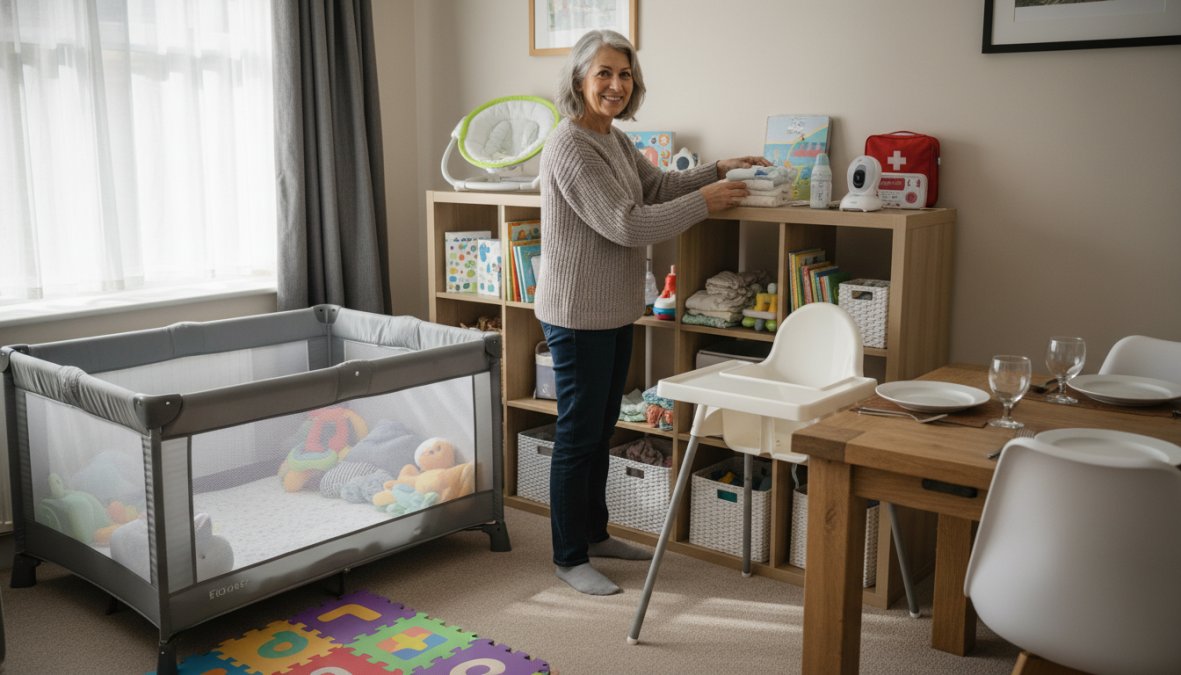
Grandparents hosting grandchildren gear for a first visit should focus on a "starter layer" rather than a full nursery overhaul. A playard doubles as a safe sleep space and a contained play area. A compact high chair handles feeding. A basic baby monitor gives you peace of mind across the house. These three items cover the majority of real needs for visiting grandchildren under age three.
The gear list expands as the child’s developmental stage changes. A crawler needs floor padding and cabinet locks. A toddler needs stair gates and outlet covers. A school-age child needs age-appropriate outdoor toys and a stroller for longer outings. Build your kit in layers rather than buying everything at once.
According to the American Academy of Pediatrics safe sleep guidelines, infants should always sleep on a firm, flat surface free of soft bedding, which means a proper playard or portable crib is non-negotiable, not optional.
Budget-Friendly Starter Kits: What to Buy First
The "starter kit" concept is the most practical framework for grandparents hosting grandchildren gear on a budget. Rather than purchasing every possible item, focus on the four highest-impact pieces:
- Playard or portable crib – Safe sleep plus a contained play zone
- Clip-on or freestanding high chair – Feeding at any table
- Baby monitor – Audio at minimum, video preferred
- Basic childproofing kit – Cabinet locks, outlet covers, corner guards
For grandparents who host once or twice a year, renting beats buying on almost every measure. Rental gear is sanitized, inspected, and current with safety standards. Purchased gear, especially secondhand, carries risks that are easy to overlook.
Grandparents who [rent](/blog/how-to-rent-baby-items) gear for visits rather than storing it year-round save significant closet and garage space. Rental services like First Coast Baby Rentals deliver directly to your address, which means zero assembly headaches and zero storage between visits.
Second-Hand vs. New Gear: What’s Safe and What’s Not
This is the part most grandparents get wrong. Secondhand baby gear can be a smart savings move, but only for specific categories. The rule is simple: if a recall or structural failure could directly injure a child, buy new.
Never buy secondhand:
- Car seats (invisible damage from prior accidents)
- Cribs and playards manufactured before 2011 (pre-updated CPSC standards)
- Helmets of any kind
- Breast pumps designed for single-user use
Generally safe to buy secondhand (if in good condition):
- High chairs with no missing straps or cracked trays
- Strollers with functioning brakes and harnesses
- Baby monitors that power on and connect correctly
- Bouncers and swings with intact harness systems
Always cross-reference any secondhand item against the CPSC recall database before using it with a child. A five-minute search can prevent a serious injury.
Sleep Solutions: Portable Cribs, Playards, and Baby Monitors
Safe sleep is the single most important category in grandparents hosting grandchildren gear, full stop. A portable crib or playard is the correct sleep surface for any infant under 12 months. Bed-sharing with grandparents, however well-intentioned, is a documented risk factor for sleep-related infant deaths.
A playard is the most versatile option for most grandparents. It functions as a safe sleep space, a daytime play enclosure, and a changing station when fitted with a bassinet insert. The UPPAbaby Remi and the Graco Pack ‘n Play are both widely used, easy to set up, and current with safety standards as of 2026.
Baby monitors deserve more attention than they typically get in grandparent gear guides. For grandparents hosting grandchildren in larger homes, a video monitor is worth the upgrade over audio-only. Being able to see whether a child is simply stirring versus genuinely awake prevents unnecessary disruptions to sleep routines, which matters enormously for routine consistency during visits.
Never place a portable crib or playard near window blind cords, curtains, or furniture the child could pull into the sleep space. Cord strangulation is a leading cause of accidental infant death at home, and it is entirely preventable.
For grandparents in Saint Augustine and the surrounding Northeast Florida area, renting a Snoo smart sleeper or a portable crib through First Coast Baby Rentals means the equipment arrives sanitized, fully assembled, and ready to use, with no storage burden between visits.
Feeding Gear and High Chair Recommendations for Grandparents
Feeding gear is where grandparents tend to either over-invest or completely skip. The right answer sits in the middle, and the format of high chair you choose matters more than the brand.
The Three High Chair Formats, and Which One Fits Your Home
There is no single best grandparent high chair. The right choice depends on your table type, your storage space, and how often you host. Here is how the three main formats compare:
Clip-on high chairs (examples: Inglesina Fast Table Chair, Chicco 360 Hook-On Chair)
- Attach directly to the table edge; no floor footprint at all
- Store flat in a kitchen drawer or cabinet shelf
- Work only on tables with a solid edge, glass tops and pedestal tables are not compatible
- Best for: grandparents with limited floor space or who host infrequently
- Watch out for: tables with lips or decorative edges that prevent a flush clamp
Compact folding high chairs (examples: Graco Slim Snacker, Joovy Nook)
- Freestanding with a full five-point harness and removable tray
- Fold to roughly the width of a folded camp chair; store in a closet corner
- Work at any table height and on any floor surface
- Best for: grandparents who host multiple ages or want a more traditional feeding setup
- Watch out for: some folding models have fabric seat pads that absorb food and are difficult to fully sanitize
Booster seats with harness (examples: Ingenuity Trio 3-in-1, Fisher-Price Healthy Care Deluxe)
- Strap onto an existing dining chair; store in a cabinet when not in use
- Appropriate for children who can sit independently but are not yet stable in a standard chair
- The most budget-friendly format, often under $40 new
- Best for: grandparents hosting toddlers and preschoolers rather than infants
- Watch out for: only use on chairs with a solid back and no wheels
If you host grandchildren across a wide age range, say, an infant and a four-year-old in the same visit, a compact folding high chair for the infant and a booster seat for the older child covers both needs for well under $100 combined, and both store in a single closet shelf.
What to Look for in Any Format
Regardless of which format you choose, four features are non-negotiable:
- Five-point harness in working condition, Check that all buckles click, release cleanly, and show no fraying. A crotch strap that a child can slip out of is not a safety feature.
- Tray or surface that removes completely for washing, Trays that only wipe down accumulate bacteria in the crevices around the tray lock. Removable trays that go in the dishwasher are meaningfully safer.
- No cracked plastic on the seat or frame, Cracks in structural plastic are a failure point. If a secondhand chair has visible cracks in the seat shell or leg joints, do not use it.
- Stable base that does not tip under lateral load, Before a child is ever in the seat, press firmly on the side of the tray with one hand. A safe chair does not rock or shift.
The Grandparent Feeding Bundle: What to Keep on Hand
Beyond the chair itself, a small feeding bundle stored in a single kitchen drawer covers the practical needs of most visits:
- Silicone bibs with a catch pocket, Cloth bibs absorb and retain food odors; silicone wipes clean in seconds and dries flat
- Divided silicone plates or suction plates, Suction bases reduce the number of plates launched off the tray; divided sections help with children who do not want foods touching
- Soft-tip spoons in two sizes, A smaller infant spoon and a standard toddler spoon cover the range from purees to table food
- A lidded straw cup and a standard sippy cup, Straw cups are developmentally preferred for children over 12 months; having both on hand covers the transition period
- A small bottle of dish soap kept separate from household cleaners, Dedicated feeding-item soap prevents cross-contamination from cleaning products
This bundle costs very little, fits in a single drawer, and eliminates the scramble of trying to improvise feeding supplies when grandchildren arrive.
Coordinating with Parents Before the Visit: A Practical Framework
One thing most guides miss entirely: the coordination step before the visit is as important as the gear itself. Children’s diets change faster than most grandparents expect. A toddler who ate pureed everything six months ago may now be on full table food with strong preferences and at least one new allergy.
A simple pre-visit text or call with parents should cover:
- Current foods and textures, Is the child on purees, soft table food, or full table food? Are there any textures they actively refuse?
- Known allergies or intolerances, Even a mild dairy sensitivity changes what you can offer at breakfast
- Mealtime schedule, What time does the child typically eat? Disrupting a toddler’s meal timing is a reliable way to produce a difficult afternoon
- Preferred cups and utensils, Many toddlers are strongly attached to a specific cup or spoon. Parents can pack it; grandparents just need to know to use it
- Any current feeding challenges, If a child is going through a picky phase or a new food introduction, knowing in advance prevents a mealtime conflict from feeling like a failure
This five-minute conversation before the visit prevents the majority of mealtime friction grandparents report. It also signals to parents that you are taking the child’s current routine seriously, which builds trust for future visits.
American Academy of Pediatrics guidance on introducing solid foods and feeding schedules
Babyproofing for Grandparents: Room-by-Room Safety Checklist
Babyproofing for grandparents is different from babyproofing a primary home. You are not redesigning your living space permanently. You are creating a safe zone for a specific developmental stage during a specific visit.
The most practical approach is a room-by-room sweep using this checklist:
Living Room:
- Outlet covers on all accessible sockets
- Corner guards on coffee tables and sharp furniture edges
- Cords from lamps and electronics secured or removed
- Unstable furniture (tall bookshelves, freestanding lamps) anchored or relocated
Kitchen:
- Cabinet locks on lower cabinets containing cleaning supplies or sharp items
- Stove knob covers if a toddler can reach
- Trash can relocated to a locked cabinet or high shelf
Bathroom:
- Toilet lock installed
- All medications moved to high or locked storage
- Non-slip mat in tub or shower
Stairs and Hallways:
- Pressure-mounted gates at the bottom of stairs (hardware-mounted at the top)
- Door knob covers on rooms you want off-limits
Childproofing for a grandparent visit does not need to be permanent. Many safety products are designed for temporary installation and can be removed after the visit without damaging walls or furniture.
The Safe Kids Worldwide childproofing resource center offers free room-by-room guides that are particularly useful for grandparents who have not had young children in the home for many years.
Grandparent Car Seat Safety Rules Every Family Should Know
Grandparent car seat safety rules are the area where good intentions most frequently collide with outdated information. Car seat standards have changed significantly over the past decade, and a seat purchased when your grandchildren’s parents were children is not safe for use today.
The core grandparent car seat safety rules every family should align on:
- Never use a car seat that is expired. Most seats expire 6-10 years from the manufacture date, printed on a label on the seat itself.
- Never use a secondhand car seat without a complete history. Any seat involved in a moderate or severe crash should be replaced, even if it looks undamaged.
- Rear-facing is the safest position for infants and toddlers. Grandparent car seat safety rules align with current pediatric guidance: keep children rear-facing until they reach the maximum height and weight for their seat, not just until they turn two.
- Install the seat before the grandchildren arrive. Do not attempt to install an unfamiliar seat with a child present. Practice the installation in an empty car.
- Get the installation checked. Many fire stations and certified child passenger safety technicians offer free installation checks.
For families visiting Saint Augustine, Jacksonville Beach, or Ponte Vedra, car seat rental through First Coast Baby Rentals at Jacksonville Airport or local delivery removes the entire installation guesswork. Every seat is inspected before delivery and installed correctly.
Activities for Grandkids at Grandparents House: Bonding Through Play
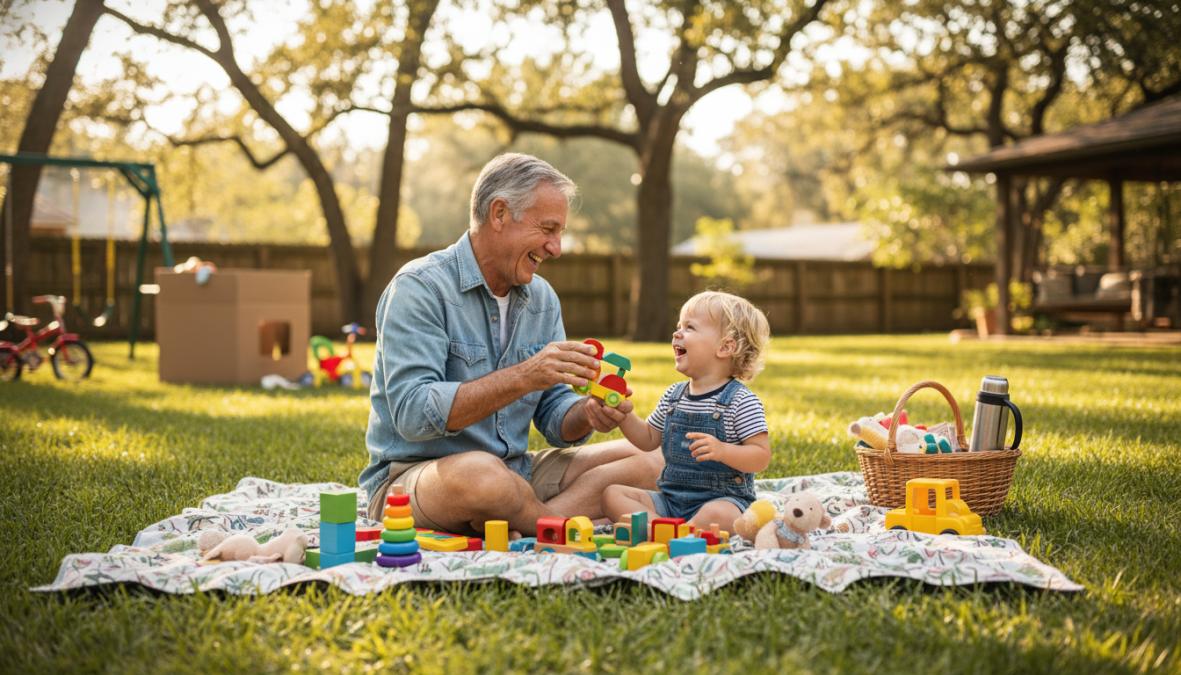
Activities for grandkids at grandparents house are the heart of what makes these visits memorable, but the research on what actually works points in a different direction than most activity lists suggest. The activities themselves matter less than the quality of attention a grandparent brings to them. A grandparent fully present during a ten-minute stacking game creates a stronger memory than an elaborate craft project executed while distracted.
That said, having a practical, age-matched activity toolkit reduces the friction of visits and gives grandparents a confident starting point rather than improvising under pressure.
Why Intergenerational Play Works Differently Than Peer Play
Grandparent-grandchild play has a distinct developmental function that peer play does not replicate. Grandparents naturally slow down, narrate, and repeat, behaviors that are exactly what young children need for language acquisition and emotional regulation. A grandparent reading the same picture book for the fourth time in a row is not being indulgent; they are providing the repetition that builds vocabulary and narrative comprehension.
For grandparents, the psychological benefits run in the other direction: sustained engagement with young children is associated with maintained cognitive flexibility and a stronger sense of purpose. The visit is not a favor grandparents do for parents. It is genuinely good for everyone involved.
The practical implication: do not feel pressure to entertain. The goal is shared attention, not performance.
Age-Matched Activity Toolkit
Infants (0-12 months): Sensory engagement and narration
Infants do not need toys as much as they need faces, voices, and gentle physical contact. The most effective activities at this stage are the simplest:
- Floor time on a soft mat with high-contrast objects in reach
- Narrating everything you do aloud, "Now we’re going to the kitchen, I’m opening the refrigerator", builds language exposure
- Gentle songs and finger plays (Itsy Bitsy Spider, Pat-a-Cake) provide rhythm and predictable interaction
- Outdoor time in a stroller or on a blanket in dappled shade, which provides novel sensory input without overstimulation
Gear note: a simple activity mat with a few hanging toys covers the majority of infant floor play needs and stores flat under a bed.
Toddlers (12 months-3 years): Parallel play and simple process activities
Toddlers are not yet capable of true cooperative play, but they thrive on parallel engagement, doing something alongside a grandparent rather than with them. The activity does not need to be complex:
- Stacking and knocking down blocks (the knocking down is the point)
- Water play at the kitchen sink with cups and measuring spoons
- Simple baking: pouring pre-measured ingredients, stirring, pressing cookie cutters
- Watering plants or pulling weeds in a garden, toddlers are surprisingly motivated by real tasks
- Board books with lift-the-flap or touch-and-feel elements that reward repeated handling
For toddler visits, a small sensory bin, a plastic storage bin filled with dry rice or dried pasta and a few cups and spoons, provides 20-30 minutes of independent play and costs almost nothing. Store it in a closet between visits and it is ready immediately on arrival.
Preschoolers (3-5 years): Narrative play and skill-building
Preschoolers are entering the stage where they can follow simple rules, sustain attention for longer periods, and begin to take genuine pride in accomplishment. This is the age where grandparent-specific knowledge becomes a real asset:
- Simple card games (Go Fish, Snap, Old Maid) teach turn-taking and number recognition
- Puzzles in the 24-48 piece range are appropriately challenging without being frustrating
- Cooking projects where the child has a real job: washing vegetables, rolling dough, decorating
- Storytelling games where you take turns adding one sentence to a story, no materials required
- For Northeast Florida families: collecting shells or identifying birds at a local park connects grandchildren to the natural environment grandparents know well
School-age children (6-12 years): Shared projects and local knowledge
Older grandchildren are capable of sustained projects and genuinely benefit from grandparent expertise. This is where the relationship shifts from caretaking to mentorship:
- Fishing at local spots near Saint Augustine, Amelia Island, or the Intracoastal, grandparents who know the water have something no app can replicate
- Building projects: birdhouses, simple woodworking, model kits
- Cooking a full meal together, with the grandchild responsible for a specific dish
- Family history projects: looking through old photographs, recording stories, mapping where the family has lived
- Board games with genuine strategy (Uno, Sequence, Rummikub) that grandparents can play at full effort without the child being overwhelmed
The Cousin Camp Model: Managing Multiple Grandchildren
When grandparents host multiple grandchildren simultaneously, the "cousin camp" format that has become increasingly common during summer visits, the supervision ratio changes and the activity planning needs to account for it.
The most effective approach is structured pairing: assign an older grandchild a specific role with a younger one for certain activities. An eight-year-old reading to a three-year-old is not babysitting, it is a genuine bonding experience for both children, and it gives the grandparent a more manageable supervision ratio during that window.
For cousin camp visits, a loose daily structure reduces friction significantly:
- A morning outdoor activity while energy is high and heat is manageable
- A midday quiet activity (reading, puzzles, a movie) during peak heat hours
- An afternoon creative or cooking project
- An evening outdoor activity or walk
This structure does not need to be rigid. It just gives grandparents a default sequence to fall back on when the group energy starts to fragment.
Using Technology to Support, Not Replace, Engagement
One angle most activity guides miss entirely: technology used well can strengthen grandparent-grandchild bonding rather than undermine it. The key is using it as a shared activity rather than a substitute for one.
- Video calls with parents during a visit (brief and scheduled, not reactive) help younger children feel connected without disrupting the visit’s rhythm
- Photo documentation, taking photos together and looking at them immediately, is genuinely engaging for children over three and creates a record parents appreciate
- Age-appropriate educational apps used alongside a grandparent, with the grandparent narrating and asking questions, function more like a shared book than passive screen time
- Shared music playlists, grandparents introducing grandchildren to music they love, and grandchildren returning the favor, is a low-effort, high-connection activity that works across all ages
For grandparents who find technology intimidating, the simplest starting point is a shared photo album app (Google Photos or Apple Shared Albums) that parents set up before the visit. Grandparents take photos during the visit; parents see them in real time. It is a low-friction way to keep parents connected without requiring grandparents to navigate unfamiliar platforms under pressure.
Summer Safety, Hydration, and Outdoor Excursions
Northeast Florida summers are serious. Heat and humidity in Saint Augustine and along the First Coast can be dangerous for young children, who dehydrate faster than adults and cannot reliably communicate thirst.
Summer safety for grandchildren during outdoor excursions comes down to four non-negotiable habits:
- Hydration before, during, and after outdoor time. Offer water every 20-30 minutes during outdoor play, not just when a child asks.
- Outdoor time in the early morning or late afternoon. Avoid peak heat between 11am and 3pm.
- Sun protection every time. Broad-spectrum SPF 30 or higher, reapplied every two hours and after water play.
- Know the signs of heat exhaustion. Flushed skin, irritability, reduced urination, and lethargy in a child who has been outdoors are warning signs that require immediate shade, fluids, and rest.
For beach outings near Vilano Beach, Fernandina Beach, or Jacksonville Beach, a beach wagon is one of the most practical pieces of grandparents hosting grandchildren gear you can have. It carries the cooler, the towels, the sunscreen, the extra clothes, and the tired toddler on the way back to the car.
Grandparents Hosting Grandchildren Gear: Smart Storage and Tech Support
The practical reality of grandparents hosting grandchildren gear is that it needs somewhere to live between visits. For grandparents in smaller homes or condos, gear storage is not an afterthought. It is a real constraint that shapes what gear makes sense to own versus rent.
Small-Space Storage Solutions for Baby Gear
Small-space storage for baby gear requires the same thinking as any space-constrained home: vertical storage, multi-function items, and a ruthless commitment to only keeping what earns its square footage.
Practical small-space storage approaches:
- Fold-flat gear only. A clip-on high chair stores in a kitchen drawer. A fold-flat playard stores in a closet corner. A full-size crib does not fit in a small home.
- Under-bed storage for soft goods. Bibs, burp cloths, and small toys store well in flat bins under a guest bed.
- A single dedicated bin or shelf. Designate one specific location for all grandparent gear. When the bin is full, it is time to evaluate what stays and what goes.
- Rent the large items. Strollers, playards, and high chairs are the largest gear items and the most practical to rent rather than store.
For grandparents in Nocatee, Ponte Vedra, or Saint Augustine who host grandchildren a few times a year, the math on renting versus storing is straightforward: rental eliminates storage, eliminates safety-standard obsolescence, and eliminates the hassle of transporting gear between visits.
Tech Support for Grandparents: Apps, Monitors, and Rental Services
Tech support for grandparents managing baby gear does not need to be complicated. Three categories of technology genuinely help:
Baby monitors: A video monitor with two-way audio is the most useful single tech investment for grandparents hosting grandchildren. It provides real-time visibility into the sleep space and allows grandparents to check on a child without entering the room and disrupting sleep.
Parental preference apps: Apps like Cozi or a shared notes document allow parents to communicate feeding schedules, nap routines, and dietary preferences before and during a visit. This reduces friction and helps grandparents maintain the routine consistency that children need.
Rental service platforms: For grandparents in Northeast Florida, booking grandparents hosting grandchildren gear through a local delivery service removes every logistical barrier. Gear arrives sanitized, assembled, and ready. No assembly instructions, no storage problem, no safety-standard guesswork.
According to the CDC’s guidance on child safety at home, the home environment is the most common setting for childhood injuries, which makes proper gear selection and installation the highest-use safety investment grandparents can make.
For grandparents who are less comfortable with technology, a phone call to a local rental service is genuinely sufficient. First Coast Baby Rentals serves Saint Augustine, Jacksonville, Jacksonville Beach, Ponte Vedra, Fernandina Beach, Amelia Island, Vilano Beach, Nocatee, and surrounding areas, with last-minute reservations accommodated and gear delivered directly to your address.
Preparing your home for grandchildren visits is genuinely rewarding work, but the gear decisions can feel overwhelming without a clear framework. First Coast Baby Rentals simplifies the entire process by delivering sanitized, inspected, often brand-new equipment directly to your door across Northeast Florida, from Saint Augustine to Amelia Island and everywhere in between. Every item is thoroughly cleaned and set up before you need it, with the flexibility to extend your rental if the visit runs long. Reserve your gear with First Coast Baby Rentals and spend your energy on the moments that matter, not the logistics.
Frequently Asked Questions
What baby gear do grandparents need to keep at their house?
The core grandparents hosting grandchildren gear list typically includes a playard or portable crib for sleep, a high chair for feeding, a baby monitor, and basic childproofing supplies. Depending on the ages of visiting grandchildren, you may also want a stroller, a diaper changing station, and age-appropriate toys. Starting with a budget-friendly starter kit covering sleep, feeding, and safety covers the most critical bases before adding extras.
How do I babyproof a home for visiting grandchildren?
Babyproofing for grandparents means addressing hazards that weren't a concern when your own children were young. Start by securing heavy furniture to walls, covering electrical outlets, installing cabinet locks on cleaning supply and medication storage, and adding safety gates at stairs. Get down to a child's eye level to spot additional risks. Focus on the rooms where grandchildren will spend the most time, and always confirm current safety standards for any gear you use.
Do grandparents need to buy a car seat for grandchildren?
Understanding grandparent car seat safety rules is essential before driving grandchildren anywhere. Car seats must meet current federal safety standards, fit the child's developmental stage and weight, and be properly installed. Expired or secondhand car seats with unknown crash histories should never be used. If visits are occasional, renting a car seat from a reputable service, such as a local baby gear rental provider, is a safe, cost-effective alternative to purchasing one outright.
What are the best activities for grandkids at grandparents' house?
The best activities for grandkids at grandparents house focus on intergenerational bonding and memory building. Simple options include baking together, reading aloud, working on puzzles, and family picnics in the backyard. For older children, cousin camp-style activities like scavenger hunts or craft projects work well. Outdoor excursions to local parks or beaches support both physical activity and emotional health, while consistent routines help younger grandchildren feel secure and comfortable during visits.
Is it safe to use secondhand baby gear at grandparents' homes?
Some secondhand items are fine, like toys, books, and clothing, but certain gear poses real safety risks if outdated or damaged. Avoid used car seats, cribs older than ten years, and any items recalled since purchase. Always verify that secondhand gear meets current safety standards before use. For high-stakes items like cribs and car seats, buying new or renting from a professional baby gear rental service that sanitizes and inspects every item is the safest approach.
This article was written using GrandRanker