Table of Contents
- How to Rent Baby Items: The Step-by-Step Booking Process
- What Baby Gear Can You Rent? Types of Equipment Available
- Renting a Crib for Travel: What Parents Need to Know
- Sanitization Standards for Baby Rentals: What to Expect
- Baby Equipment Rental Cost: Is It Worth It?
- Best Baby Gear Rental Companies for Northeast Florida Families
- How to Rent Baby Items Without the Headaches: Troubleshooting Tips
- Conclusion
Last Updated: May 22, 2026
Traveling with a baby doesn’t have to mean checking three extra bags or hauling a car seat through two connecting flights. Knowing how to rent baby items at your destination is one of the smartest moves a traveling parent can make, and First Coast Baby Rentals has helped hundreds of Northeast Florida families do exactly that. Below, we’ll walk you through the entire process step by step, from searching for gear near your vacation rental to confirming delivery and getting everything set up before you arrive.
Here’s what most guides get wrong: they treat baby gear rental like a simple Amazon order. The reality involves sanitization standards, equipment safety checks, local logistics, and knowing which gear is actually worth renting versus packing. We cover all of it.
How to Rent Baby Items: The Step-by-Step Booking Process
Renting baby items is a straightforward process when you know the right steps. Most reputable local providers offer online booking, same-day confirmation, and direct delivery to your vacation rental, hotel, or Airbnb. The entire process typically takes less than 10 minutes once you’ve identified a trusted provider.
Search by Destination or Zip Code
Start your search by entering your destination or zip code into a local baby gear rental provider’s website. If you’re visiting Saint Augustine, Ponte Vedra, Amelia Island, Jacksonville Beach, or anywhere along the First Coast, searching for "baby gear rental near me" or "crib rental St. Augustine" will surface local providers who know the area well.
Why does local matter? A local provider knows your vacation rental neighborhood, can accommodate last-minute reservations, and can physically deliver and set up gear at your door. National platforms often rely on a patchwork of independent providers, which creates inconsistency in sanitization standards and delivery reliability. A dedicated local service built specifically for Northeast Florida families offers a fundamentally different experience.
Search with your specific zip code rather than just the city name. Saint Augustine zip codes (32080, 32084, 32092) can span very different areas, and a local provider will know exactly which vacation rentals and beach communities they serve.
When searching, confirm that the provider covers your exact address. First Coast Baby Rentals serves Saint Augustine, Jacksonville, Jacksonville Beach, Vilano Beach, Ponte Vedra, Fernandina Beach, Amelia Island, and surrounding Northeast Florida communities.
Making Your Reservation and Confirming Delivery
Once you’ve selected your gear, the booking process follows a clear sequence:
- Choose your rental dates. Select your arrival and departure dates. Many providers allow you to extend your rental period if your plans change or weather keeps you at the beach house longer than expected.
- Select your equipment. Pick from available cribs, strollers, car seats, high chairs, play yards, and specialty items like the Snoo smart bassinet.
- Enter your delivery address. Provide the exact vacation rental address. If you have gate codes, parking notes, or a specific arrival window, include those in the notes field.
- Confirm payment and receive booking details. Reputable providers send a confirmation with delivery time, contact information, and setup instructions.
- Receive delivery and setup. A punctual provider will arrive within your confirmed window, set up the equipment, and walk you through any questions before leaving.
The whole process is designed so gear is ready and waiting when you walk through the door.
What Baby Gear Can You Rent? Types of Equipment Available
Baby equipment rental covers far more than just a crib. A full-service local provider stocks everything a traveling family needs, from sleep gear to feeding equipment to outdoor play items. The goal is simple: you pack light, and everything you need is already there.
Sleep Gear: Cribs, Bassinets, Play Yards, and the Snoo
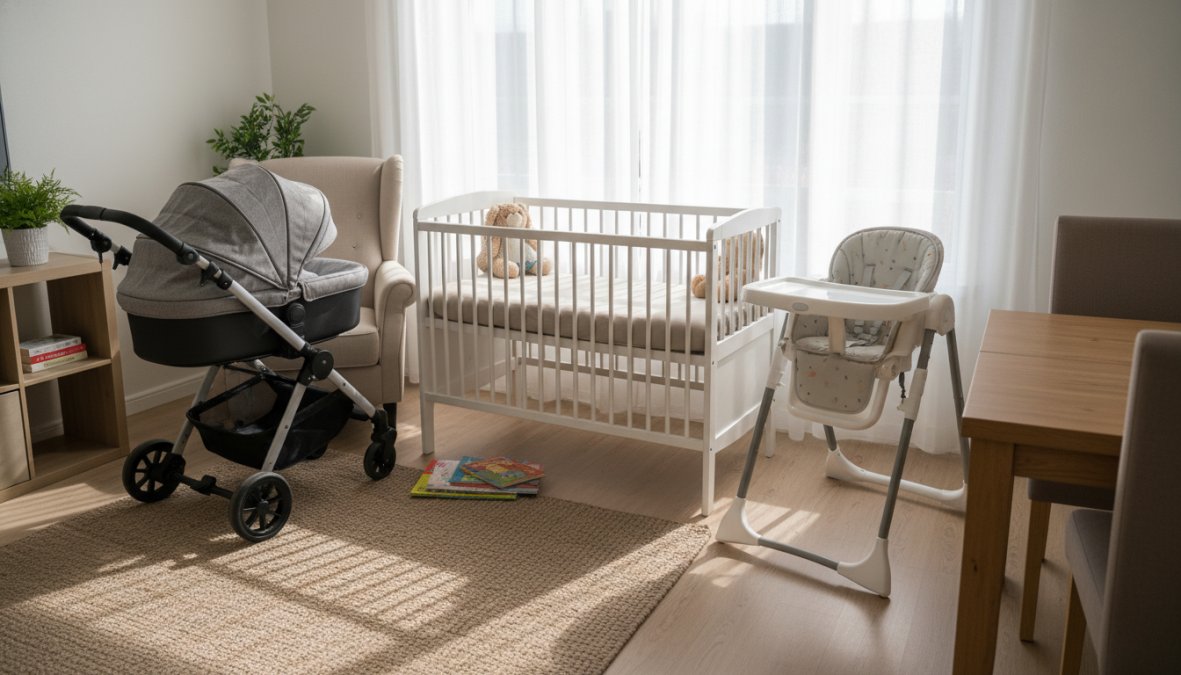
Sleep is non-negotiable on vacation, both for your baby and for you. Available sleep gear typically includes:
- Standard cribs: Full-size cribs with firm, safety-approved mattresses. Ideal for infants and toddlers who need a familiar sleep environment.
- Bassinets: Compact and portable, bassinets work well for newborns who need to sleep close to parents.
- Play yards (Pack ‘n Plays): Versatile and lightweight, play yards double as both a sleep space and a safe play area during the day.
- The Snoo smart bassinet: The Snoo is a responsive bassinet that uses gentle motion and sound to soothe babies to sleep. For families who use a Snoo at home, renting one in Saint Augustine or Ponte Vedra means your baby’s sleep routine stays intact on vacation. Snoo rental is available in Saint Augustine, Ponte Vedra, Jacksonville, and Amelia Island.
A common mistake is assuming a hotel crib will suffice. Hotel-provided cribs are often older, less inspected, and rarely set up to the standards a traveling parent expects.
On-the-Go Gear: Strollers and Car Seats
Strollers and car seats are two of the heaviest, most awkward items to travel with, and two of the most important to have on the ground. Rental options include:
- UPPAbaby strollers: Popular for their smooth ride and easy fold. Available for rental in Saint Augustine and Jacksonville Beach.
- BOB jogging strollers: The right call for active families who want to run along Ponte Vedra’s beach paths or St. Augustine’s historic streets. BOB stroller rental is available in Saint Augustine, Fernandina Beach, and Jacksonville Beach.
- City Mini strollers: Compact and lightweight, ideal for navigating tight spaces. City Mini rental is available in Ponte Vedra, St. Augustine, and Amelia Island.
- Nuna and Doona strollers: Premium options for families who want a seamless car seat-to-stroller transition. Nuna rental is available in Saint Augustine and Jacksonville; Doona rental is available in St. Augustine and Fernandina.
- Car seats: Infant car seats and convertible car seats are available for pickup at Jacksonville Airport (JAX) or delivery to your vacation rental. Car seat rental in Jacksonville is especially popular for families flying into JAX.
Feeding and Play: High Chairs, Bouncers, and Swings
Beyond sleep and transportation, a comfortable vacation requires the right feeding and play equipment:
- High chairs: Full-size high chairs for mealtimes at the vacation rental. High chair rental is available in Saint Augustine, Amelia Island, and St. Augustine Beach.
- Bouncers and swings: Helpful for keeping younger babies content and calm, especially during nap transitions.
- Beach wagons: For families headed to Fernandina Beach, Amelia Island, or St. Augustine Beach, a beach wagon makes hauling gear across the sand significantly easier.
Renting a Crib for Travel: What Parents Need to Know
Renting a crib for travel is one of the most requested items in the baby equipment rental category, and for good reason. Traveling with a full-size crib is impractical; hotel cribs are inconsistent; and a baby who sleeps poorly disrupts the entire trip.
Renting a crib for travel means your child sleeps on a properly inspected, sanitized mattress in a crib that meets current safety standards. According to the American Academy of Pediatrics safe sleep guidelines, babies should sleep on a firm, flat surface with no soft bedding, bumpers, or incline. A rental crib from a trusted local provider meets these standards; a repurposed hotel playpen often does not.
What to confirm before your crib rental:
- The crib meets current Consumer Product Safety Commission (CPSC) standards
- The mattress is firm and fits the crib frame without gaps
- All hardware is inspected and tightened before delivery
- The crib has been fully sanitized between rentals
Crib rental is available across Northeast Florida, including Saint Augustine, Nocatee, Ponte Vedra, and Jacksonville Beach.
Never accept a crib with drop-side rails. Drop-side cribs were banned by the CPSC in 2011 due to entrapment and suffocation risks. Always confirm with your rental provider that the crib meets post-2011 federal safety standards.
Sanitization Standards for Baby Rentals: What to Expect
Sanitization standards for baby rentals are the single most important factor parents should evaluate before booking, and the area where the rental industry is most inconsistent. Baby gear makes direct contact with infants’ skin, mouths, and airways, so the cleaning and safety-checking process matters more here than in almost any other rental category. Yet most rental platforms publish nothing more than a vague ‘cleaned between rentals’ assurance. This section explains what a rigorous sanitization protocol actually looks like, what questions to ask any provider, and what red flags to walk away from.
What a Legitimate Sanitization Protocol Covers
A reputable local provider treats every returned item as contaminated until proven otherwise. The process should include every one of the following stages, not a subset of them:
Stage 1: Disassembly
All fabric components, crib sheets, stroller seat pads, high chair cushions, car seat inserts, are removed completely. Hard-surface frames, buckles, harness straps, and tray tables are separated so no surface is cleaned around rather than cleaned directly.
Stage 2: Fabric Laundering
Fabric components are machine-washed in hot water (most pathogens are neutralized at or above 140°F / 60°C) using a fragrance-free, dye-free detergent that meets infant-safe standards. Items are dried on high heat or line-dried in direct sunlight, which provides additional UV-based microbial reduction. Providers should be able to confirm the detergent they use is free of optical brighteners and synthetic fragrances, both of which are common infant skin irritants.
Stage 3: Hard-Surface Disinfection
Plastic frames, metal hardware, buckles, and tray surfaces are scrubbed with a cleaning agent appropriate for infant contact. The most common professional-grade options used in infant care settings are:
- Hydrogen peroxide-based disinfectants (typically 3%): Effective against a broad spectrum of bacteria and viruses, breaks down into water and oxygen, leaves no harmful residue after the recommended dwell time.
- Hypochlorous acid (HOCl) solutions: Increasingly used in pediatric and food-service settings because it is non-toxic to skin and mucous membranes at use concentrations, yet effective against common pathogens including norovirus and RSV.
- Quaternary ammonium compounds (‘quats’): Effective disinfectants, but require thorough rinsing on infant-contact surfaces because residue can be irritating. A quality provider rinses all quat-treated surfaces with clean water after the dwell period.
Ask your provider which specific disinfectant they use on hard surfaces and whether they observe the manufacturer’s recommended contact (dwell) time. A disinfectant wiped off immediately is not actually disinfecting, the solution needs to remain wet on the surface for the labeled contact period, typically one to three minutes, to be effective.
Stage 4: Structural and Safety Inspection
Cleaning and safety inspection happen simultaneously. Every item is checked for:
- Crib slats spaced no more than 2⅜ inches apart (the federal standard that prevents head entrapment)
- Harness webbing for fraying, cuts, or UV degradation
- Buckle and latch function under load
- Stroller brake engagement and wheel lock integrity
- Car seat shell for cracks, especially around harness anchor points
- High chair tray locking mechanism and leg stability
Any item that fails inspection is removed from the rental inventory, not repaired and returned. Ask your provider what their retirement policy is for damaged items.
Stage 5: Reassembly and Final Wipe-Down
Items are reassembled and given a final wipe with a clean, dry cloth before being stored in a clean environment (not a garage floor or open van) until delivery.
The Marketplace Platform Problem
This is the detail most rental guides skip: marketplace-style platforms that connect you with independent local owners cannot guarantee any of the above. When you book through a peer-to-peer platform, the cleaning protocol is entirely up to the individual owner. Some are meticulous. Many are not. There is no central inventory, no standardized inspection checklist, and no accountability mechanism if the gear arrives dirty or structurally compromised.
A dedicated local service with its own physical inventory controls every step of this process. First Coast Baby Rentals maintains its own equipment, performs its own inspections, and is directly accountable if something is wrong at delivery, because there is no third-party owner to deflect responsibility to.
What to Do When Gear Arrives: Your Delivery Inspection
Even with a trusted provider, parents should perform a brief inspection at delivery before the team leaves. According to the Consumer Product Safety Commission’s guidance on baby product safety, parents should always inspect rental baby gear upon arrival and raise any concerns before use. Here’s a practical 90-second checklist:
- Crib: Shake the frame gently. No wobble, no loose slats. Mattress fits snugly with no gap larger than two fingers at any edge.
- Car seat: Harness straps lie flat with no twists. Buckle clicks and releases cleanly. Shell has no visible cracks.
- Stroller: Fold and unfold once. Both brakes engage. Harness buckle functions. No frayed webbing.
- High chair: All four legs contact the floor evenly. Tray locks into position. Harness straps are present and intact.
- Smell test: Clean gear should smell neutral or faintly of clean laundry. Any chemical odor (suggesting inadequate rinsing) or musty smell (suggesting improper drying or storage) is a reason to ask questions.
A provider confident in their sanitization process will not only welcome this inspection, they will expect it.
If a provider cannot tell you specifically what cleaning agents they use on infant-contact surfaces, that is a significant red flag. ‘We clean everything thoroughly’ is not a sanitization protocol. Ask for specifics before you book, not after gear arrives.
For families with infants under three months or with known skin sensitivities, ask your provider to confirm that fabric components were washed in fragrance-free detergent. This is a reasonable request that any quality provider should be able to accommodate.
Baby Equipment Rental Cost: Is It Worth It?
Baby equipment rental cost is the question most parents ask first and most rental guides answer least helpfully. Vague assurances that ‘renting is worth it’ don’t help a parent standing in front of a $400 stroller deciding whether to check it or leave it home. This section gives you the actual framework for running the math yourself, including the costs most parents forget to count.
The True Cost of Traveling With Baby Gear
Most parents mentally account for the airline checked-bag fee and stop there. The real cost of traveling with your own baby gear includes several line items that rarely appear in the same calculation:
1. Airline fees
Most major U.S. carriers allow one car seat and one stroller to be checked or gate-checked at no charge, but policies vary and are subject to change. A pack-n-play or travel crib, however, typically counts as a standard checked bag, which runs between roughly $35 and $40 each way on most domestic carriers as of 2025, meaning $70 to $80 round trip for that item alone. Oversized or overweight fees apply if the packed item exceeds the airline’s dimensional or weight limits, and a packed pack-n-play in its bag frequently does.
2. Damage and loss risk
The U.S. Department of Transportation tracks mishandled baggage reports from major carriers. the U.S. Department of Transportation’s air travel consumer report consistently shows that strollers and car seats are among the most frequently damaged checked items, partly because they are often gate-checked and loaded last, unloaded first, and handled without the protective packaging of hard-sided luggage. A damaged car seat cannot legally or safely be used, car seat manufacturers universally advise retiring any seat that has been in a moderate or severe impact, and airline baggage handling qualifies as rough treatment. Replacing a mid-range convertible car seat runs several hundred dollars. That cost belongs in your rental-vs-pack calculation.
3. Physical and logistical cost
This one doesn’t appear on a receipt, but it’s real. Managing a stroller, a car seat, a pack-n-play, a diaper bag, and a carry-on through a connecting flight with an infant is a logistical event that most parents who have done it once prefer never to repeat. The time cost of gate-checking, retrieving, reassembling, and re-stowing gear across a two-leg flight is measurable. So is the stress.
4. The ‘just in case’ gear problem
Parents who pack their own gear often bring more than they use, because they’re uncertain what the vacation rental will have. Renting solves this differently: you order exactly what you need for the exact duration you need it, and nothing sits unused in a corner of the rental house for a week.
A Realistic Cost Comparison
Rental pricing varies by provider, item, and rental duration. The table below uses representative ranges for a one-week rental from a quality local provider in a market like Northeast Florida. These are illustrative ranges based on common market pricing, confirm exact rates with your specific provider at booking.
| Item | Typical 7-Day Rental Range | Checked Bag Fee (round trip) | Damage/Loss Risk | Net Rental Advantage |
|---|---|---|---|---|
| Full-size crib | $75 – $120 | N/A (impractical to fly with) | N/A | Renting is the only practical option |
| Pack-n-play / play yard | $55 – $90 | $70 – $80 (standard bag fee) | Moderate | Roughly break-even to slight savings, plus zero hassle |
| Car seat (infant or convertible) | $65 – $110 | $0 – $40 (policy-dependent) | High (damage voids safety) | Significant if damage risk is factored in |
| Full-size stroller | $70 – $120 | $0 – $40 (gate-check, policy-dependent) | High (gate-check damage common) | Meaningful savings plus no damage risk |
| High chair | $45 – $75 | N/A (impractical to fly with) | N/A | Renting is the only practical option |
| Snoo smart bassinet | $150 – $250 | N/A (impractical to fly with) | N/A | Renting is the only practical option |
Reading the table: For items like a full-size crib, Snoo, or high chair, the rental-vs-pack question doesn’t really exist, you’re not flying with those items. The genuine cost decision is for the pack-n-play, car seat, and stroller. For those three items combined, a family checking all of them as luggage (where fees apply) and renting them instead would typically see the costs come close to even on fees alone, and renting wins decisively once damage risk, physical effort, and the value of arriving to a set-up rental are included.
When Renting Clearly Wins
- You’re flying with connections. Every additional flight segment is another opportunity for gate-checked gear to be damaged or delayed.
- You’re staying fewer than 10 days. Shorter trips favor renting because the rental cost is fixed and low; the airline fee is the same regardless of trip length.
- Your baby is in a size transition. If your infant is about to outgrow their car seat or stroller, renting the next size up at the destination avoids buying a new item you’ll use for only a few months.
- You’re visiting multiple destinations. Renting at each stop rather than hauling gear between cities is almost always the more practical and cost-effective approach.
When Packing Your Own Gear Makes Sense
Renting isn’t always the right answer, and a trustworthy guide should say so.
- You’re driving to your destination. No airline fees, no damage risk, and your car has the space. Packing your own gear is often the right call for road trips.
- Your child has strong attachment to a specific sleep environment. Some toddlers will only sleep in their own crib with their own mattress. If that’s your child, the disruption of an unfamiliar rental crib may cost you more in lost sleep than the rental saves in luggage fees.
- You’re traveling for more than two weeks. Longer rental periods can approach or exceed the cost of checking gear, depending on the items and the provider’s pricing structure. Run the specific numbers for your trip length.
Sustainability: Why Renting Is the Greener Choice
Baby gear has one of the shortest useful lifespans of any durable consumer product. Most families use a high chair, bouncer, or infant car seat for fewer than 18 months before the child outgrows it. The result is a significant volume of durable plastic, metal, and foam that ends up in landfills or sits unused in storage, because most baby gear cannot be easily recycled through standard municipal programs.
Renting baby items is a meaningfully greener choice. A single set of rental gear serves dozens of families over its lifespan, reducing the demand for new manufacturing and keeping equipment in active use rather than in a garage. Families who rent instead of buy avoid contributing to the cycle of short-use baby product consumption that the Environmental Protection Agency’s guide on sustainable consumption identifies as a growing waste category. For families who already prioritize sustainability at home, renting baby gear on vacation is a natural extension of those values, and one that costs the same or less than the alternative.
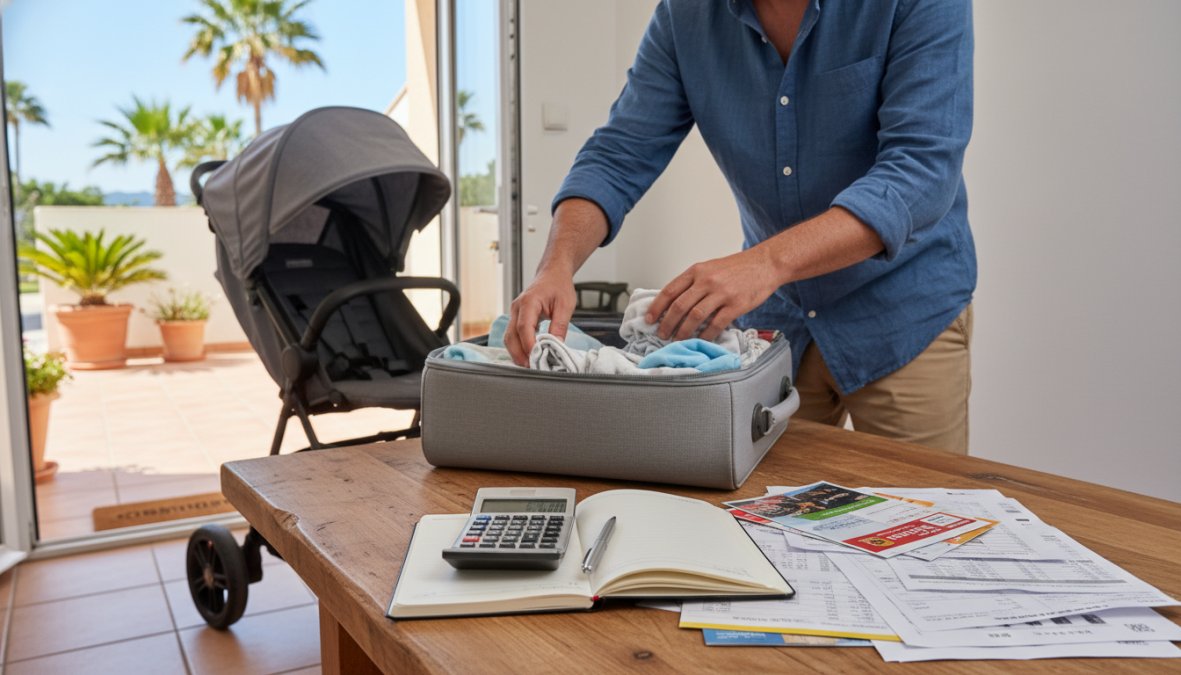
For most families flying to a vacation destination, renting a car seat, stroller, and crib for a week costs roughly the same as checking those items as luggage, and eliminates the risk of airline damage, the physical burden of hauling gear through airports, and the uncertainty of arriving to an unequipped rental. For items like full-size cribs, high chairs, and the Snoo, renting is simply the only practical option.
Best Baby Gear Rental Companies for Northeast Florida Families
The best baby gear rental company for Northeast Florida families is one that knows the region, maintains its own sanitized inventory, and delivers directly to your vacation rental. That’s a narrower category than it might seem.
Delivery, Setup, and Trusted Local Providers in St. Augustine
First Coast Baby Rentals is the top choice for families vacationing in Saint Augustine and across Northeast Florida. The service is built specifically for this region, covering Saint Augustine, Saint Augustine Beach, Vilano Beach, Ponte Vedra, Jacksonville, Jacksonville Beach, Fernandina Beach, Amelia Island, Nocatee, and surrounding areas.
What sets First Coast Baby Rentals apart from national marketplace platforms:
- Spotless, often brand-new equipment. Every item is sanitized and inspected before every delivery. Many items are new or near-new, which matters when you’re putting your infant in a crib or car seat.
- Punctual delivery and full setup. Gear is delivered and assembled at your vacation rental before you arrive. You don’t need to figure out how to install a crib in an unfamiliar space.
- Last-minute reservations accommodated. Plans change. First Coast Baby Rentals handles last-minute bookings without the friction that larger platforms create.
- Rental extensions for weather delays. Northeast Florida weather can extend a beach vacation unexpectedly. Rental periods can be extended to match your actual stay.
For families flying into JAX, car seat rental at Jacksonville Airport is a particularly practical option. Instead of checking a car seat and hoping it survives the flight, you can arrange for a properly inspected car seat to be available immediately upon arrival.
The local expertise matters. A provider based in Saint Augustine understands the difference between a Vilano Beach vacation rental and a Nocatee short-term rental, and can plan delivery logistics accordingly.
How to Rent Baby Items Without the Headaches: Troubleshooting Tips
Even straightforward rental processes occasionally run into friction. Knowing how to rent baby items smoothly means knowing what can go wrong and how to handle it before it becomes a problem.
Common issues and how to resolve them:
- Gear arrives and something doesn’t look right. Inspect every item before the delivery team leaves. Check crib hardware, car seat harness integrity, and stroller brake function. A reputable provider will address any concern on the spot or return with a replacement.
- Your vacation rental doesn’t have a good setup space for a crib. Mention room dimensions or layout constraints when booking. A good local provider will advise on the best placement and bring the right configuration.
- Your travel dates shift after booking. Contact your provider as soon as possible. Most local services accommodate date changes with reasonable notice, especially for extensions.
- You need gear for a destination you weren’t sure was covered. Northeast Florida’s vacation rental geography can be confusing. If you’re staying in Nocatee, Crescent Beach, or anywhere between Jacksonville and Fernandina, confirm your address is in the service area when booking rather than assuming.
- You forgot to book until the last minute. This is more common than you’d think, especially for grandparents planning a surprise visit with grandchildren. First Coast Baby Rentals specifically accommodates last-minute reservations, which most national platforms cannot reliably do.
A practical pre-trip checklist for renting baby gear:
- Confirm exact delivery address and any access notes (gate codes, parking)
- Book before your flight, not after landing
- Specify your child’s age and weight for car seat sizing
- Ask about the sanitization process if it isn’t documented on the website
- Confirm which items require assembly and whether setup is included
- Get a direct contact number for the provider in case of day-of questions
- Clarify the pickup process so you’re not waiting around on checkout day
The real difference between a smooth rental experience and a frustrating one almost always comes down to communication. Book early, provide accurate information, and choose a provider with a direct line of contact.
Packing for a vacation with a baby is stressful enough without adding a 50-pound stroller to the equation. First Coast Baby Rentals makes it possible to travel light and arrive to a fully equipped vacation rental, with sanitized, inspected, often brand-new gear set up and ready before you walk through the door. Rentals can be extended if your plans change, and last-minute bookings are welcome. Reserve your gear at First Coast Baby Rentals and spend your First Coast vacation focused on your family, not your luggage.
Frequently Asked Questions
Is it safe to rent baby gear for travel?
Yes, renting baby gear from a reputable provider is generally very safe. Trustworthy rental companies sanitize and inspect every item before each delivery, and many use providers who are insured and background-checked. When you know how to rent baby items from a vetted local service, you can expect equipment that meets current safety standards, often brand-new or like-new condition, rather than aging gear stored in a hotel closet.
How does baby equipment rental work?
The process is straightforward: search for a provider by destination or zip code, choose the baby gear you need (cribs, strollers, car seats, high chairs, etc.), select your rental dates, and complete a reservation online. A local provider then delivers and sets up the equipment directly at your vacation rental or hotel before you arrive. At checkout, they pick it up. Many services accommodate last-minute bookings and offer rental extensions if your plans change.
What is the typical baby equipment rental cost compared to buying or checking gear?
Baby equipment rental cost varies by item and duration, but renting is often more economical than the alternatives when you factor in airline baggage fees, the hassle of transporting bulky gear, and the one-time purchase price of items you may rarely use again. A week-long crib rental, for example, typically costs far less than a checked-bag fee plus the wear on your own equipment. Renting also eliminates storage costs at home.
How are rented baby items cleaned and sanitized?
Sanitization standards for baby rentals vary by provider, so it pays to ask. High-quality services clean and disinfect every item, cribs, car seats, high chairs, bouncers, using baby-safe products before each new rental. The best providers inspect equipment for recalls, structural damage, and missing parts at the same time. Look for companies that describe their cleaning process transparently and deliver items that arrive visibly spotless and ready to use.
Do baby rental companies deliver to vacation rentals and hotels in Northeast Florida?
Yes. Local baby gear rental providers serving areas like St. Augustine, Jacksonville Beach, Amelia Island, Ponte Vedra, and Fernandina Beach typically offer direct delivery and setup at your vacation rental, Airbnb, or hotel. The best baby gear rental companies in Northeast Florida will coordinate arrival timing with your check-in, set everything up before you arrive, and return for pickup at checkout, making the entire process completely hands-free for traveling parents.
What should I do if there's a problem with my rented baby gear during my trip?
Contact your rental provider immediately. Reputable local services prioritize responsive customer support and will often swap out a faulty item the same day. Before your trip ends, document any issues with photos. To avoid problems in the first place, confirm the provider's replacement and support policy at booking, choose insured and background-checked providers, and inspect gear upon delivery so any concerns are addressed before you need the item.
This article was written using GrandRanker