Table of Contents
- How to Travel With Infant on Plane: What You Need to Know First
- What You’ll Need Before Boarding: The Complete Packing List
- Stroller and Car Seat Gate Checking: Navigating Airline Policies
- Feeding Your Infant During Takeoff and Landing
- Managing Ear Pressure and Keeping Your Newborn Comfortable
- Entertainment and Comfort: Toys, White Noise, and Swaddling Strategies
- Lap Infant vs. Separate Seat: Making the Right Choice
- Common Mistakes to Avoid When Flying With an Infant
Last Updated: July 16, 2026
How to Travel With Infant on Plane: What You Need to Know First
Flying with a baby for the first time can feel overwhelming, but the right preparation makes all the difference. With the right gear, smart packing, and insider strategies, you can navigate airports and cabins with a little one in tow. This guide covers everything you need to know before booking, from carry-on essentials to managing feeding and diaper changes at 35,000 feet.
What You’ll Need Before Boarding: The Complete Packing List
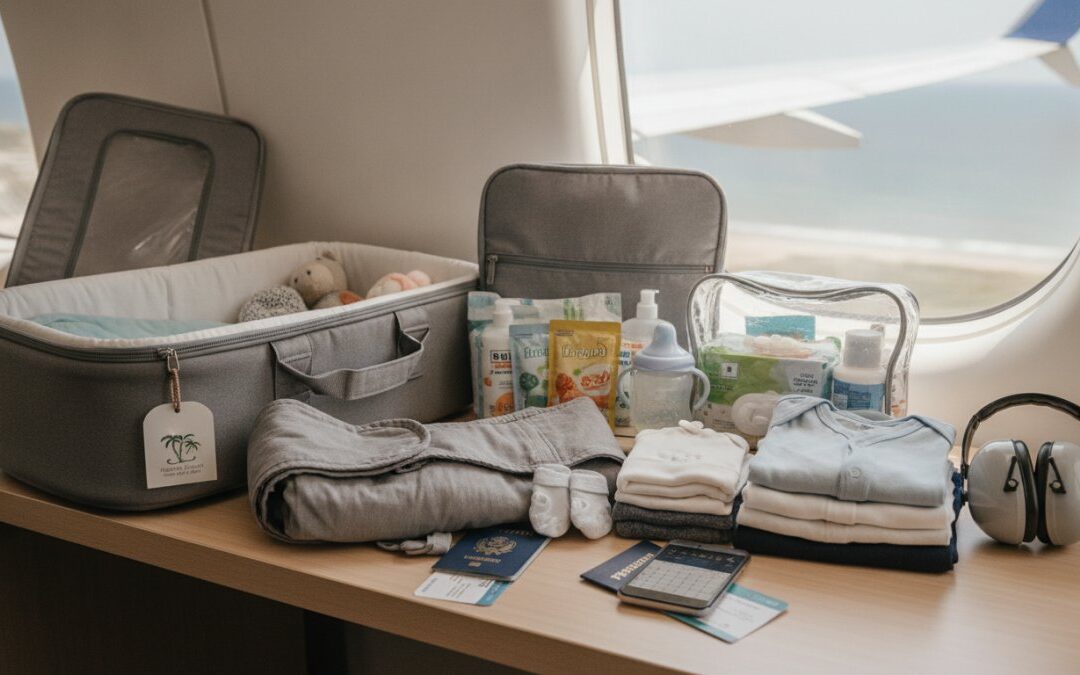
Packing light is the dream when traveling with an infant, but you need the essentials. Most airlines allow one standard carry-on bag plus a personal item per passenger, and you can bring a diaper bag on top of that, a huge advantage when traveling with babies.
Carry-On Essentials
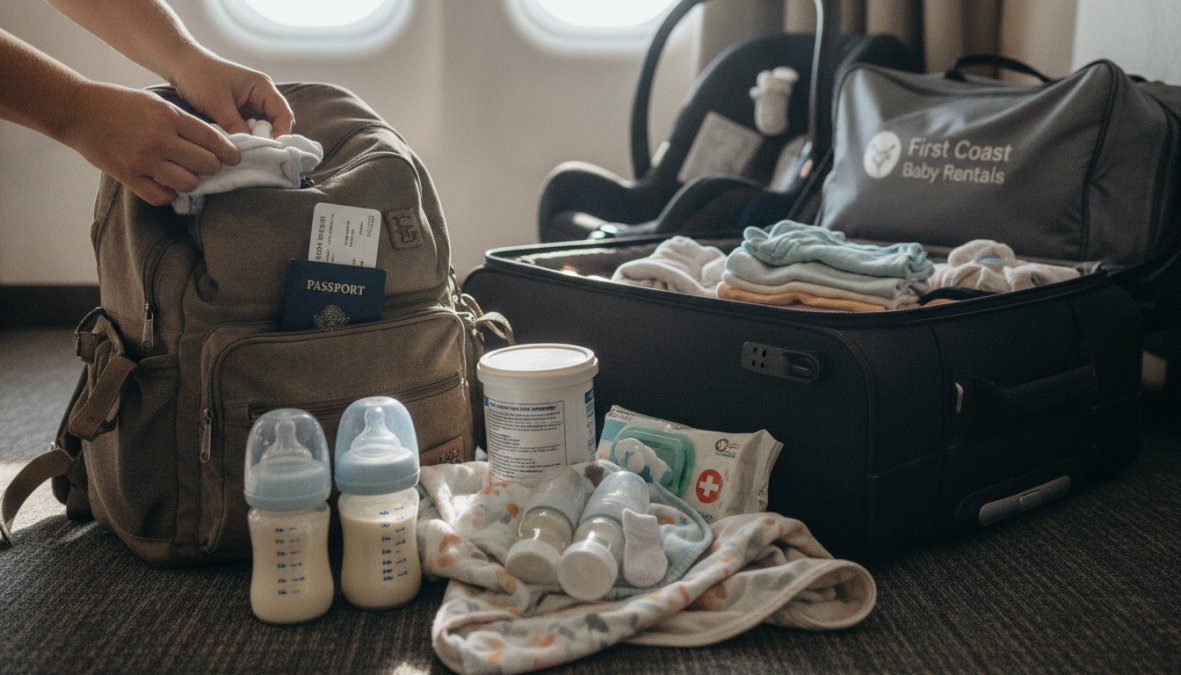
Your carry-on should hold everything you might need during the flight and immediately after landing. Assume you won’t have access to checked bags until you reach your destination.
Diaper essentials:
- Diapers (at least one per hour of flight time, plus extras)
- Portable changing pad
- Wipes (sealed container)
- Diaper cream
- Small garbage bags for disposal
Feeding supplies:
- Bottles (empty until after security)
- Formula in a sealed container
- Breast milk in bottles if pumping ahead
- Bibs or burp cloths
Comfort and hygiene:
- Pacifiers (multiple)
- Small blanket or swaddle
- Change of clothes for baby and you
- Sanitizing wipes
- Hand sanitizer
Entertainment and soothing:
- 2-3 small toys your baby hasn’t seen before
- Teething ring if applicable
- White noise app on your phone
- A lovey or familiar stuffed animal
Organize your diaper bag into sections so you can grab what you need quickly.
TSA Regulations for Breast Milk, Formula, and Liquids
Breast milk and formula are exempt from the standard 3.4-ounce liquid limit, a huge relief when traveling with infants.
Breast milk: You can bring an unlimited amount in your carry-on, whether fresh, thawed, or frozen. TSA agents may open and test it, so arrive early enough to allow time for screening.
Formula: Powder formula travels easily in a sealed container without restriction. Liquid formula follows the same rules as breast milk: unlimited quantity in your carry-on.
Water for mixing: Bring an empty bottle through security and ask the flight attendant to fill it with hot water once on the plane.
Other liquids: Sunscreen, lotion, and baby food in jars must follow the standard 3.4-ounce rule. Pack larger quantities in checked luggage.
Arrive early on your first flight with a baby. Most TSA agents are experienced with traveling parents and will guide you through the process.
Stroller and Car Seat Gate Checking: Navigating Airline Policies
Most airlines allow you to gate check a stroller and car seat at no extra charge. Gate checking means you keep the items until boarding, then hand them off at the gate to be loaded into cargo. You’ll get them back when you deplane.
When to gate check your stroller:
- You have a long layover and need mobility between gates
- Your stroller is lightweight and compact
- You plan to use it immediately upon arrival
When to check your stroller:
- You have a short connection
- Your stroller is bulky or heavy
- You’re renting gear at your destination
Car seat considerations:
If you purchased a seat ticket for your infant, your car seat goes in the overhead bin or under the seat. If your baby is a lap infant, you can gate check the car seat. Many families gate check to avoid the hassle of installing and removing it multiple times.
When you arrive at your vacation rental, having a properly installed car seat waiting eliminates the stress of figuring out installation at the rental car counter. First Coast Baby Rentals delivers sanitized, inspected car seats directly to your rental home.
Feeding Your Infant During Takeoff and Landing
Feeding during takeoff and landing serves a dual purpose: it keeps your baby calm and helps manage ear pressure changes. The sucking motion helps equalize pressure in the middle ear.
If you’re breastfeeding: Takeoff and landing are ideal times to nurse. Wear nursing-friendly clothing and use a small blanket for privacy if you prefer.
If you’re bottle feeding: Have a bottle ready before the plane starts moving. Ask the flight attendant for warm water if needed.
If your baby isn’t hungry: A pacifier works almost as well as feeding for managing ear pressure. The key is the sucking motion.
Managing spit-up: Have a burp cloth or bib within arm’s reach. Burp your baby frequently during feeding, and have a change of clothes accessible.
Flight attendants are experienced with nursing parents and bottle-feeding babies. Don’t hesitate to ask for what you need.
Managing Ear Pressure and Keeping Your Newborn Comfortable
Ear pressure is one of the biggest concerns for parents flying with infants, but it’s actually less of an issue for babies than for older kids and adults.
Why ear pressure happens: As the plane climbs and descends, cabin pressure changes. Babies experience the same pressure change but often sleep through it.
How feeding helps: The sucking motion during breastfeeding or bottle feeding helps open the Eustachian tubes, which equalizes pressure.
If your baby seems uncomfortable: Look for fussiness, pulling at ears, or inconsolable crying. Try offering a pacifier, nursing, holding your baby upright, or gentle ear massage.
Hydration matters: Airplane cabins are extremely dry. Dehydration can make ear discomfort worse. Offer water or breast milk frequently throughout the flight.
Layering for comfort: Dress your baby in layers so you can adjust quickly without waking a sleeping baby.
Most babies handle ear pressure changes beautifully with no intervention needed.
Entertainment and Comfort: Toys, White Noise, and Swaddling Strategies
Keeping your infant entertained is less about elaborate entertainment and more about managing comfort and preventing boredom.
Toy rotation strategy: Bring 2-3 small toys your baby hasn’t seen before. Wrap them individually so you can "unwrap" them throughout the flight for novelty. New toys capture attention far better than familiar ones.
White noise: A white noise app or small portable speaker can help your baby sleep. Familiar white noise sounds can be soothing.
Swaddling: If your baby is still swaddled at home, bring a lightweight swaddle blanket. It provides comfort and security in an unfamiliar environment.
Pacifier strategy: Bring at least two pacifiers and attach one to a clip so it doesn’t disappear.
Movement: If your baby gets fussy, walking the aisles is perfectly acceptable and often calms a fussy baby.
Don’t rely on screens as your primary entertainment. You’ll get better results from physical toys and movement.
Lap Infant vs. Separate Seat: Making the Right Choice
One of the biggest decisions is whether to purchase a separate seat for your infant or hold them as a lap infant.
Lap infant (free):
- Your baby sits on your lap during flight
- No additional ticket cost
- Requires holding your baby during takeoff, landing, and turbulence
- More difficult if your baby is fussy or needs frequent diaper changes
Separate seat (paid ticket):
- Your baby gets their own seat with a car seat installed
- More comfortable for longer flights
- Easier diaper changes
- Additional cost (usually equivalent to a child ticket)
Which is right for you?
Lap infant works best for short flights (under 3 hours), young newborns who sleep frequently, or families on a tight budget. A separate seat makes sense for longer flights, older infants who are more active, or if you want flexibility for diaper changes.
If you’re renting baby gear at your destination, you might already have a car seat waiting. First Coast Baby Rentals delivers car seats to your rental home, so you can gate check yours and use the rental at your destination.
Common Mistakes to Avoid When Flying With an Infant
Mistake 1: Arriving too late. Security lines with a baby take longer. Arrive at least three hours early for domestic flights.
Mistake 2: Not bringing enough diapers. Bring at least one diaper per hour of flight time, plus extras.
Mistake 3: Overpacking toys. A few well-chosen items work better than quantity.
Mistake 4: Forgetting a change of clothes. Pack a complete change for your baby in your carry-on, not checked luggage. Pack an extra shirt for yourself too.
Mistake 5: Not asking for help. Flight attendants are experienced with traveling families and want your flight to go smoothly.
Mistake 6: Skipping hydration. Airplane cabins are dry. Offer water or breast milk frequently.
Mistake 7: Expecting perfection. Your baby might cry. That’s normal. Focus on your baby’s comfort and safety.
Flying with your infant doesn’t have to be stressful when you’re prepared. The biggest challenge most families face is managing all the gear and equipment at both ends of your trip. First Coast Baby Rentals delivers sanitized, inspected car seats, strollers, cribs, and pack-n-plays directly to your vacation rental in Saint Augustine, Jacksonville, Jacksonville Beach, Ponte Vedra, Fernandina, Amelia Island, Vilano, or surrounding areas. You arrive at your destination, and your gear is already set up and ready to go. [Reserve your gear](https://www.firstcoastbabyrentals.com) with First Coast Baby Rentals and travel light while you vacation right.
Frequently Asked Questions
Can you bring breast milk and formula through TSA security when traveling with an infant on a plane?
Yes. Breast milk, formula, and baby food are exempt from the 3.4-ounce liquid allowance. You can bring as much as needed for your flight, though TSA may test the liquid. Keep these items in a clear, separate bag at security. Frozen breast milk is allowed if completely solid. Always declare these items to the flight attendant and TSA officer.
What's the best way to prevent ear pressure problems when flying with a newborn?
Feeding during takeoff and landing helps tremendously, the sucking motion equalizes ear pressure naturally. If bottle feeding, have a bottle ready. For breastfeeding, latch your infant during ascent and descent. A pacifier works too. Keep your baby awake during these critical times, and avoid letting them sleep through pressure changes. Hydration also helps with comfort.
Should I book a separate seat for my infant or keep them as a lap infant?
A lap infant is free but offers no safety restraint. A separate seat lets you use a car seat for protection and gives your infant their own space. Consider your flight length, baby's age, and comfort level. For longer flights or if traveling solo, a separate seat reduces stress. Check your airline's boarding pass policy, some offer discounts for infant seats.
What should I pack in my carry-on when flying with an infant to St. Augustine or Jacksonville Beach?
Pack diapers, wipes, changing pad, extra clothes (for baby and you), pacifiers, a swaddle, white noise app or toy, snacks, and medications. Include sanitizing wipes for tray tables and armrests. Bring layers since airplane cabins vary in temperature. Keep formula, breast milk, and bottles easily accessible. A small toy rotation prevents boredom during the flight and boarding process.
This article was written using GrandRanker