
Table of Contents
- How to Keep Baby Entertained on Long Car Rides: The Essentials
- Best Travel Toys for Babies That Actually Hold Attention
- How to Plan a Road Trip with a Baby: Timing and Preparation
- Car Seat Activities for Infants: Interactive Play and Engagement
- Baby Travel Tips: Managing Comfort and Reducing Fussiness
- Common Mistakes Parents Make When Keeping Babies Entertained in Cars
- Solo Parenting on Long Drives: Sanity-Saving Hacks
- Post-Trip Recovery: Helping Baby Readjust After Long Car Rides
Last Updated: July 18, 2026
How to Keep Baby Entertained on Long Car Rides: The Essentials
Long car rides with babies test every parent’s patience. The challenge isn’t just boredom, babies get uncomfortable in car seats, miss their routines, and sense your stress. But when you approach the drive strategically with the right tools and timing, those hours can be peaceful or even enjoyable.
Below, we’ll walk you through proven strategies that parents have tested on real road trips across Florida’s highways. You’ll learn which toys actually hold attention, how to sync nap time with drive time, and what to do when nothing seems to work.
Start your road trip early in the morning or late afternoon when your baby is naturally tired. A baby who sleeps for two hours is a baby who isn’t bored, and you get uninterrupted driving time.
Why Entertainment Matters on the Road
Boredom in a car seat creates a cascading problem: a bored baby fusses, a fussy baby cries, and a crying baby makes parents tense. Breaking this cycle early prevents hours of stress.
Entertainment serves a deeper purpose than keeping your baby quiet. Engaging activities regulate your baby’s nervous system. Sensory input, colors, sounds, textures, keeps their developing brain occupied and calm. When babies have something to focus on, they’re less likely to notice the discomfort of the car seat or the monotony of the road.
Best Travel Toys for Babies That Actually Hold Attention
Not all toys work in a car. The toys that actually work share specific qualities: they’re high-contrast, they engage multiple senses, and they’re designed for use in tight spaces.
High-Contrast and Sensory Play Options
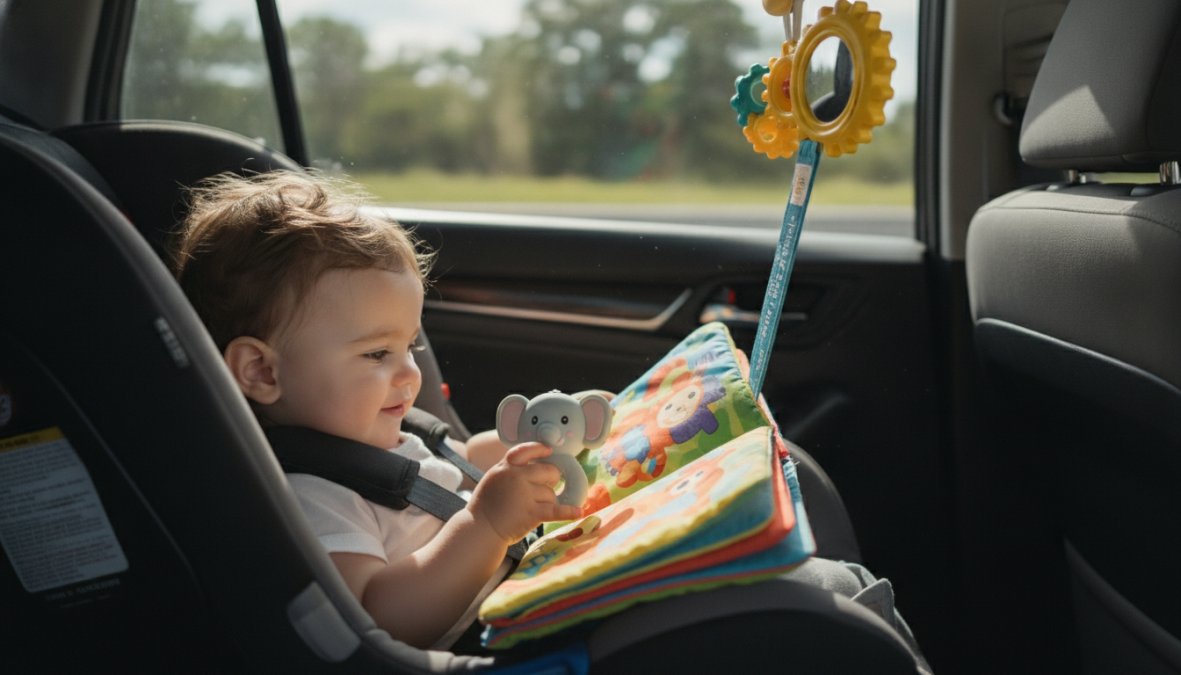
Babies’ eyes are drawn to high-contrast images and bold colors, this is how their visual development works. Black-and-white board books are exceptional car toys: lightweight, battery-free, and babies can hold them independently. Crinkle books add texture and sound without being jarring. Attach them to the car seat with a clip so they stay within reach.
Sensory toys with different textures, bumpy, smooth, ridged, give babies something to explore. Silicone teething toys with varied textures serve double duty: they soothe sore gums and keep little hands busy. Toys with built-in mirrors let rear-facing babies see your face, which is surprisingly soothing.
Keep toys tethered to the car seat with short, secure clips to prevent the constant "drop and retrieve" cycle that exhausts parents.
Teething Toys and Chewables for Comfort
If your baby is teething, the right chewable toys can transform a fussy drive into a manageable one. Refrigerated teething toys provide soothing relief, pack two or three and rotate them. Silicone teething rings with different textures give babies options. Teething toys designed for car seats that attach with a clip are game-changers.
Never attach toys with cords longer than 6-8 inches to a car seat. Long strings pose strangulation risks.
How to Plan a Road Trip with a Baby: Timing and Preparation
The single biggest mistake parents make is treating a road trip with a baby like a road trip with an adult. Your baby’s schedule, comfort needs, and entertainment tolerance shape everything about the journey.
Successful road trips start with realistic planning. If your baby normally naps at 1 p.m., plan your drive to align with that window. If your baby gets fussy after two hours of activity, schedule a rest stop every two hours.
Syncing Nap Time with Drive Time
This is the most powerful strategy for long car rides. A sleeping baby is an entertained baby. Time your drive so major nap times happen while you’re on the road. If your baby typically naps from 1 p.m. to 3 p.m., start your drive at 12:30 p.m. The car’s motion and white noise often lull babies to sleep, giving you two hours of peaceful driving.
For longer trips, align your drive with your baby’s longest sleep window. Consistency matters, babies whose routines stay stable sleep better in cars.
Strategic Rest Stops and Diaper Changes
Plan rest stops before your baby gets desperate. Stop every 1.5 to 2 hours, even if your baby seems fine. This prevents the cascade of problems that starts with discomfort.
Let your baby move during rest stops. If your baby is crawling or walking, five minutes of movement resets their mood. Pack extra clothes in an easily accessible bag, not in the trunk. Wet wipes, disposable changing pads, and extra diapers should be within arm’s reach.
The best rest stop is one where your baby can move freely, you can change them comfortably, and you can both reset emotionally before getting back on the road.
Car Seat Activities for Infants: Interactive Play and Engagement
Not all entertainment is passive. Interactive activities keep attention longer and build connection during the drive.
Using Mirrors and Visual Stimulation
Rear-facing car seats mean your baby can’t see you. A car seat mirror solves this, your baby can see your face, and you can monitor them without turning around. Babies find faces endlessly fascinating. Seeing you smile and react keeps them engaged and calm.
High-contrast window decals give rear-facing babies something to focus on besides the seat in front of them.
Singing, Music, and Auditory Soothing
Live singing beats recorded music for soothing babies. Your voice is familiar and conveys calm. Sing the same songs repeatedly, babies find comfort in repetition.
White noise or nature sounds provide consistent auditory input that masks jarring traffic noise. Many parents find that white noise helps their babies sleep longer in the car. Slower tempos (60-90 beats per minute) naturally calm babies.
Record yourself singing your baby’s favorite lullabies before the trip. Hearing your voice on a loop is often more soothing than live singing when you’re focused on driving.
Baby Travel Tips: Managing Comfort and Reducing Fussiness
Entertainment is only part of the puzzle. Comfort is equally important.
Feeding Schedules and Hydration on the Road
Plan feeding stops before your baby gets hungry. A hungry baby is a fussy baby. For bottle-fed babies, bring more bottles than you think you’ll need and prepare them before you leave. For nursing mothers, plan stops where you can nurse comfortably. Nursing in a moving car is unsafe.
Offer water to babies old enough for it. Dehydration increases fussiness.
Temperature, Clothing, and Car Seat Canopy Setup
Layer your baby’s clothing so you can adjust without stopping. A car seat canopy blocks direct sunlight, reduces overheating, and creates a darker environment that encourages sleep. Pre-cool the car before your baby gets in rather than leaving it running unattended.
Check your baby’s temperature frequently by feeling the back of their neck or chest. Babies can’t regulate their temperature as effectively as adults.
Common Mistakes Parents Make When Keeping Babies Entertained in Cars
Overpacking toys is the first mistake. You bring 15 toys thinking variety will keep your baby entertained, but instead your baby gets overwhelmed. Pack five toys maximum and rotate them.
Relying on screens is tempting but backfires. Babies under 18 months shouldn’t watch screens. When the screen stops working, you have a much bigger problem.
Starting the drive too late in the day is another common error. Leave when your baby is well-rested and fed. Babies sense tension, so take deep breaths and remember that rest stops exist for a reason.
Never use car rides as a time to skip naps or feeding schedules. Your baby’s routine is what makes them predictable and calm.
Solo Parenting on Long Drives: Sanity-Saving Hacks
If you’re driving alone with your baby, accept that you might not make good time. Plan for eight hours instead of six. Build in extra rest stops.
Bring snacks for yourself. Hunger makes you irritable, which makes your baby irritable. Use audio books or podcasts to keep yourself engaged and your mood lighter.
If your baby falls asleep, don’t panic about missing a turn. Pull over safely and check your GPS. Your baby’s sleep is more valuable than shaving five minutes off your drive time.
Post-Trip Recovery: Helping Baby Readjust After Long Car Rides
When you arrive, don’t jump into activities. Spend the first hour just being. Let your baby move around and adjust to the new space.
Expect sleep disruption the first night. Your baby’s routine has been disrupted. Return to your regular routine as quickly as possible. Consistent meal times, nap times, and bedtimes help your baby reset.
If you’re renting gear for your vacation, having familiar equipment helps. At First Coast Baby Rentals, we deliver spotless, often brand-new equipment directly to your vacation rental in Saint Augustine, Jacksonville, Jacksonville Beach, Vilano, Ponte Vedra, Fernandina, Amelia Island, and surrounding areas. Familiar gear in a new space helps your baby feel more secure, and you don’t have to travel with bulky equipment.
The goal isn’t a perfectly silent drive. It’s a manageable drive where your baby is as comfortable as possible and you arrive without losing your mind.
Long car rides with babies are hard. But they’re manageable when you plan strategically, bring the right tools, and adjust your expectations. Syncing nap times, choosing the right toys, planning rest stops, and managing comfort transform chaotic drives into peaceful ones.
When you arrive at your Northeast Florida vacation destination, you’ll want everything to feel easy. First Coast Baby Rentals delivers sanitized, often brand-new cribs, strollers, car seats, and beach gear directly to your rental home. You travel light, skip the hassle of packing bulky equipment, and arrive ready to enjoy your vacation. Book your gear with First Coast Baby Rentals and focus on what matters, enjoying time with your little one on the First Coast.
Frequently Asked Questions
What are the best toys to keep a baby entertained on a long car ride?
High-contrast board books, soft sensory toys, and teething toys work best for car rides. Look for toys that attach to the car seat or are easy to retrieve. Avoid small parts that could become choking hazards. Rotate toys every 20-30 minutes to maintain novelty and engagement. Toys with mirrors, crinkly textures, and different fabrics provide visual and tactile stimulation that keeps babies calm.
How do I prepare my baby for a long car ride?
Plan your road trip around your baby's nap schedule, aim to drive during natural sleep times. Pack extra diapers, wipes, and supplies for rest stops. Bring familiar comfort items like a favorite blanket or pacifier. Practice short car rides before the long trip. Dress your baby in comfortable, easy-to-change clothing. Bring a car seat canopy if your baby is sensitive to sunlight, and ensure the car seat is properly installed and ergonomic.
Is screen time okay for babies during long car rides?
Screen time isn't necessary for keeping babies entertained on car rides, and many parents find that toys, music, and interaction work just as well. If you do use screens, limit them to short periods and prioritize interactive toys and auditory stimulation like white noise or singing instead. Babies benefit more from sensory play and parent interaction than passive screen time during travel.
What should I pack for a long car ride with a baby?
Pack a diaper bag with diapers, wipes, and changing supplies for rest stops. Bring travel-friendly toys, board books, and teething toys. Include snacks, bottles, and water. Pack extra clothes, a blanket, and comfort items. If you're flying into Northeast Florida for vacation, consider renting gear like pack-and-plays and strollers instead of packing them, First Coast Baby Rentals delivers sanitized, brand-new equipment directly to your rental home in St. Augustine, Jacksonville, Amelia Island, and surrounding areas.
This article was written using GrandRanker