
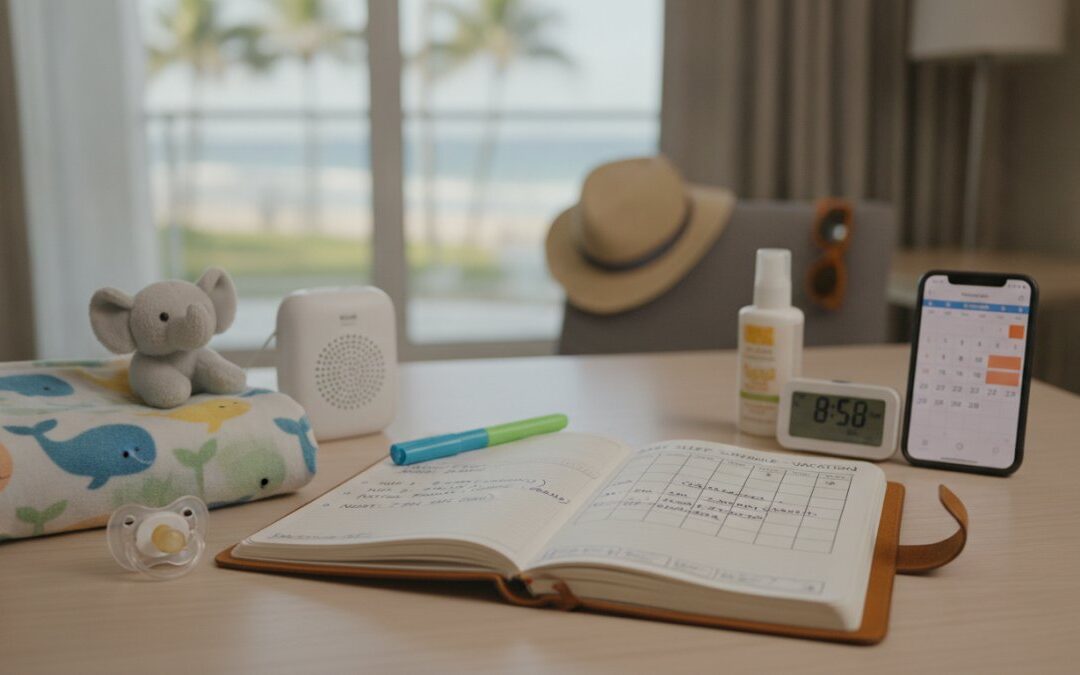
Table of Contents
- How to Manage Baby Sleep Schedule on Vacation: Start Here
- Maintaining Baby Sleep Routine on Holiday: Keep It Simple
- Managing Jet Lag and Baby Sleep: Adjusting to Time Zones
- Portable Crib for Travel: Creating a Familiar Sleep Space
- Baby Sleep Tips for Travel: The Flexibility Balance
- Common Vacation Sleep Problems and How to Fix Them
- How to Manage Baby Sleep Schedule on Vacation Without Burnout
- Conclusion: Rest Easy on Your First Coast Vacation
Manage Baby Sleep Schedule on Vacation: A Parent’s Guide
Last Updated: July 17, 2026
Figuring out how to manage baby sleep schedule on vacation doesn’t have to derail your whole trip. At First Coast Baby Rentals, we’ve helped hundreds of Northeast Florida families keep their little ones rested while exploring everything from St. Augustine’s historic streets to Jacksonville Beach’s sandy shores. A few simple strategies, applied before you leave home, can make the difference between a restful vacation and an exhausting one.
Maintaining Baby Sleep Routine on Holiday: Keep It Simple
The biggest mistake parents make is abandoning routine altogether upon arrival. You don’t need perfection, you need consistency in what matters most.
Identify your non-negotiables: a bedtime story, a specific sleep sack, or 15 minutes of wind-down time. These anchor points signal sleep is coming, even in an unfamiliar room. Pack at least one familiar comfort item, a beloved stuffed animal, particular blanket, or recording of your home’s white noise machine. When babies see and smell something they recognize, their nervous system relaxes.
Keep bedtime within an hour of your normal time, even if it means leaving an activity early. A well-rested baby means a well-rested you, and maintaining a loose bedtime routine actually gives you more freedom during the day, not less.
Plan Your Travel Times Around Naps and Bedtime
Time your departure to align with a nap window. A baby who falls asleep naturally in the car seat stays calmer during the journey. If flying, book flights that land in the afternoon so your baby has time to settle before bedtime.
During travel, keep the environment sleep-friendly. Bring a portable blackout shade for the car window and use a white noise app if needed. Once you arrive at your vacation rental, give your baby 30 minutes to decompress before jumping into activities. A calm arrival sets the tone for better sleep that night.
Pack Your Sleep Essentials Before You Leave
| Item | Why It Matters | Alternatives |
|---|---|---|
| Familiar sleep sack or blanket | Provides comfort and signals sleep time | Lightweight sleep bag for warm climates |
| Portable crib or pack-n-play | Safe, familiar sleeping surface | Travel bassinet or firm bed with guardrails |
| White noise machine or app | Masks unfamiliar sounds | Phone app with nature sounds or fan noise |
| Blackout shades or dark cloth | Controls light, especially for early mornings | Electrical tape or clip-on shades |
| Comfort items (stuffed animal, pacifier) | Familiar smell and texture | Extra set in case one gets lost |
| Favorite books for bedtime routine | Maintains pre-sleep ritual | Digital books or new stories from local library |
Don’t overpack. One or two comfort items, a portable crib, and blackout shades cover 95% of what you need. First Coast Baby Rentals can deliver quality pack-n-plays and essentials directly to your vacation rental, so you arrive with less luggage and familiar equipment.
Managing Jet Lag and Baby Sleep: Adjusting to Time Zones
If traveling across time zones, jet lag hits babies hard but is manageable with a strategic approach. Don’t try to shift your baby’s entire schedule overnight. Start adjusting 3-4 days before travel. If heading east and losing hours, move bedtime 15 minutes earlier each night. If heading west and gaining hours, push bedtime 15 minutes later.
Once at your destination, light exposure becomes your biggest tool. Morning light tells your baby’s body clock to wake up. Get them outside in natural sunlight in the morning, even 15 minutes makes a measurable difference. Research from the American Academy of Pediatrics confirms light exposure is one of the most powerful ways to reset a baby’s internal clock.
Gradual Shifts Work Better Than Sudden Changes
A three-day gradual shift is far less disruptive than a sudden one. Your baby’s body won’t rebel if bedtime moves 15 minutes at a time. For U.S. travel with a 1-2 hour time difference, your baby will adapt within a day or two with just morning light exposure. For three or more time zones, the gradual pre-travel shift is worth the effort.
Don’t let jet lag become an excuse to abandon nap times. An overtired baby adjusts to time zones much more slowly than a well-rested one. Protect at least one solid nap during your first few days.
Use Light and Darkness to Reset Your Baby’s Clock
When you arrive, open the curtains immediately and get your baby in bright light within the first hour. Natural sunlight is far more powerful than indoor light. In the evening, do the opposite: use blackout shades to create darkness starting 1-2 hours before bedtime. Dim the lights in your rental. If your rental has bright hallway lights or street lights, a simple blackout curtain or dark sheet pinned over the window makes an enormous difference.
Babies’ circadian rhythms respond strongly to light cues. Most babies adjust within 2-3 days when light exposure is managed strategically.
Portable Crib for Travel: Creating a Familiar Sleep Space
A portable crib creates a defined sleep zone in an unfamiliar room. Your baby knows this is where sleep happens. Set it up in the quietest corner of your rental, away from hallways and common areas. Use the same bedding and sleep sack your baby uses at home, the familiar smell and texture matter.
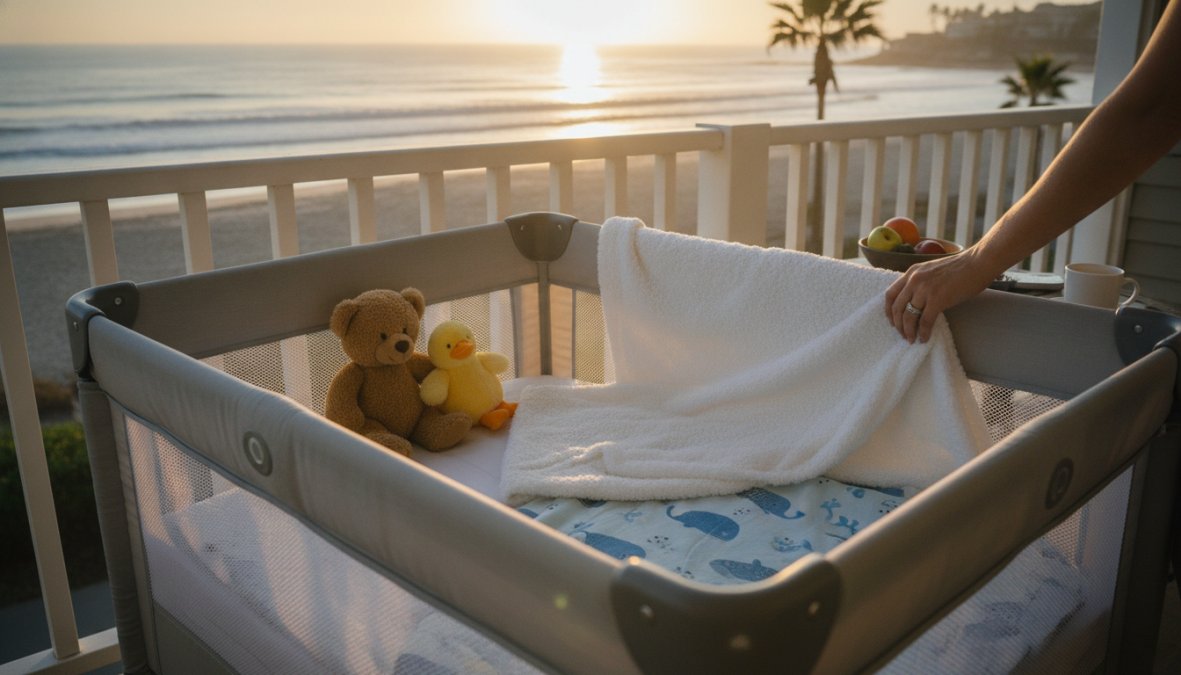
If renting through First Coast Baby Rentals, request a portable crib delivered and set up before you arrive. Everything comes sanitized and ready to use. Keep the room temperature cool, around 68-72°F. A portable white noise machine or fan helps with both temperature control and sound masking.
If your baby is used to a specific type of crib (full-size, mini, or play yard), ask your rental company what they have available. Consistency in the sleeping surface helps with faster adjustment.
Baby Sleep Tips for Travel: The Flexibility Balance
The 80/20 rule works: keep 80% of your sleep routine consistent, and let 20% flex based on vacation activities. Your baby still needs the same bedtime, wind-down routine, and sleep environment. But if you miss one nap because you’re exploring Vilano Beach, that’s okay. One disrupted nap won’t ruin sleep that night.
What will ruin sleep: staying out late every night, skipping all naps, and expecting your baby to adjust to constant change. Think of your sleep routine as the foundation. Everything else can move around it.
The 80/20 Rule: When to Hold the Line and When to Let Go
Hold the line on these things:
- Bedtime (within 30 minutes of normal)
- Sleep environment (familiar crib, familiar blanket, blackout shades)
- Wind-down routine (even a shortened version)
- At least one solid nap per day
Let go of these things:
- Exact timing of naps (as long as one happens)
- Where the nap happens (stroller, car, beach chair)
- Daytime activities that shift bedtime by 15-30 minutes occasionally
- One or two late nights for special events
Handling Multiple Children’s Sleep Schedules on Vacation
Identify which child’s sleep is most fragile and plan activities around that child’s nap times. When possible, stagger bedtimes slightly to avoid managing two sleep battles simultaneously. For room-sharing situations, use white noise to mask sounds from one child’s movements from disturbing the other.
Don’t expect multiple children to maintain perfect schedule alignment on vacation. One child will likely have a rough night or two. Focus on keeping the most vulnerable sleeper on track.
Common Vacation Sleep Problems and How to Fix Them
Noisy Hotels, Unfamiliar Beds, and Sibling Room-Sharing
White noise is non-negotiable. A portable white noise machine, fan, or app masks disruptive sounds and creates a consistent acoustic environment. If your rental has an unfamiliar bed, use your own fitted sheet and bring your baby’s sleep sack. For sibling room-sharing, position cribs as far apart as possible and use a room divider if you can.
A few nights of disrupted sleep won’t cause lasting damage, but prioritize one solid sleep night every 2-3 days so your baby doesn’t become overtired by the end of your trip.
How to Manage Baby Sleep Schedule on Vacation Without Burnout
The real challenge is managing your own stress about managing your baby’s sleep. You’re on vacation, your baby will have some rough nights. This is temporary and completely normal. The goal isn’t perfect sleep, it’s good enough sleep so everyone can enjoy the vacation.
Let go of the idea that vacation sleep will look like home sleep. Your baby might nap in the stroller instead of their crib or go to bed 30 minutes later. None of this is failure, it’s just vacation. What matters: your baby is safe, fed, and getting some rest, and you’re not running yourself ragged.
The best vacation sleep strategy is the one you’ll actually stick to. Simple beats perfect. A basic routine, familiar comfort items, and flexibility on the details will get you through most vacation sleep challenges.
Vacationing in Northeast Florida should be about making memories, not managing sleep anxiety. When you have the right equipment and a realistic plan, your baby sleeps better, which means you actually get to enjoy your time away. First Coast Baby Rentals delivers everything you need directly to your vacation rental across the First Coast, so you arrive with quality gear already in place. Book your baby gear rental today and let us handle the equipment while you focus on what matters, time with your family.
Frequently Asked Questions
How do I help my baby sleep in a new vacation environment?
Recreate familiar sleep cues from home: bring your baby's favorite sleep sack, white noise machine, or comfort items. Set up the portable crib in a quiet corner with blackout shades if possible. Stick to your normal bedtime routine, bath, story, cuddles, even if the setting looks different. Consistency with the routine matters more than the location. Most babies adjust within a few days when they recognize familiar sleep signals.
Should I keep my baby on their home sleep schedule when traveling?
It depends on your trip length and time zone change. For short vacations (under a week) with minimal time zone shifts, keep your home schedule. For longer trips or significant time zone changes, gradually shift your baby's schedule 2-3 days before travel. Prioritize one solid nap during the day and protect bedtime, these are your non-negotiables. Everything else can flex while you're on vacation.
What sleep essentials should I pack for baby when traveling to St. Augustine or Jacksonville Beach?
Pack your baby's sleep sack, favorite stuffed animal or lovey, white noise machine or app, and any special pillow they use. Bring blackout shades or a dark cloth for windows. If you're renting a portable crib, consider what familiar bedding helps your baby relax. First Coast Baby Rentals delivers sanitized, high-quality pack-n-plays and cribs to St. Augustine, Jacksonville Beach, and surrounding areas, so you can travel light and still have reliable sleep gear waiting at your rental.
How do I prevent my baby from becoming overtired on vacation?
Watch for overtired cues: rubbing eyes, fussiness, or hyperactivity. Plan your activities around wake windows, the time your baby can comfortably stay awake. Protect nap time, especially one solid nap during the day, even if it means skipping an activity. An overtired baby sleeps worse at night and is harder to manage. Building in downtime and flexibility helps prevent that exhausted, overstimulated state that derails sleep for days.
This article was written using GrandRanker