Table of Contents
- Planning Your First Vacation With Baby: Where to Start
- Flying With a Baby: Tips That Actually Work
- Baby Travel Essentials Checklist for Every Trip
- Best Baby-Friendly Vacation Destinations on the First Coast
- Maintaining Baby Sleep Routine While Traveling
- Feeding, Diapering, and Health on the Road
- Common Travel Mistakes to Avoid on Your First Trip
- Budgeting for Baby Travel Without Breaking the Bank
Last Updated: July 15, 2026
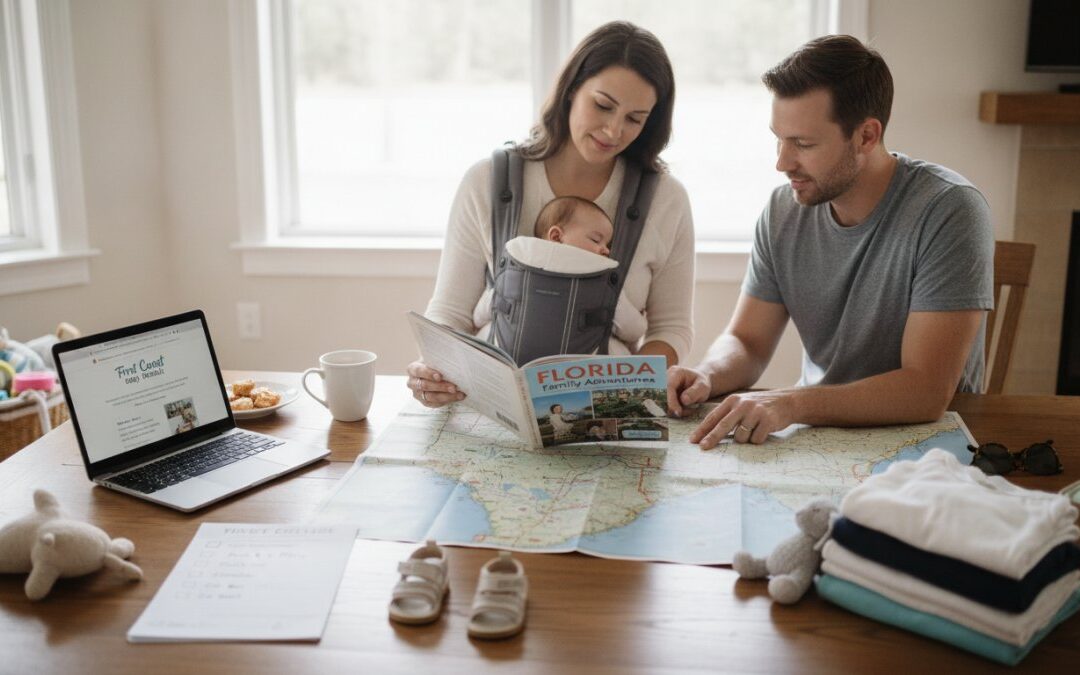
Your first family vacation with a baby doesn’t have to be overwhelming. This guide breaks down everything you need to know to travel confidently with your little one, whether you’re heading to St. Augustine Beach, Jacksonville, or the quieter retreats of Ponte Vedra.
Planning Your First Vacation With Baby: Where to Start
The biggest mistake parents make is overpacking. Travel light, vacation right. Choose your destination based on what works for your baby’s age and temperament, not what sounds fun for adults.
Babies under 6 months need consistent naps and feeding schedules. A 15-month-old wants to explore everything. St. Augustine’s historic downtown and beaches offer shaded spots for rest, while Jacksonville Beach has family-friendly amenities for diaper changes and feeding.
Start planning 6-8 weeks before your trip to book accommodations and arrange gear rentals without rushing.
Call your pediatrician before booking. Ask about vaccinations your baby might need for your destination and whether travel poses any risks.
Timing Your Trip: Age and Readiness
Most pediatricians say babies are ready to travel around 3 months old, once their immune systems have developed. Babies aged 6-12 months are often the easiest travelers, past newborn fragility, not yet mobile enough to require constant supervision, and many nap reliably. Toddlers aged 1-3 can be trickier because they want to explore everything and may resist new sleep environments.
Avoid traveling during major developmental leaps, when your baby is clingy or struggling to sleep.
Choosing Between Flying and Driving
A road trip under 3 hours is usually easier than flying. You control the pace and can pull over whenever needed. For Northeast Florida destinations, driving from most of the Southeast is manageable.
Flying requires more coordination but saves time for distant destinations. If your destination is more than 5 hours away by car, flying often wins. If flying into Jacksonville Airport, arrange ground transportation in advance. First Coast Baby Rentals delivers car seats and travel gear directly to your vacation rental, eliminating airport hassle.
Flying With a Baby: Tips That Actually Work
Nursing or bottle-feeding during takeoff and landing helps equalize ear pressure and keeps your baby calm. Bring two extra changes of clothes in your carry-on for blowouts and spit-up. Arrive 3 hours early for security, diaper changes, and unexpected delays.
Never check your car seat as regular luggage, it can be damaged. Gate-check it instead (free and safe), or rent one at your destination.
TSA Regulations and What You Can Bring
The TSA allows baby formula, breast milk, and baby food in carry-on bags without liquid restrictions. Diapers, wipes, and diaper cream are allowed in carry-on and checked baggage. Bring a portable changing pad, as many airplane lavatories have fold-down tables that are small or broken. Pacifiers, teething rings, and small toys help keep your baby calm during flight.
Managing Jet Lag and Cabin Pressure
If flying east, arrive a day early if possible to let your baby adjust before your vacation starts. Nursing or bottle-feeding during ascent and descent helps babies’ ears adjust to cabin pressure. After landing, get outside in natural light as soon as possible, sunlight helps reset your baby’s internal clock. Plan for 2-3 days of adjustment before expecting normal sleep schedules.
Baby Travel Essentials Checklist for Every Trip
You absolutely need: car seat (if driving), stroller, portable crib or pack-and-play, diaper bag, and appropriate clothing. You do not need to bring your full-size crib, high chair, or bulky baby carrier. First Coast Baby Rentals delivers spotless, sanitized equipment directly to your vacation rental in St. Augustine, Jacksonville, Ponte Vedra, Amelia Island, and surrounding areas.
Packing Smart: Diaper Bag and Carry-On Gear
Pack your diaper bag the night before with: diapers, wipes, diaper cream, plastic bags, a change of clothes, a blanket, pacifiers, and a toy. For flights, use your diaper bag as a personal item for easy access. Bring nursing pads if breastfeeding, a water bottle to stay hydrated, and pre-measured formula packets or bottles if using formula. Pack sunscreen (SPF 30+) in your carry-on for sunny destinations.
Checked Luggage Must-Haves
Pack extra diapers, wipes, clothing, and formula. Include a first aid kit with infant pain reliever, anti-diarrheal medication, and a thermometer. Bring a white noise machine if your baby uses one at home, along with comfort items like a favorite stuffed animal, sleep sack, or blanket. Include lightweight, breathable clothing in layers for temperature adjustments.
| Packing Category | Carry-On Essentials | Checked Luggage Backup | Notes |
|---|---|---|---|
| Diapers & Wipes | 8-10 diapers, small pack of wipes | 2-3 days’ worth | TSA allows all quantities |
| Clothing | 2 changes (spit-up, blowouts) | 5-7 additional outfits | Include seasonally appropriate layers |
| Feeding | Formula packets, bottles or nursing pads | Extra formula, backup bottles | Pre-measured formula saves stress |
| Sleep | Comfort item (stuffed animal) | Sleep sack, white noise machine | Familiar items ease adjustment |
| Health & Safety | Thermometer, pain reliever | First aid kit, prescription meds | Include acetaminophen and ibuprofen |
| Miscellaneous | Pacifiers, small toy | Extra pacifiers, teething ring | Backup pacifiers prevent meltdowns |
Best Baby-Friendly Vacation Destinations on the First Coast
Northeast Florida offers several baby-friendly destinations without requiring flights.
St. Augustine and Vilano Beach: History Meets Family Fun
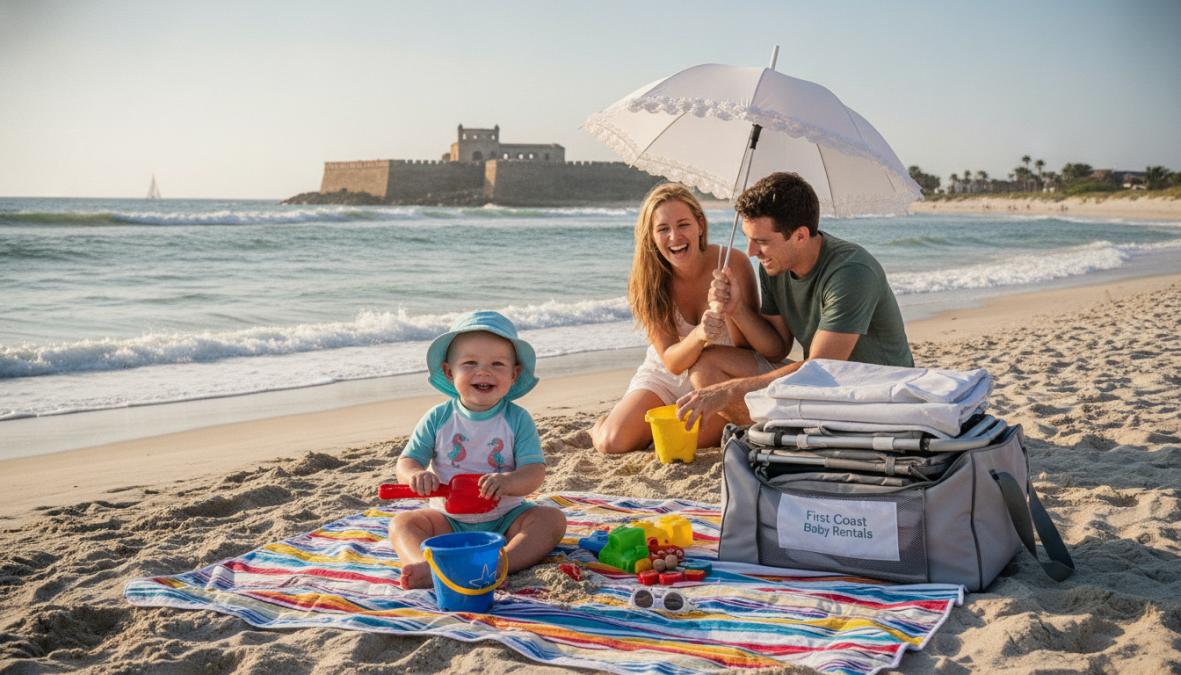
St. Augustine is America’s oldest city and surprisingly baby-friendly. The historic district has shaded walkways, benches for nursing, and restaurants with high chairs. Vilano Beach, just north of downtown, is quieter than other Northeast Florida beaches, ideal for families with young babies. The pace is slow, allowing you to walk cobblestone streets and explore at your own speed. The Fountain of Youth Archaeological Park has stroller-friendly paths and shaded areas. First Coast Baby Rentals delivers strollers, pack-and-plays, and beach gear directly to your St. Augustine vacation rental.
Jacksonville Beach, Amelia Island, and Fernandina: Beach Bliss
Jacksonville Beach offers an active beach vacation with a boardwalk, shops, and restaurants. The beach is wide and sandy, perfect for strollers. Amelia Island, about 30 minutes north, feels quieter and more upscale. Fernandina’s historic downtown has outdoor seating and a slower pace. Both destinations have strong family infrastructure: pediatricians, pharmacies, grocery stores, and baby-friendly restaurants. First Coast Baby Rentals serves these areas, delivering high chairs, strollers, and beach wagons.
Ponte Vedra and Nocatee: Quieter Retreats
Ponte Vedra is a planned community south of Jacksonville Beach, known for golf courses and a quieter, residential feel. Nocatee is even quieter, a newer planned community with parks and family-friendly amenities. Both areas have excellent restaurants, grocery stores, and pediatric care nearby.
Maintaining Baby Sleep Routine While Traveling
Sleep is the biggest challenge when traveling with a baby. Unfamiliar environments, time zone changes, and disrupted routines all affect sleep. Maintain as much of your baby’s sleep routine as possible while accepting some disruption is inevitable. Expect sleep to be worse during the first 2-3 days. By day 4-5, most babies settle in.
Setting Up a Safe Sleep Space
If the rental has a full-size crib, use it. If not, rent a pack-and-play from First Coast Baby Rentals and place it in the room where you’re sleeping, babies sleep better when they can sense a parent nearby. Keep the room dark with blackout curtains and cool (around 68-72°F). Set up the sleep space during a calm moment before your baby gets tired.
Managing Nap Time and Sleep Schedule Shifts
If your baby won’t nap in the pack-and-play, try napping them in the stroller. If crossing time zones, shift your baby’s schedule gradually. For Northeast Florida destinations (same time zone as most of the Southeast), time zone adjustment isn’t necessary. Expect bedtime to be later on vacation, this is temporary.
The single biggest factor in vacation sleep success is managing your expectations. Your baby will not sleep like they do at home. Accept this, and you’ll enjoy your trip more.
Feeding, Diapering, and Health on the Road
Nursing and Formula Feeding While Traveling
If breastfeeding, bring nursing pads and a nursing cover for public spaces. If formula feeding, pre-measure formula into bottles or bring pre-made bottles. Bring enough formula to cover your trip plus 50% extra. Florida grocery stores carry all major formula brands. If your baby eats solids, bring their favorite foods in pouches or jars.
First Aid Kit and Health Essentials
Pack a basic first aid kit: infant pain reliever, anti-diarrheal medication, anti-gas drops, and any prescription medications. Include a thermometer. Bring sunscreen rated SPF 30 or higher. Babies under 6 months shouldn’t have direct sun exposure. Pack insect repellent if visiting during mosquito season (May-October). Know the location of the nearest pediatrician or urgent care clinic to your vacation rental.
Common Travel Mistakes to Avoid on Your First Trip
Overpacking is the number one mistake, you can buy almost anything in Florida. Underestimating how much your baby will sleep is another; babies often sleep more on vacation from exhaustion. Don’t plan activities during nap times. Choose a close destination with good family infrastructure rather than an overly ambitious multi-state road trip. Ask your vacation rental about cribs, high chairs, or pack-and-plays before booking, and rent from First Coast Baby Rentals if needed. Confirm gear rentals in advance, arrive a day early to let your baby settle, and embrace flexibility over strict schedules.
Budgeting for Baby Travel Without Breaking the Bank
A vacation rental with a kitchen saves money compared to eating every meal out. Renting gear instead of buying saves money and luggage space. Choose free or low-cost activities, Northeast Florida beaches are free, walking downtown St. Augustine is free, and playing at parks is free. Eat breakfast at your vacation rental and buy groceries for snacks and simple meals. Book during off-season or shoulder season (May-June or September-October) for lower prices and fewer crowds.
Planning your first vacation with a baby requires thoughtful preparation, but it’s absolutely doable. Northeast Florida, with its calm beaches, historic towns, and family-friendly infrastructure, is ideal for first baby vacations. First Coast Baby Rentals makes logistics easier by delivering sanitized, high-quality gear directly to your vacation rental in St. Augustine, Jacksonville, Jacksonville Beach, Vilano, Ponte Vedra, Fernandina, Amelia Island, and surrounding areas. Travel light, vacation right, and focus on enjoying your baby’s first trip.
Frequently Asked Questions
At what age can a baby go on their first vacation?
Most pediatricians recommend waiting until your baby is at least 3 months old before flying or taking long trips. At this age, their immune system is stronger and feeding routines are more established. For road trips, babies can travel at any age, many families take short drives home from the hospital. Always check with your pediatrician before planning your first vacation with baby to ensure they're healthy for travel.
What should I pack in my diaper bag for flying with a baby?
Pack extra diapers (more than you think you'll need), wipes, a change of clothes for your baby and yourself, nursing pads or bottles, formula if needed, a small first aid kit, a white noise machine or app, and comfort items like a favorite toy. Keep this in your carry-on so you have everything accessible during the flight. Don't forget TSA-approved items like baby food, breast milk, and formula, these are allowed in carry-on luggage without size restrictions.
How do I maintain my baby's sleep schedule while traveling?
Try to keep nap times and bedtimes as consistent as possible, even if they're slightly shifted for your destination's time zone. Bring familiar comfort items like a favorite blanket or stuffed animal. A travel crib or pack n play helps create a familiar sleep environment. White noise machines or apps can mask unfamiliar sounds. If your rental accommodation doesn't have the gear you need, services like First Coast Baby Rentals deliver sanitized, brand-new equipment directly to your vacation rental in St. Augustine, Jacksonville, Amelia Island, and surrounding areas.
What are the biggest mistakes parents make when planning their first vacation with baby?
Common mistakes include overpacking gear you won't use, not booking baby-friendly accommodations in advance, ignoring your baby's sleep schedule, traveling when your baby is sick or teething, and forgetting to check TSA regulations. Many parents also underestimate how much feeding and diaper supplies they'll need. Plan ahead, keep your baby's routine as normal as possible, and don't hesitate to rent gear instead of bringing everything, it saves space and stress.
This article was written using GrandRanker