Table of Contents
- Where to Rent a Baby Carrier in Jacksonville (Top Providers Compared)
- Baby Carrier Comparison Guide: Which Type Should You Rent?
- Baby Gear Rental Jacksonville FL: What Else Can You Rent?
- Stroller Rental Jacksonville: Pairing Your Carrier With the Right Ride
- Safety Certification Verification: What to Ask Before You Rent
- How to Rent Baby Gear for Vacation: A Step-by-Step Walkthrough
- Traveling With Baby to Jacksonville: A Baby-Friendly Itinerary
- Conclusion: Rent Baby Carrier in Jacksonville and Travel Light
Last Updated: May 15, 2026
Packing for a trip with a baby is already a logistical puzzle, and hauling bulky gear makes it worse. If you want to rent baby carrier Jacksonville for your upcoming trip to the First Coast, you have more options than most parents realize. First Coast Baby Rentals has helped dozens of visiting families skip the baggage fees and vacation-day stress by delivering sanitized, high-quality gear directly to their rental properties. Below, we cover the top providers, the right carrier type for Florida’s heat, and a practical checklist to make your reservation smooth.
Here’s what most guides get wrong: they treat baby carriers as an afterthought in a long list of rental gear. The carrier is often the single most-used piece of equipment on a beach vacation, a nature trail, or a downtown stroll. Getting the right one matters more than people expect.
Where to Rent a Baby Carrier in Jacksonville (Top Providers Compared)
Baby gear rental in Jacksonville and the surrounding Northeast Florida area has grown significantly. Families visiting Saint Augustine, Ponte Vedra, Amelia Island, and Jacksonville Beach now have access to several reliable services. The table below gives you a fast comparison before we go deeper on each option.
| Provider | Starting Price | Delivery | Best For |
|---|---|---|---|
| First Coast Baby Rentals | Contact for quote | Yes, to your rental | Local families, Northeast FL |
| BabyQuip | From $4/day | Yes, via local providers | National travelers |
| Baby’s Away | Contact for quote | Yes | Long-term or corporate stays |
| Cloud of Goods | Contact for quote | Yes | One-stop gear shopping |
| Baby’s Getaway | Contact for quote | Yes | Transparent rental plans |
1. First Coast Baby Rentals, Best for Northeast Florida Families
First Coast Baby Rentals is the top editorial pick for families visiting Saint Augustine, Jacksonville Beach, Fernandina Beach, Amelia Island, Ponte Vedra, and Nocatee. The reason is simple: this is a local, dedicated service built specifically for the First Coast, not a national platform with variable local coverage.
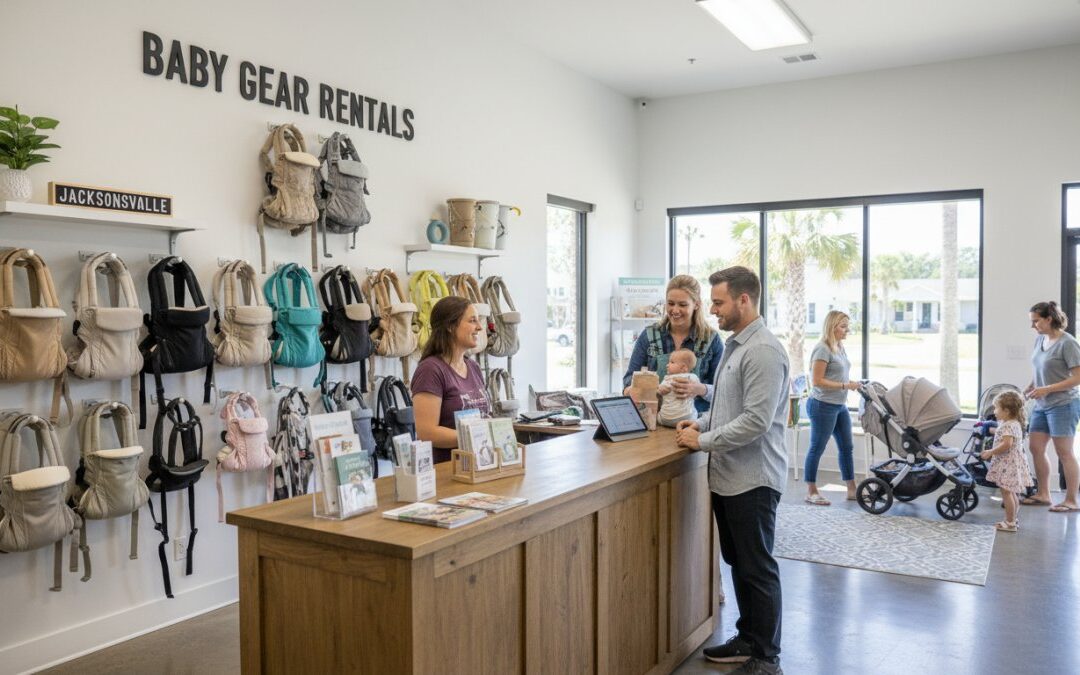
Every item arrives sanitized, inspected, and often brand-new. The team delivers directly to your vacation rental and sets the gear up for you, which matters when you arrive at 9 PM with a tired toddler. They also accommodate last-minute reservations, something national platforms often cannot guarantee.
Pros:
- Delivery and setup at your vacation rental
- Every item sanitized and inspected before delivery
- Equipment is frequently brand-new condition
- Flexible rental extensions for weather delays
- Punctual, informative service
Best for: Families vacationing anywhere along the Northeast Florida coast who want hands-off, local-expert service.
If a storm rolls in and your beach plans get pushed back, First Coast Baby Rentals allows rental extensions due to poor weather. This is a genuinely rare policy that national platforms rarely offer.
2. BabyQuip, Best National Marketplace Option
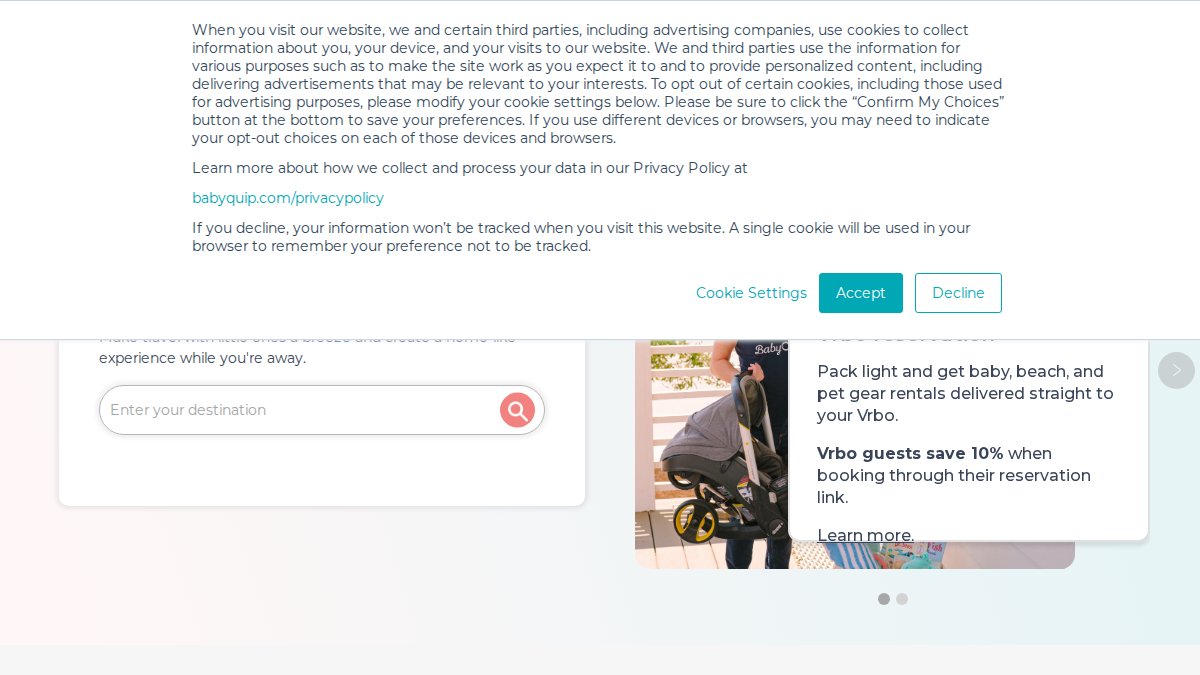
BabyQuip operates as a marketplace connecting travelers with independent local Quality Providers. Pricing starts from $4/day, though the final cost depends on the specific provider in your area. Carriers available through BabyQuip typically include soft structured carriers, slings, and hiking backpack carriers.
The platform provides insurance coverage for rentals, which adds a layer of confidence. Delivery and setup go directly to hotels, vacation rentals, or airports.
Watch out for: Provider quality and inventory vary by location. Jacksonville coverage exists, but availability is not guaranteed the way a dedicated local service can be.
3. Baby’s Away, Best for Long-Term or Corporate Stays
Baby’s Away has been in the baby gear rental business for decades, with locations across the country. For families relocating temporarily or corporate travelers with extended stays in the Jacksonville area, this is worth exploring. Contact them directly for pricing, as rates depend on duration and gear type.
4. Cloud of Goods, Best One-Stop-Shop Platform
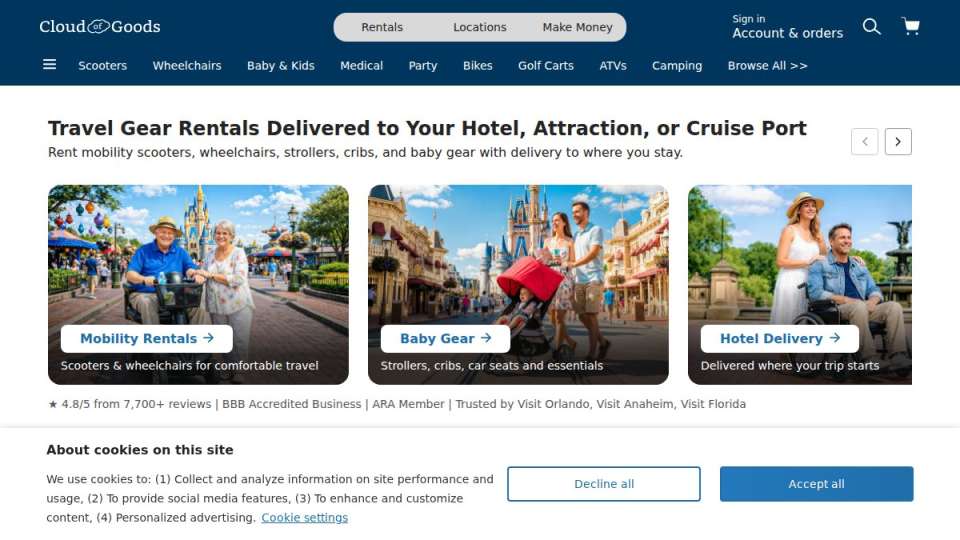
Cloud of Goods is a BBB-accredited online marketplace covering baby gear, mobility aids, and event rentals. Their Jacksonville-area inventory includes strollers, car seats, and carriers. The website is easy to navigate, with clear product descriptions and online booking. Inventory availability can fluctuate with local demand, so booking early is smart.
5. Baby’s Getaway, Best for Transparent Rental Plans
Baby’s Getaway focuses on straightforward rental terms with no hidden charges and a replacement guarantee if equipment is unsatisfactory. Pricing is quote-based rather than immediately visible, so you will need to reach out to confirm availability for specific carrier types in the Jacksonville area.
Baby Carrier Comparison Guide: Which Type Should You Rent?
Renting the wrong carrier type is one of the most common mistakes families make. The carrier that works perfectly in a cool Pacific Northwest forest will leave you and your baby overheated on a Jacksonville Beach boardwalk in July. Most rental guides list ‘soft structured carrier’ as a single option and move on. This guide goes further: it breaks down the specific models most commonly available through Jacksonville-area rental services, maps each one to the local terrain and climate, and tells you exactly what to ask for when you call.
The Florida Heat Problem: Why Fabric Is the First Decision
Before you think about brand or price, think about fabric. Jacksonville averages high humidity from May through September, and heat index values regularly exceed 100°F during peak summer travel season. Infants cannot regulate body temperature the way adults can, their sweat glands are less developed, and a carrier that traps heat against their torso becomes a genuine safety concern, not just a comfort issue.
According to American Academy of Pediatrics guidance on infant heat safety, caregivers should watch for signs of overheating including flushed skin, rapid breathing, and unusual fussiness, all of which can develop faster in a carrier than in a stroller because the child is pressed against an adult body generating its own heat.
For Florida conditions, the fabric hierarchy looks like this:
| Fabric Type | Breathability | Best Season | Watch Out For |
|---|---|---|---|
| 3D mesh (e.g., Ergobaby Omni Breeze) | Excellent | Year-round in FL | Less structured feel for newborns |
| Linen-cotton blend (e.g., Tula Free-to-Grow) | Good | Spring/Fall | Heavier when wet from sweat |
| Standard canvas/nylon | Poor | Winter only | Traps heat rapidly in summer |
| Woven wrap | Variable | Depends on weave | Learning curve; not ideal for rentals |
Avoid requesting a standard canvas or thick nylon carrier for any Jacksonville trip between May and October. Even a short walk from a parking lot to the beach can cause a baby to overheat in a non-ventilated carrier. Always ask the rental provider specifically whether the carrier has mesh panels before confirming your booking.
Soft Structured Carriers: The Right Choice for Most Jacksonville Trips
Soft structured carriers (SSCs) are padded, buckle-based carriers that hold infants and toddlers close to the wearer’s body. They are compact, easy to put on without assistance, and work well for urban walking, theme parks, beach boardwalks, and restaurant waits. They are the most commonly available carrier type through Jacksonville-area rental services.
The models most frequently stocked by local and national rental providers in this region include:
Ergobaby Omni Breeze
The Omni Breeze is the most rental-friendly SSC for Florida because its SoftFlex mesh is designed specifically for airflow. It accommodates newborns through toddlers up to approximately 45 lbs without a separate infant insert, which reduces the number of components a renting family has to manage. The four carry positions (front inward, front outward, hip, and back) make it versatile across developmental stages. When requesting this model, confirm the provider stocks the Breeze variant specifically, the standard Omni 360 uses a different fabric that is noticeably warmer.
Tula Free-to-Grow (FTG)
The Tula FTG is a popular alternative that accommodates newborns from approximately 7 lbs without an insert. The linen-cotton blend versions offer reasonable breathability, though they are not as ventilated as the Ergobaby mesh options. The Tula’s wider waistband distributes weight well for longer carries, making it a good choice for parents planning a full day at the Jacksonville Zoo or a long walk through the Saint Augustine historic district. Ask whether the provider stocks a linen or canvas version, the canvas runs significantly warmer.
LÍLLÉbaby Complete
The LÍLLÉbaby Complete is a six-position carrier that handles newborns through toddlers up to approximately 45 lbs. Its lumbar support panel is a genuine differentiator for parents with lower back sensitivity. The standard version uses a jersey-mesh blend that performs adequately in Florida heat, though it is not as breathable as the Ergobaby Breeze. This is a reasonable choice for cooler months or for parents prioritizing back support over maximum ventilation.
Hiking Backpack Carriers: Worth It for Specific Jacksonville Itineraries
Hiking backpack carriers are rigid-frame carriers designed for trails and longer outdoor excursions. They typically accommodate toddlers who can sit independently (generally around 6 months and up, depending on the model) and offer sun shades, storage pockets, and better ventilation for the child because the child sits away from the wearer’s body rather than pressed against it.
For most Jacksonville-area beach trips, a hiking backpack carrier is overkill. But for two specific itineraries, it is worth the upgrade:
- Timucuan Ecological and Historic Preserve: The shaded trails here are manageable but uneven in places, and a hiking carrier’s rigid frame provides better stability on rooted paths than a soft carrier.
- Little Talbot Island State Park: The nature trails and dune crossings here are easier with a hiking carrier that keeps the child elevated and ventilated, and the storage pockets are genuinely useful for snacks, sunscreen, and a small water bottle.
The Deuter Kid Comfort and Osprey Poco series are the models most commonly available through rental services that stock hiking carriers. Both accommodate children up to approximately 48 lbs and include integrated sun hoods. The Osprey Poco has a slightly more compact fold for transport, which matters if you are also renting a stroller and space in your rental vehicle is limited.
If you are visiting Jacksonville primarily for beach days and one or two nature walks, rent a soft structured carrier with mesh fabric for the beach days and ask your provider whether they offer a hiking carrier add-on for the trail day. First Coast Baby Rentals and BabyQuip local providers can often accommodate mixed-gear requests for the same rental period.
Carrier Fit by Baby’s Age and Weight: A Quick Reference
Weight limits and positioning requirements vary by model, and rental providers do not always volunteer this information upfront. Use this reference when you call:
| Baby’s Age/Stage | Recommended Carrier Type | Key Question to Ask Provider |
|---|---|---|
| Newborn to 4 months | SSC with newborn-ready design (no insert needed) | ‘Does this model require a separate newborn insert?’ |
| 4-9 months | Any SSC; front inward or outward | ‘What is the minimum weight for front-outward carry?’ |
| 9-18 months | SSC or hiking carrier | ‘What is the weight limit, and does the waistband adjust for my frame?’ |
| 18 months and up | Hiking backpack carrier for trails; SSC for urban | ‘Can my child sit independently? Is the seat panel wide enough for their hips?’ |
Choosing the Right Carrier for Florida’s Climate and Activities
The decision tree for most Jacksonville families is straightforward once you map your itinerary:
- Beach days + historic district walking: Ergobaby Omni Breeze or equivalent mesh SSC. Prioritize ventilation above everything else.
- Nature trails + preserve visits: Hiking backpack carrier with sun hood. Confirm the child meets the minimum age and weight for independent sitting.
- Theme parks or long urban days: Tula FTG or LÍLLÉbaby Complete for the lumbar support on extended carries. Choose a linen or mesh version.
- Mixed itinerary: Rent a mesh SSC as your primary carrier and ask about a hiking carrier add-on for trail days.
The thing nobody tells you about renting carriers in a humid climate is that breathability matters more than the brand name. A well-ventilated carrier from a lesser-known brand will outperform a premium carrier with thick padding in 90-degree heat. When in doubt, ask the provider to describe the fabric before you confirm, any reputable service will know exactly what their inventory is made of.
Baby Gear Rental Jacksonville FL: What Else Can You Rent?
Baby gear rental in Jacksonville FL extends well beyond carriers. Most providers offer a full inventory of equipment, which means you can pack a single carry-on and have everything waiting at your rental property.
Cribs, Bassinets, and Pack N Plays
Cribs and bassinets are the most-requested rental items after strollers. Options typically include standard cribs, portable bassinets, and Pack N Plays for families who prefer a familiar sleep environment. For newborns, a Snoo rental in Saint Augustine or a Snoo rental in Ponte Vedra is available through select local providers. Safe sleep standards from Safe to Sleep campaign by the National Institute of Child Health and Human Development apply regardless of whether the crib is owned or rented, so always verify that the rental meets current safety guidelines.
Strollers, Jogging Strollers, and Beach Wagons
Stroller rental in Jacksonville and stroller rental in Saint Augustine are popular because families quickly realize that their lightweight umbrella stroller does not handle beach sand well. Options worth asking about include:
- Jogging strollers (BOB stroller rental in Saint Augustine, BOB stroller rental in Fernandina Beach): ideal for paved trails and light terrain
- City Mini rental in Ponte Vedra or City Mini rental in Saint Augustine: compact, foldable, and easy to navigate in restaurants and shops
- UPPAbaby rental in Jacksonville Beach: premium option for families who want a full-featured stroller
- Doona rental in Saint Augustine: a car seat that converts to a stroller, excellent for airport arrivals
- Beach wagons: a practical alternative on soft sand where strollers struggle
Car Seats, High Chairs, and Mealtime Gear
Car seat rental at Jacksonville Airport is one of the highest-demand items for flying families. A car seat rental in Jacksonville eliminates the need to gate-check your own seat and risk damage. High chair rental in Saint Augustine and high chair rental in Amelia Island round out the mealtime gear category, along with portable booster seats and travel high chairs for restaurant visits.
Stroller Rental Jacksonville: Pairing Your Carrier With the Right Ride
The smartest traveling families use a carrier and a stroller together, not as either-or options. The carrier handles the moments when a stroller cannot, including crowded markets, beach access paths, and restaurant waits. The stroller handles longer stretches where carrying becomes tiring.
For Jacksonville Beach and Saint Augustine Beach trips, a beach wagon paired with a soft structured carrier covers nearly every scenario. The wagon handles gear and tired toddlers on flat sand; the carrier takes over for narrower paths and indoor spaces.
Nuna rental in Saint Augustine and Nuna rental in Jacksonville are worth requesting if you want a stroller that transitions smoothly from airport to beach without multiple gear swaps. These premium strollers pair well with ergonomic carriers because both prioritize ergonomic positioning for the child.
Safety Certification Verification: What to Ask Before You Rent
This is the section most rental guides skip entirely. Safety certification verification is the single most important step before accepting any rented baby gear, and it takes less than five minutes.
Before accepting a carrier rental, ask these questions:
- Has this carrier been recalled? (Check the CPSC product recall database for current recalls)
- What is the maximum weight limit for this carrier?
- Has the carrier been inspected for frayed straps, broken buckles, or compromised stitching?
- When was it last sanitized, and what cleaning method was used?
- Does the carrier meet ASTM or JPMA safety standards?
- Is the carrier still within its manufacturer-recommended lifespan?
For car seats specifically, always confirm the seat has not been involved in a collision and has not passed its expiration date (printed on the seat itself). A reputable provider will have documentation ready. If they hesitate, that hesitation is your answer.
The difference between a trustworthy rental provider and a risky one is documentation. Any provider who cannot answer the safety checklist above confidently should not have your business.
How to Rent Baby Gear for Vacation: A Step-by-Step Walkthrough
Knowing how to rent baby gear for vacation efficiently saves time and prevents the last-minute scramble that leaves families without critical gear.
Step 1: List your gear needs before you search. Write down every item by category: sleep gear, feeding gear, transportation, and carriers. Knowing exactly what you need prevents over-renting and under-renting.
Step 2: Book your rental before you book your flights. Popular items like Doona car seat strollers and jogging strollers sell out during peak Florida travel season. Booking early locks in availability.
Step 3: Confirm your delivery address and arrival time. Most local providers need a confirmed check-in time to schedule delivery. Provide your vacation rental address and a contact number.
Step 4: Ask about setup service. The best providers, including local services in the Saint Augustine and Northeast Florida area, deliver and set up gear so it is ready when you walk in the door.
Step 5: Inspect everything on arrival. Check straps, buckles, and fabric before your first use. Confirm the gear matches what you ordered.
Step 6: Know the extension policy. Florida weather changes fast. A rental provider that allows extensions for weather delays gives you real flexibility.
Traveling With Baby to Jacksonville: A Baby-Friendly Itinerary
Jacksonville and the surrounding First Coast offer genuinely excellent options for families traveling with babies and toddlers. The key is knowing which activities work with a carrier, which require a stroller, and how to sequence the day around nap windows so you are not managing a meltdown at the worst possible moment. The itinerary below is built around the gear rental combinations covered in this guide, with specific notes on terrain, shade, parking, and timing.
How to Use This Itinerary
Each stop below includes:
- Gear recommendation: which carrier or stroller configuration works best
- Terrain note: what the ground is actually like (critical for stroller decisions)
- Shade rating: how much sun exposure to expect (important for infant safety in Florida heat)
- Best timing: when to go relative to nap schedules and peak crowd times
This is not a rigid schedule. It is a modular menu, pick the stops that match your baby’s age, your rental gear, and your energy level.
Stop 1: Saint Augustine Historic District
Gear: Mesh soft structured carrier (primary), stroller optional but not recommended
Terrain: Cobblestone streets, narrow brick sidewalks, uneven surfaces throughout
Shade rating: Moderate, buildings provide intermittent shade, but open plazas are fully exposed
Best timing: Early morning (8-10 AM) before heat peaks; or late afternoon after 4 PM
The cobblestone streets and narrow passages of Saint Augustine’s historic district are ideal carrier territory. Many of the older buildings along St. George Street and around Castillo de San Marcos are not stroller-accessible, and the cobblestones make stroller pushing genuinely difficult even on the accessible sections. A soft structured carrier keeps your hands free while you navigate the bayfront and the narrow shop entrances.
Practical logistics: Parking is available at the Saint Augustine Visitor Information Center on San Marco Avenue, with a short walk to the historic core. The walk from the parking area to Castillo de San Marcos is flat and paved, use the stroller here if you have one, then switch to the carrier once you enter the historic district proper. The Castillo itself has gravel paths and uneven stone surfaces inside; the carrier is the right call for the interior.
Nap strategy: If your baby naps in the carrier, the historic district walk is an ideal nap window. The motion of walking on cobblestones is often enough to keep a light sleeper settled. Plan your café stop or lunch break to coincide with the end of the nap so you are not navigating a narrow restaurant with a sleeping baby in a carrier.
The Lightner Museum on King Street has wide, climate-controlled interior spaces and is stroller-friendly inside. If the heat peaks earlier than expected, this is a good mid-morning retreat. The museum’s courtyard café is manageable with a carrier or a compact stroller.
Stop 2: Jacksonville Beach or Ponte Vedra Beach
Gear: Beach wagon (primary for gear and tired toddlers on sand), mesh SSC (for beach access paths and pavilion areas)
Terrain: Soft sand from dune crossings to waterline; paved boardwalk access at most public beach accesses
Shade rating: Low to none at the waterline; some shade at pavilions and under beach umbrellas
Best timing: Morning arrival before 10 AM to avoid peak UV hours; plan to leave or move to shade by 11 AM-1 PM
A beach wagon handles gear and a tired toddler on the sand far better than a stroller. Most standard stroller wheels sink into soft sand within a few feet of the dune crossing. A wagon with wide, all-terrain wheels rolls across dry sand with significantly less effort and doubles as a shaded rest spot for a baby who needs a break from the carrier.
Ponte Vedra Beach tends to be quieter and less crowded than Jacksonville Beach, making it more manageable with young children. The public beach accesses at Ponte Vedra are generally well-maintained with paved or boardwalk approaches, which means you can push the wagon from the parking area to the sand without carrying it.
Practical logistics: Jacksonville Beach has metered parking along 1st Street North and South with reasonable availability on weekday mornings. The main beach access ramps are wide enough for a wagon. Ponte Vedra public accesses are more limited in number but less congested, arrive early to secure a spot.
Nap strategy: Many babies nap well in a beach wagon under a shade canopy with the sound of waves. If your baby is on a predictable nap schedule, time your beach arrival so the first hour of beach time coincides with an active window, then let the wagon serve as a nap spot during the midday rest period while you stay in the shade.
Do not use a dark-colored carrier at the beach waterline during peak sun hours. Even mesh carriers absorb heat in direct sun. If you are carrying your baby near the water, use a lightweight muslin cover or a carrier with a built-in sun hood, and limit continuous carry time in direct sun to short intervals.
Stop 3: Amelia Island and Fernandina Beach Historic Downtown
Gear: Compact stroller (City Mini or equivalent) for downtown; mesh SSC for beach sections
Terrain: Flat, paved sidewalks through downtown; soft sand at the beach
Shade rating: Good in downtown (tree canopy and building shade); low at the beach
Best timing: Mid-morning or late afternoon; Centre Street restaurants fill up at peak lunch hour
Fernandina Beach’s historic downtown along Centre Street is flat, walkable, and genuinely stroller-friendly, one of the most accessible historic downtowns on the First Coast for families with young children. The shops and restaurants along Centre Street have wide doorways and level entries, and the sidewalks are smooth enough for a compact stroller without difficulty.
Amelia Island’s beach sections are accessible via several public accesses with paved approaches. The beach itself is wide and relatively firm near the waterline at low tide, which means a stroller with larger wheels can actually function here, though a wagon is still more practical for soft sand sections.
Practical logistics: Parking in Fernandina Beach downtown is free in several lots off Centre Street. The walk from the main parking areas to the waterfront is short and flat. If you are combining a downtown stop with a beach visit, the carrier handles the transition between the two environments more smoothly than breaking down and reassembling a stroller.
Stop 4: Timucuan Ecological and Historic Preserve (Optional, Older Babies)
Gear: Hiking backpack carrier (required for trail sections); mesh SSC acceptable for the visitor center area
Terrain: Rooted, uneven natural surface trails; some boardwalk sections over marsh
Shade rating: Excellent, heavily canopied trails provide consistent shade even in summer
Best timing: Morning; trails are cooler and wildlife is more active before 10 AM
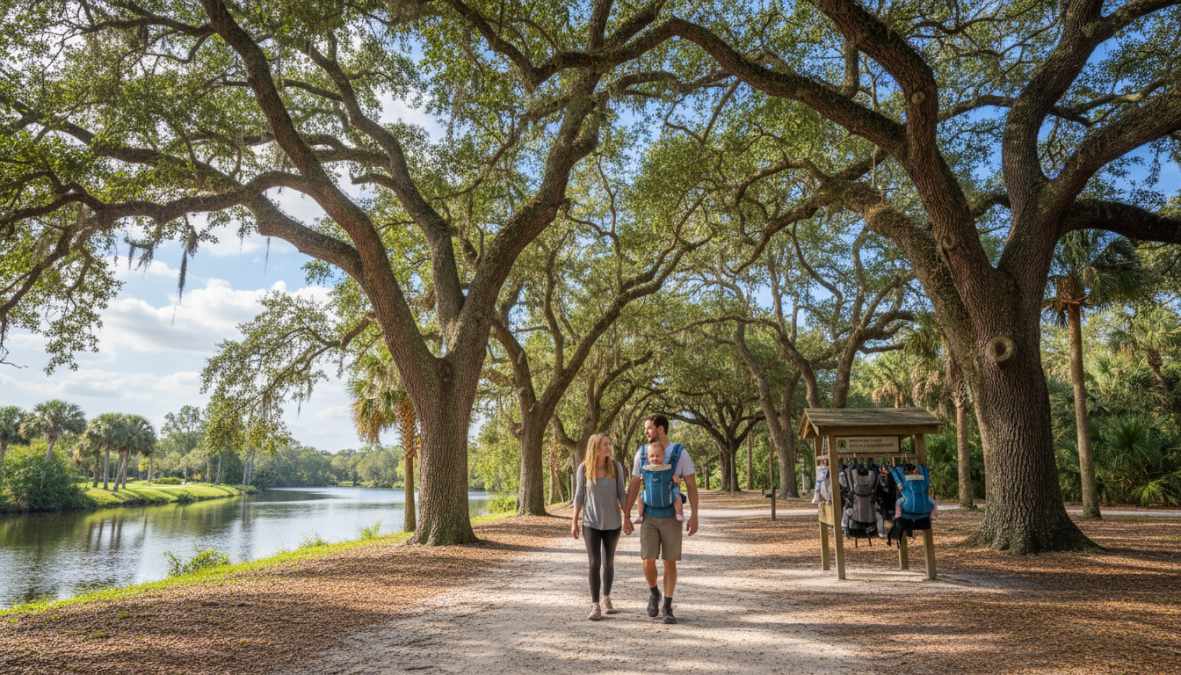
For families with babies who can sit independently (generally around 6 months and up, depending on the child), the shaded trails at Timucuan Ecological and Historic Preserve offer a genuine nature experience without intense terrain. The preserve is one of the few places near Jacksonville where the tree canopy provides enough shade to make a summer morning trail walk genuinely comfortable.
The hiking backpack carrier is the right tool here. The rooted trail surfaces are manageable but uneven, and the rigid frame of a hiking carrier provides better stability than a soft carrier on this terrain. The storage pockets on most hiking carriers are useful for water, sunscreen, and snacks, you will want all three.
Practical logistics: The Ribault Club visitor area has restroom facilities and a parking area. The Fort Caroline National Memorial is within the preserve and adds historical context for families interested in more than the nature trails. The boardwalk sections over the marsh are stroller-accessible, so if you are not renting a hiking carrier, the boardwalk areas are still worth visiting with a standard stroller.
Gear Packing List by Itinerary Type
Use this reference when finalizing your rental order:
| Itinerary Focus | Primary Carrier | Secondary Gear | Add-On to Request |
|---|---|---|---|
| Historic district walking | Mesh SSC | Compact stroller for longer stretches | Sun hood attachment |
| Beach days | Mesh SSC | Beach wagon | Extra carrier waistband padding |
| Nature trails | Hiking backpack carrier | Mesh SSC for non-trail segments | Sun hood; storage pack |
| Mixed (beach + historic) | Mesh SSC | Beach wagon + compact stroller | Both carrier types if budget allows |
The First Coast is genuinely baby-friendly when you have the right gear. The barrier is almost always logistics, knowing which tool to use where, not the destinations themselves. Matching your rental gear to your specific itinerary stops is the single highest-leverage planning decision you will make before your trip.
Conclusion: Rent Baby Carrier in Jacksonville and Travel Light
Traveling with a baby does not have to mean checking three extra bags and spending your first vacation day assembling gear. The right rental service delivers everything you need, sets it up, and picks it up when you leave. First Coast Baby Rentals serves families across Saint Augustine, Jacksonville Beach, Ponte Vedra, Amelia Island, Fernandina Beach, Nocatee, and the surrounding Northeast Florida area with sanitized, inspected, often brand-new equipment delivered directly to your vacation rental. Their flexibility to extend rentals for weather delays and their accommodation of last-minute reservations make them the most practical choice for First Coast visitors. Reserve your gear with First Coast Baby Rentals before your trip and spend your vacation doing what you came for.
Frequently Asked Questions
Can you rent baby carriers in Jacksonville, FL?
Yes, you can rent baby carriers in Jacksonville, FL through several local and national providers. First Coast Baby Rentals serves Northeast Florida with delivery directly to your vacation rental. National platforms like BabyQuip and Cloud of Goods also have local providers in the Jacksonville area. Most services offer soft structured carriers and hiking backpack carriers, with sanitized and safety-checked equipment delivered on demand.
What types of baby carriers can I rent for travel in Jacksonville?
When you rent a baby carrier in Jacksonville, you can typically choose from soft structured ergonomic carriers, ring slings, and hiking backpack carriers. Ergonomic carriers are ideal for everyday use around Jacksonville Beach or St. Augustine. Hiking backpack carriers work well for nature trails and outdoor activities. Ask your rental provider which styles are in their current inventory, as availability can vary by season and rental duration.
Is it cheaper to rent baby gear or bring it on vacation?
Renting baby gear for vacation is often more cost-effective once you factor in airline baggage fees, the hassle of gate-checking bulky equipment, and the risk of damage in transit. Daily rental rates for carriers start as low as a few dollars per day with some providers. For short trips to Jacksonville or Northeast Florida, renting a baby carrier and other gear typically saves money and significantly reduces travel stress.
Do baby gear rental companies in Jacksonville deliver to hotels and vacation rentals?
Yes, most baby gear rental services in Jacksonville offer delivery and setup directly at your hotel, vacation rental, or Airbnb. First Coast Baby Rentals, for example, delivers throughout Northeast Florida, including Jacksonville Beach, St. Augustine, Ponte Vedra, and Amelia Island, and sets up all equipment on-site. BabyQuip providers also offer delivery to hotels and airports. Always confirm the delivery service area when making your reservation.
How far in advance should I book baby gear rentals in Jacksonville?
Booking baby gear rentals at least one to two weeks before your arrival in Jacksonville is generally recommended, especially during peak travel seasons like summer and spring break. That said, providers like First Coast Baby Rentals are known for accommodating last-minute reservations when inventory allows. To guarantee your preferred carrier type and other gear, particularly jogging strollers or specific ergonomic carriers, earlier reservations are always the safer choice.
What should I check to verify a rental baby carrier is safe to use?
Before using a rented baby carrier in Jacksonville, confirm that the provider sanitizes and inspects every item before delivery, that the carrier has no recalls associated with its model, and that all buckles, straps, and seams are intact. Reputable providers like First Coast Baby Rentals inspect every item before each rental. You can also cross-reference the carrier's model number with the CPSC recall database online for added peace of mind.
This article was written using GrandRanker