Table of Contents
- Why Florida Is the Sunshine State for Stress-Free Family Travel
- Best Time to Visit Florida with Kids to Avoid Crowds
- Family Friendly Resorts in Florida Worth Booking First
- Outdoor Adventures and Theme Park Alternatives in Northeast Florida
- Budget Friendly Florida Family Vacation: Save Without Sacrificing Fun
- Florida Vacation Planning Tips Every Parent Needs Before Packing
- How Baby Gear Rentals Make Your Stress Free Family Vacation Florida Reality
- Conclusion
Last Updated: May 27, 2026
Planning a stress free family vacation Florida doesn’t have to feel like a second job. First Coast Baby Rentals has helped hundreds of families arrive in Northeast Florida without a car packed to the roof with gear, and the difference is immediate: parents who travel light actually enjoy the trip. Below, we’ll show you exactly how to pick the right destination, dodge the crowds, pack smarter, and set up your family for the kind of vacation where everyone, including you, genuinely relaxes.
Here’s what most guides get wrong: they focus entirely on where to go and almost nothing on how to make the logistics painless. A beautiful resort means nothing if you spent the drive down arguing about a forgotten pack-n-play. The five strategies we cover, from coast selection to gear rental, address the friction points that turn family trips into survival missions.
Why Florida Is the Sunshine State for Stress-Free Family Travel
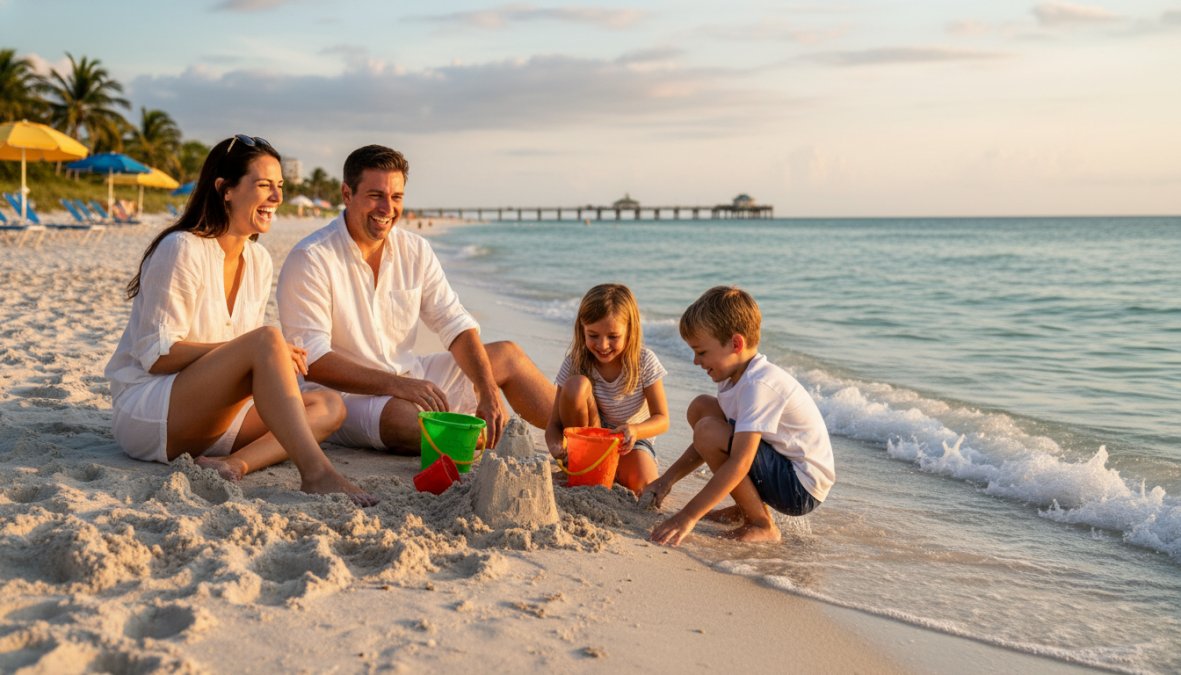
Florida is genuinely one of the most accessible family travel destinations in the country, and the reasons go beyond the weather. The Sunshine State offers an unusually dense concentration of toddler-friendly beaches, shallow-water coastlines, wildlife encounters, and resort infrastructure within a short driving radius of each other. For families with young children, that density matters: you can course-correct quickly when a nap runs long or a toddler melts down at 2pm.
Northeast Florida, in particular, is a quiet revelation for parents who want a stress-free getaway without theme park crowds or peak-season pricing. Saint Augustine, the nation’s oldest city, sits within 30 minutes of Ponte Vedra, Vilano Beach, and Saint Augustine Beach, all of which offer calm Atlantic surf, wide shorelines, and vacation rentals with direct beach access. That proximity collapses the daily logistics of a family trip into something manageable.
According to Florida Tourism Industry Association’s travel data, Northeast Florida consistently ranks among the state’s fastest-growing family travel regions, driven by its combination of outdoor access and lower crowd density compared to South Florida and the Tampa Bay area.
The real advantage is the pace. You’re not rushing between attractions. You’re setting up at a beach, watching your kids discover sand for the first time, and actually being present. That’s the version of Florida family travel worth planning for.
Northeast Florida, centered on Saint Augustine, offers families the ideal combination of calm beaches, low crowds, and short driving distances between destinations, making it one of the most genuinely stress-free corners of the Sunshine State.
Best Time to Visit Florida with Kids to Avoid Crowds
The best time to visit Florida with kids is late April through early June, or September through mid-October. Both windows land outside the peak summer crush and Florida’s hurricane season peak, offering lower accommodation rates, shorter beach lines, and weather that’s warm without being brutal.
Summer is the obvious choice for families tied to school calendars, but it comes with trade-offs. July and August bring daily afternoon thunderstorms, maximum humidity, and the highest visitor volumes of the year. If summer is your only option, aim for weekday arrivals and build mid-day reset time into every day, typically 1pm-3pm indoors, which also happens to align with toddler nap schedules.
Spring break (mid-March through mid-April) is the most congested period for Northeast Florida beaches. Accommodation prices spike, and Ponte Vedra and Saint Augustine Beach see noticeably higher foot traffic. Book at least 90 days out if this window is unavoidable.
Gulf Coast vs. Atlantic Coast: Which Side Fits Your Family?
The Gulf Coast offers warmer, calmer water and the famous white sand beaches of destinations like Clearwater, Destin, and Naples. The Atlantic Coast, including Saint Augustine Beach, Fernandina Beach, and Amelia Island, offers more wave action, slightly cooler water, and a less commercialized atmosphere.
For families with toddlers or children under five, the Gulf’s shallow, gentle surf is often the safer and easier choice. For families with older kids who want to bodyboard or explore tidal pools, the Atlantic side delivers more energy. Northeast Florida’s Atlantic beaches split the difference well: the surf is mild by East Coast standards, and the wide, hard-packed sand makes pushing a stroller or beach wagon genuinely easy.
Real-Time Traffic and Crowd-Avoidance Hacks for Florida Roads
Florida road trip logistics are where stress-free vacations get derailed fastest. I-95 through Jacksonville and A1A through Saint Augustine Beach both experience significant congestion on Friday afternoons and Sunday evenings during peak season.
Three tactics that consistently work:
- Arrive Thursday or depart Monday to sidestep weekend traffic entirely.
- Use Florida 511 real-time traffic system before any drive over 45 minutes. It shows live incident data and estimated delays on I-95 and A1A.
- Download Waze and set it to avoid tolls if you’re traveling with a rental car that doesn’t have a SunPass. Toll confusion is a surprisingly common source of vacation stress.
Beach parking at Saint Augustine Beach and Vilano Beach fills by 9am on summer weekends. Arrive before 8:30am or after 4pm to avoid circling.
Family Friendly Resorts in Florida Worth Booking First
Family friendly resorts in Florida are not all created equal, and the gap between "family-friendly" in the marketing brochure and genuinely toddler-functional is wide. Most resort guides stop at listing properties. This section goes further: it explains the specific features that actually reduce stress, flags the room configuration details most parents don’t think to ask about until they’re standing at the front desk at 11pm with an overtired toddler, and adds a layer most guides skip entirely, which property features matter most for neurodivergent children and sensory-sensitive families.
The Five Features That Separate Stress-Reducing Resorts from Stress-Adding Ones
Before you look at a single property name, filter every option against these five criteria:
-
Zero-entry or splash pad pool access. A standard pool with a 4-foot shallow end is not toddler-functional. Zero-entry pools, where the water gradually deepens from a flat deck, allow children under three to move independently without a parent holding them the entire time. This is the single feature that most directly affects how rested parents feel by day three.
-
Suite or two-room configurations with a door between sleeping areas. Open-plan hotel rooms force parents to go to bed when their children do or sit in the dark on their phones. A bedroom door, even a partial partition, restores adult evening time, which is a measurable factor in how parents rate their overall vacation satisfaction. When calling to book, ask specifically: "Is there a door that closes between the sleeping area and the living area?" Do not rely on floor plan diagrams.
-
Beach or pool access without crossing a road. This sounds obvious until you’re managing a toddler, a beach wagon, and a diaper bag at a crosswalk with moving traffic. Properties where the pool or beach is accessible via a path or boardwalk from the building eliminate a daily friction point that compounds across a week.
-
On-site food options that don’t require a reservation. Full-service resort restaurants with reservation requirements are incompatible with toddler schedules. Look for properties with a casual poolside grill, a market, or at minimum a grab-and-go option. Hungry toddlers do not wait for a 7:30pm seating.
-
Outdoor shower or gear rinse station. Sand management is an underrated source of vacation stress. Properties with an outdoor shower near the beach or pool entrance allow you to rinse children and gear before re-entering the room, which prevents the 20-minute sand-cleanup ritual that derails afternoon nap timing.
Northeast Florida Properties That Meet the Standard
In Northeast Florida, the Ponte Vedra Inn and Club consistently meets all five criteria: it offers suite configurations, a zero-entry pool, direct beach access via a boardwalk, and casual dining options that don’t require advance reservations. It sits on one of the calmest stretches of Atlantic beach in the region, which matters for families with young children who need predictable, low-wave surf.
The Casa Monica Resort in downtown Saint Augustine is better suited to families with children over five who can engage with a historic urban environment. It does not offer direct beach access, but it is within a 15-minute drive of Saint Augustine Beach and Vilano Beach, and its location makes it the strongest base for families who want to mix beach days with the city’s walkable historic district.
For larger family groups or multi-generational trips, vacation rentals on Amelia Island and in Fernandina Beach frequently outperform resorts on both value and functional space. A four-bedroom rental with a private pool, full kitchen, and outdoor shower delivers more genuine stress reduction than a comparably priced resort room, because it eliminates the daily decision of where to eat, removes the social pressure of shared pool spaces, and gives children a consistent home base that supports routine, which is the single most important factor in keeping young children regulated on vacation.
Neurodivergent-Friendly Accommodation: What to Ask Before You Book
Generic "family-friendly" resort marketing is not the same as sensory-friendly or neurodivergent-friendly accommodation. For families traveling with children who have autism spectrum disorder, ADHD, sensory processing differences, or anxiety, the accommodation environment itself is a major variable in whether the trip is restorative or destabilizing.
Specific questions to ask any property before booking:
- "What are the pool hours, and are there quieter periods?" Crowded, loud pool environments during peak afternoon hours are high-stimulation spaces. Properties that open pools early (before 8am) or have secondary pool areas with lower traffic give families a predictable low-stimulation window.
- "Are there blackout curtains in the rooms?" Sleep disruption is the fastest way to dysregulate a child with sensory sensitivities. Blackout curtains are not standard in all Florida properties, and Florida’s early sunrise (as early as 6:15am in summer) will wake a light-sensitive child without them.
- "Is the room located away from the elevator bank and ice machine?" Hallway noise is a consistent complaint in family travel reviews and is entirely avoidable by requesting a room at the end of a corridor during booking.
- "Do you have a quiet or low-stimulation dining option?" Some larger resorts have secondary dining areas or early-seating options that are meaningfully less chaotic than the main restaurant during peak dinner hours.
For families who want pre-vetted neurodivergent-friendly accommodation options, Autism Travel’s accommodation directory includes Florida-specific listings with sensory environment ratings.
The Resort-First Strategy for Toddler Families
The resort-first strategy is simple: book your accommodation before you plan anything else, and choose it based on how much it eliminates daily decision-making. For toddler families specifically, this reduces the number of times per day you have to pack up and move, which is the single biggest driver of vacation stress.
Pairing any of the Northeast Florida properties above with a baby gear delivery service means you arrive to a fully equipped space without checking a single bag. A crib already assembled in the second bedroom, a high chair waiting in the kitchen, and a beach wagon staged at the door changes the emotional tone of arrival entirely.
When booking any Florida resort or vacation rental, call the property directly and ask for a room on the ground floor or with elevator access, away from the elevator bank.
Outdoor Adventures and Theme Park Alternatives in Northeast Florida
Theme park crowds are the antithesis of a stress-free family vacation. Florida offers a genuinely compelling alternative circuit in its natural spaces, and Northeast Florida is the strongest region in the state for nature-based travel with young children.
Saint Augustine alone offers the Alligator Farm Zoological Park, one of the most legitimately impressive wildlife attractions in the Southeast, Anastasia State Park with 1,600 acres of Atlantic beachfront, and the Castillo de San Marcos for older kids interested in history. None of these require advance ticket booking months out, and none involve a 45-minute queue for a 90-second ride.
Nature-Based Travel: Wildlife Encounters, Beach Camping, and Splash Pads
Nature-based travel with kids works best when you match the activity to the child’s age and energy level. For toddlers and children under five, wildlife encounters at ground level, think gopher tortoises on the beach path, dolphins visible from the shore at Ponte Vedra, or manatees in the Intracoastal Waterway, are genuinely captivating without requiring any logistics beyond showing up.
Anastasia State Park offers beach camping with full facilities, a genuinely underrated option for families who want an outdoor adventure without the gear complexity of backcountry camping. The campground has restrooms, outdoor showers, and is a 10-minute walk from one of the best-protected Atlantic beaches in Northeast Florida.
Splash pads in the Saint Augustine area, including the water play area at Treaty Park, are free or low-cost and provide 45-60 minutes of high-energy play that reliably produces afternoon naps.
Neurodivergent-Friendly Activities and Low-Friction Experiences
Low-friction experiences are particularly valuable for neurodivergent children and families managing sensory sensitivities. The defining feature of a low-friction activity is predictability: you know what the environment looks, sounds, and smells like before you arrive, and you can exit easily if needed.
Northeast Florida’s natural spaces are well-suited to this need. Open beaches with wide sightlines, minimal crowds outside peak hours, and no entry queues make them among the most accessible environments for children who struggle with crowded, unpredictable spaces. The Washington Oaks Gardens State Park near Palm Coast offers a structured botanical garden environment with defined paths, low noise, and predictable sensory input.
For families who benefit from pre-visit preparation, Autism Travel’s destination guides includes specific guidance on Florida beach destinations and low-stimulation activity planning.
:::warning
Avoid scheduling more than two structured activities per day with toddlers or neurodivergent children. Over-scheduling is the most common mistake families make, and it transforms a relaxing trip into an exhausting itinerary that nobody enjoys.
Budget Friendly Florida Family Vacation: Save Without Sacrificing Fun
A budget friendly Florida family vacation is entirely achievable in Northeast Florida, and the region’s structure actually favors cost-conscious travelers. The biggest expense on any family trip isn’t accommodation or food; it’s gear. Families who check car seats, strollers, pack-n-plays, and beach wagons pay airline fees, deal with damage risk, and spend the first hour of vacation assembling equipment. Renting locally eliminates all of that.
Beyond gear, here’s where Northeast Florida families consistently save:
- Accommodation: Vacation rentals in Fernandina Beach and Amelia Island run meaningfully lower than comparable Gulf Coast properties during spring and fall shoulder seasons.
- Food: Properties with full kitchens cut food costs significantly. Breakfast and lunch at the rental, dinner out once per day, is the standard approach among experienced family travelers.
- Activities: Anastasia State Park, Guana Tolomato Matanzas National Estuarine Research Reserve, and Fort Clinch State Park in Fernandina all charge modest entry fees. Most beaches in Northeast Florida have free public access.
- Timing: A Tuesday-to-Tuesday rental window typically costs less than a Saturday-to-Saturday booking and avoids peak changeover day traffic.
The budget-friendly stress reduction principle is this: every dollar you spend eliminating a logistical problem is a dollar that pays a better return than a fancier hotel room.
Florida Vacation Planning Tips Every Parent Needs Before Packing
Florida vacation planning tips that actually matter come from the logistics layer, not the destination layer. Most families over-research where to go and under-prepare for how to get there and function once they arrive.
The two most important decisions you make before packing are your airport selection and your gear strategy. Get both right and the rest of the trip is much easier to manage.
Packing Checklist for a Stress-Free Florida Trip with Young Kids
A packing checklist for a stress-free Florida trip should be built around one principle: if you can rent it locally, don’t pack it.
Rent locally (do not pack):
- Crib or pack-n-play
- High chair
- Stroller or jogging stroller (BOB, UPPAbaby, City Mini)
- Beach wagon
- Car seat (if flying)
- Snoo smart sleeper (available in Saint Augustine and Ponte Vedra)
- Beach chairs and umbrella
Pack from home:
- Reef-safe sunscreen (SPF 50+)
- Rash guards for all children
- Portable sound machine
- Favorite comfort items (stuffed animals, blankets)
- Waterproof phone case
- First aid kit with children’s pain reliever
- Reusable water bottles
- Snack supply for first 24 hours
- Portable white noise app downloaded offline
The rash guard is non-negotiable. Florida’s UV index is among the highest in the continental US, and rash guards eliminate the need to reapply sunscreen to a moving toddler every 90 minutes.
Airport Proximity and Vacation Logistics: Saint Augustine and Northeast Florida
Jacksonville International Airport (JAX) is the primary gateway for Northeast Florida family vacations. It’s approximately 45 minutes from Saint Augustine, 30 minutes from Ponte Vedra, and 45 minutes from Amelia Island and Fernandina Beach. It’s a significantly less congested airport than Orlando or Miami, which matters when you’re traveling with young children and managing car seats, strollers, and carry-on bags.
For families flying into JAX, car seat rental in Jacksonville is available through First Coast Baby Rentals, with delivery directly to your vacation rental or hotel. This eliminates one of the most stressful parts of flying with young children: installing a car seat in an unfamiliar rental car in an airport parking garage.
Daytona Beach International Airport serves as an alternative southern gateway, roughly 90 minutes from Saint Augustine, and is worth considering for families whose flight options are limited.
According to FAA family travel guidance, the FAA recommends that children under 40 pounds use an FAA-approved child restraint system during all phases of flight, which means traveling with or renting a proper car seat is not optional for families with young children.
How Baby Gear Rentals Make Your Stress Free Family Vacation Florida Reality
Baby gear rental is the single most effective logistics upgrade available to families traveling to Northeast Florida, and the math is straightforward. Checked bag fees, damage risk, and the physical effort of hauling a stroller through two connecting flights add up to a significant cost in both money and energy before the vacation even starts.
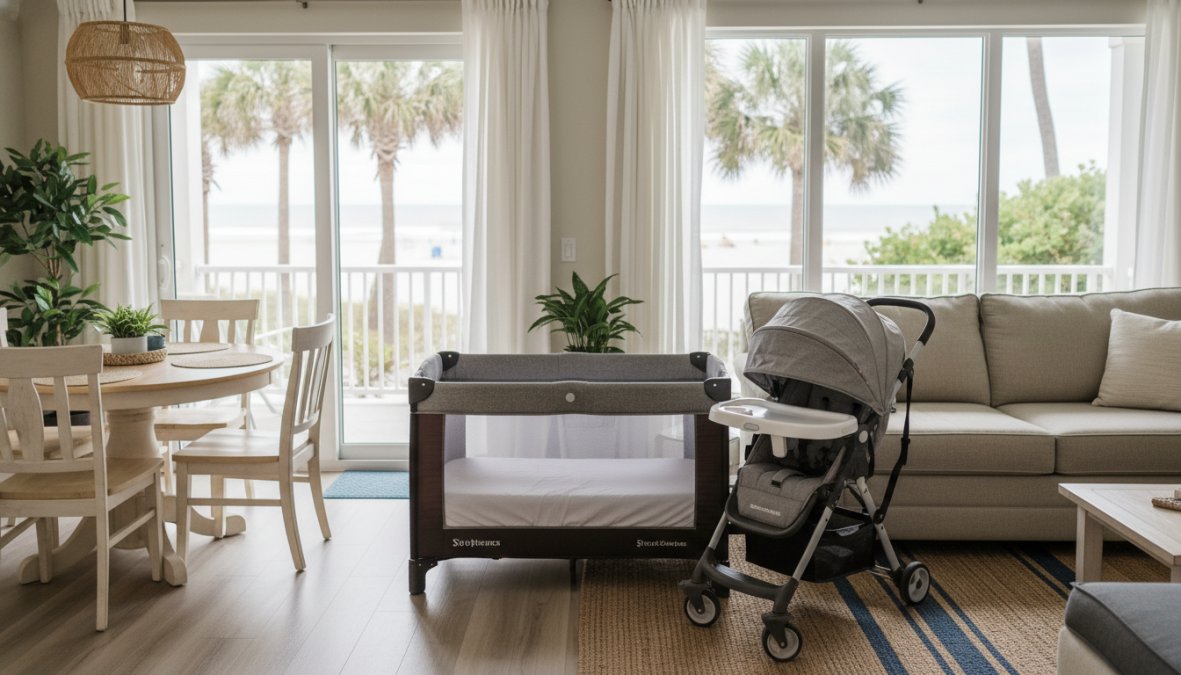
First Coast Baby Rentals delivers sanitized, inspected, often brand-new equipment directly to your vacation rental, whether you’re staying in Saint Augustine, Ponte Vedra, Jacksonville Beach, Amelia Island, Fernandina Beach, Vilano Beach, or Nocatee. Setup is included. The gear is ready when you arrive.
The service accommodates last-minute reservations, which is genuinely useful for families whose plans shift. If a weather event extends your stay, rental periods can be extended to match. The equipment inventory includes everything from Doona infant car seats and UPPAbaby strollers to Snoo smart sleepers and beach wagons, covering the full range of what families with newborns through toddlers actually need.
What most families don’t realize until they’ve tried it: arriving to a fully equipped vacation rental with a crib already assembled and a high chair waiting in the kitchen changes the emotional tone of the entire trip. You walk in and it feels like someone was expecting you. That’s the "travel light, vacation right" experience in practice.
For families asking about baby gear rental near me in the Saint Augustine and Jacksonville area, First Coast Baby Rentals covers the entire First Coast region with punctual delivery and detailed setup guidance.
Traveling to Northeast Florida with young children involves a genuine logistical challenge: getting the right gear to the right place without turning your travel day into a cargo operation. First Coast Baby Rentals solves that problem directly, delivering sanitized, brand-new equipment to your vacation rental across Saint Augustine, Jacksonville Beach, Ponte Vedra, Amelia Island, and the surrounding First Coast region. Every item is inspected before delivery, setup is included, and last-minute bookings are accommodated. Reserve your gear with First Coast Baby Rentals and arrive ready to enjoy the trip from the moment you walk through the door.
Frequently Asked Questions
What is the best time of year to visit Florida with family to avoid crowds?
The best time for a stress free family vacation in Florida is typically late April through early June or mid-September through October. These shoulder seasons offer warm weather, lower hotel rates, and significantly thinner theme park crowds compared to summer and holiday peaks. Spring break and July Fourth week are the busiest periods to avoid. If traveling with toddlers, cooler shoulder-season temperatures also make outdoor adventures and beach days far more comfortable.
Which Florida beaches are best for families with toddlers?
Gulf Coast beaches like those near Fort Myers and Clearwater are known for calm, shallow water and white sand, ideal for toddlers. On the Atlantic Coast, Northeast Florida beaches around Saint Augustine and Amelia Island offer wide, uncrowded shores with a more relaxed vibe. For families using vacation rentals in Northeast Florida, these beaches pair perfectly with delivered baby gear like beach wagons and strollers, eliminating the need to haul heavy equipment from home.
How can I save money on a Florida family vacation?
A budget friendly Florida family vacation starts with traveling during shoulder season, booking vacation rentals over hotels, and skipping expensive theme parks in favor of free or low-cost outdoor adventures like state parks, wildlife refuges, and public beaches. Renting baby and beach gear locally, rather than checking it on a flight, also saves on airline fees and eliminates the hassle of transporting bulky items. Meal prepping from a vacation rental kitchen cuts dining costs significantly.
What should I pack for a family trip to Florida with young kids?
For a stress free family vacation in Florida, focus on sun protection essentials: reef-safe sunscreen, UV rash guards, wide-brim hats, and water shoes. Pack a well-stocked first aid kit, insect repellent for nature-based activities, and a compact beach bag. Skip bulky items like strollers, high chairs, and pack n plays, these can be rented locally and delivered directly to your vacation rental, saving luggage space and reducing travel stress significantly.
Are there good non-theme park family activities in Northeast Florida?
Absolutely. Northeast Florida offers excellent theme park alternatives including Anastasia State Park in Saint Augustine, Amelia Island's quiet beaches, kayaking through salt marshes, and wildlife encounters at local nature preserves. Saint Augustine itself is one of America's oldest cities with kid-friendly historic sites, splash pads, and waterfront parks. These low-friction, nature-based activities are often more enjoyable for toddlers and neurodivergent children than crowded theme parks, and far easier on the family budget.
This article was written using GrandRanker