Table of Contents
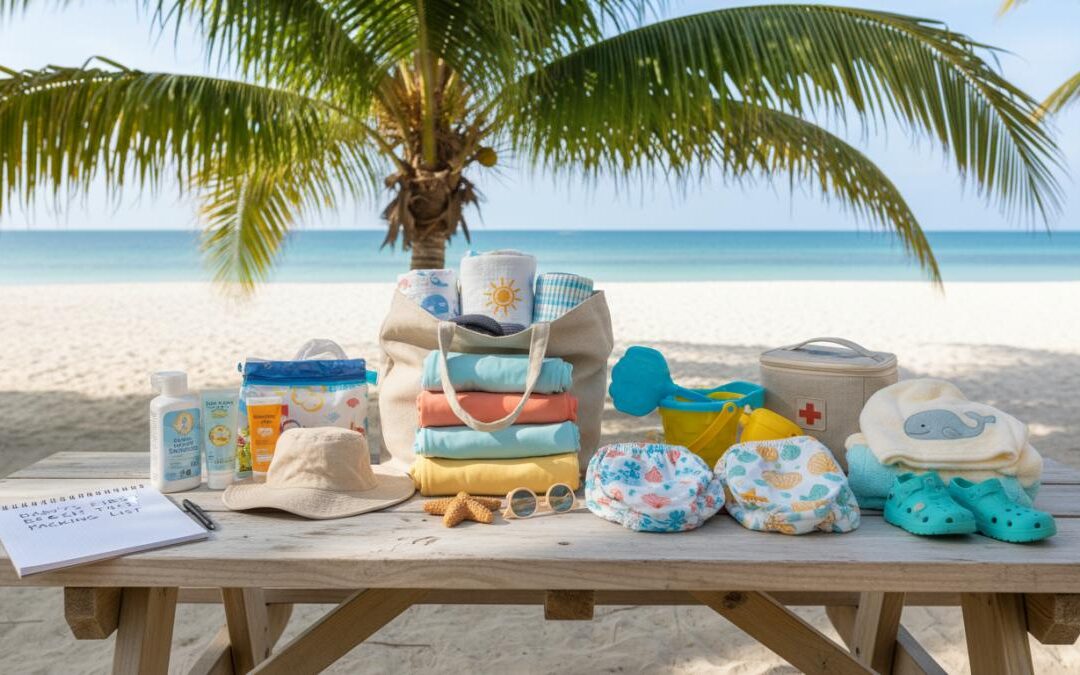
- What to Pack for Baby’s First Beach Trip: The Essential Checklist
- Feeding, Hydration, and Comfort Gear for the Beach
- Best Baby Beach Tent and Shade Solutions for Sunny Days
- How to Keep Baby Cool at the Beach: Heat Safety Strategies
- Baby Beach Safety Tips Every Parent Should Know
- What to Pack for Baby’s First Beach Trip by Age and Stage
- Budget-Friendly vs. Luxury Gear: Rent or Buy for One Trip?
- Post-Beach Cleanup, Eco-Conscious Packing, and Packing Tips for Parents
Last Updated: June 7, 2026
What to Pack for Baby’s First Beach Trip: The Essential Checklist
Knowing what to pack for baby’s first beach trip is the difference between a relaxed vacation and a stressful scramble in the sand. This guide from First Coast Baby Rentals covers every essential item, organized by category, especially useful for parents heading to Saint Augustine, Jacksonville Beach, or Amelia Island, where Northeast Florida’s intense summer sun and humidity add extra planning layers.
Sun Protection Essentials
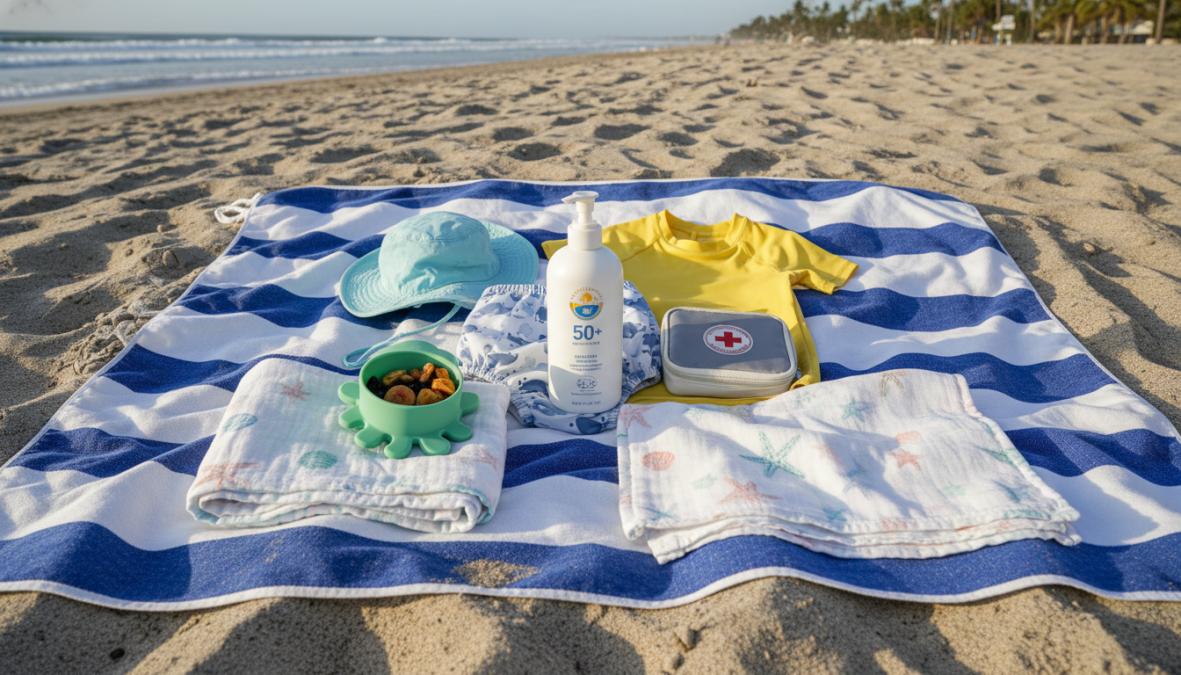
Sun protection is the most critical category on any baby beach packing list. Infant skin burns faster than adult skin, and sand and water intensify UV exposure. According to the American Academy of Pediatrics sun safety guidelines, babies under 6 months should be kept out of direct sunlight entirely; older infants need both physical shade and mineral-based sunscreen.
- Mineral sunscreen (SPF 50+): Zinc oxide or titanium dioxide formulas sit on the skin rather than absorbing into it.
- Sun hat with wide brim: Covers ears and neck far better than a baseball cap.
- UV-protective rash guard: UPF 50+ long-sleeve coverage eliminates torso reapplication.
- Baby sunglasses: Useful for babies 6 months and older.
- Beach umbrella or pop-up tent: Portable shade is non-negotiable.
Apply sunscreen at least 15 minutes before exposure and reapply every 90 minutes or after water contact.
Never apply sunscreen to a baby under 6 months without consulting your pediatrician. The AAP recommends shade and protective clothing as the primary defense for very young infants.
Diapering and Hygiene Supplies
Sand and diapers are a notoriously bad combination. Build a compact, waterproof diapering kit you can access quickly.
- Swim diapers: Contain solids without absorbing water. Standard diapers are not safe for water use.
- Portable changing pad: Keeps baby off hot sand during changes.
- Baby wipes: Handle diaper changes, sandy hands, sunscreen residue, and spills.
- Wet bag or dry bag: Holds soiled swim diapers without contaminating other gear.
- Extra swim diapers (2-3): Blowouts happen.
- Small trash bags: Beaches rarely have convenient bins near the waterline.
Keep the diapering kit in one dedicated compartment so you’re not fishing through snacks during an emergency.
Beach Clothing and Swimwear
- Full-body swimsuit or swim set: A one-piece paired with a rash guard minimizes sunscreen reapplication.
- Loose cover-up: Lightweight cotton for rest periods in shade.
- Water shoes: Hot sand burns tender feet quickly, especially on Saint Augustine Beach during peak summer afternoons.
- Extra outfit: Saltwater, sunscreen, and sand combine into a paste that gets into everything. A clean change for the ride home is essential.
- Waterproof bib: Useful if your baby is eating solids.
Keep clothing lightweight and quick-drying; heavy cotton holds moisture and causes chafing in humid Northeast Florida conditions.
Feeding, Hydration, and Comfort Gear for the Beach
Feeding and Hydration Gear
Heat increases a baby’s hydration needs, and babies cannot regulate body temperature as efficiently as adults, making this a genuine safety priority.
- Formula or breast milk in a thermal bag: A quality insulated bag with ice packs keeps formula safe for several hours. Pre-measured powder in a snack container speeds up mixing.
- Extra bottles: Two minimum.
- Burp cloths (3-4): More absorbent than receiving blankets.
- Toddler snacks in sealed containers: Flip-top lids prevent sand contamination.
- Water for older babies: Babies over 6 months can have small amounts via sippy or straw cup.
- Pacifiers (with case): Pack two in a sealed case and rinse before use.
A small cooler dedicated to food and drinks is worth the extra bag on full-day outings.
Comfort and Nap Time Items
Babies nap on a schedule, and the beach does not care about nap schedules.
- Baby blanket: A lightweight muslin blanket serves as shade layer, nursing cover, changing surface, and nap blanket.
- Portable fan: A battery-operated clip fan provides airflow and white noise inside the tent.
- Baby carrier: Keeps fussy babies calm during transitions and frees your hands. Mesh carriers designed for water use are especially practical.
- Beach chair with recline: Keeps pre-sitters comfortable and off the sand.
- Beach wagon: Carries gear to the beach and doubles as a shaded resting spot for older infants.
Time your beach visit around your baby’s natural nap window. Arriving just after a nap means you get the alert, happy version of your child for the first hour or two.
Best Baby Beach Tent and Shade Solutions for Sunny Days
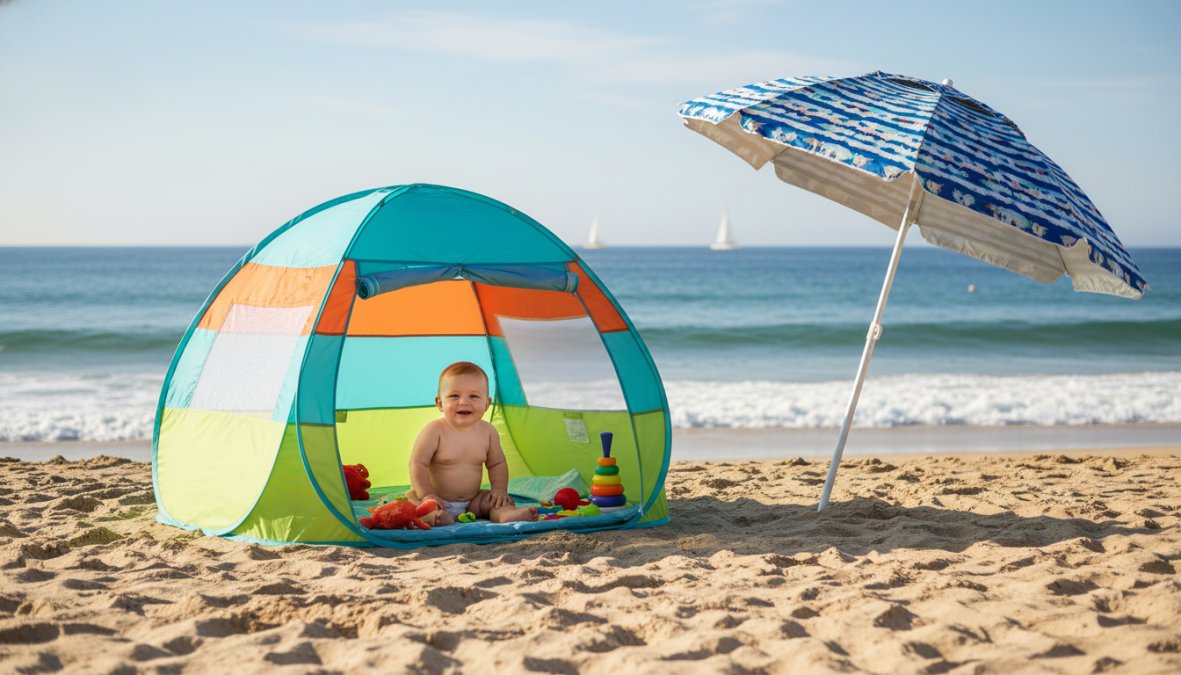
The best baby beach tent is a pop-up style with UPF 50+ rating, a sand anchor or stake system, and ventilation panels on at least two sides.
Key features to look for:
- UPF 50+ fabric: Check for a certified rating on the product label.
- Ventilation: Mesh panels or roll-up sides allow airflow without sacrificing shade.
- Sand anchors: Stake loops or built-in sand pockets prevent the tent from blowing away.
- Size: Large enough for one adult and one baby for nursing, changing, or calming.
A beach umbrella supplements but doesn’t replace a tent, umbrellas shift with the sun and provide no side protection. For babies under 12 months, a tent is the better primary solution. Set it up first, before unpacking anything else, especially on Saint Augustine Beach and Ponte Vedra Beach where afternoon sun is intense and natural shade is limited.
How to Keep Baby Cool at the Beach: Heat Safety Strategies
Infants overheat faster than adults and show fewer warning signs until they’re already in distress. Active management is required.
- Arrive early or late: Sun is most intense between 10 a.m. and 3 p.m. Arriving before 9 a.m. or after 4 p.m. dramatically reduces exposure.
- Use a portable fan: Moving air inside the tent feels significantly cooler than still air.
- Wet a muslin cloth: A damp cloth on the neck or wrists lowers body temperature quickly.
- Watch for heat exhaustion signs: Fussiness, decreased wet diapers, dry mouth, and unusual lethargy. Move to shade immediately and offer fluids.
- Keep the tent shaded: Reposition as the sun moves, what was shaded at 8 a.m. may be in full sun by 10 a.m.
- Limit direct water exposure for young infants: Repeated wetting and drying in the sun stresses infant thermoregulation.
According to the CDC’s heat safety guidelines for infants and children, children under 4 are at significantly higher risk for heat-related illness than older children and adults.
Baby Beach Safety Tips Every Parent Should Know
Baby beach safety covers sun exposure, water proximity, sand ingestion, and heat management simultaneously. No single precaution addresses all of these risks.
Safety and First Aid Kit Basics
Every beach bag should include a compact first aid kit. The items are simple and lightweight; the situations where you’ll need them are more common than most parents expect.
- Adhesive bandages (assorted sizes): Coral, shells, and rough sand cause minor cuts.
- Antiseptic wipes: For cleaning wounds when fresh water isn’t available.
- Children’s pain reliever (age-appropriate): For sunburn, teething, or minor injuries.
- After-sun lotion or aloe vera gel: For mild sunburn relief.
- Tweezers: Sand spurs are common in grassy beach access areas in Northeast Florida.
- Emergency contact information: Pediatrician’s number and nearest urgent care location.
Know where the nearest lifeguard station is upon arrival. Coverage at Saint Augustine Beach access points varies by location and time of day.
Sand ingestion is one of the most overlooked baby beach safety concerns. Crawling babies will put sand in their mouths. While small amounts aren’t dangerous, large amounts cause gastrointestinal distress. Bring a sand-free mat and keep food and pacifiers in sealed containers.
What to Pack for Baby’s First Beach Trip by Age and Stage
Packing is not one-size-fits-all. A newborn and a 14-month-old have almost nothing in common in terms of gear needs, mobility, and safety requirements.
Newborns to 6 Months
Newborns need maximum protection and minimal entertainment. Priority items:
- Full-coverage rash guard and sun hat
- Pop-up tent with UPF 50+ rating (primary sun protection)
- Muslin blankets (2-3)
- Nursing cover or privacy panel
- Formula or breast milk in insulated bag
- Portable white noise machine or fan for napping
- Infant-safe insect repellent (check with your pediatrician first)
Skip sand toys, floaties, and water shoes entirely, they add weight and serve no purpose at this stage.
6 to 12 Months
Babies in this range are sitting independently, beginning to crawl, and putting everything in their mouths. Add to your list:
- Sand-free beach mat
- Simple sand toys: small bucket and soft shovel
- Water shoes (if crawling on rocky or shell-covered sand)
- Sippy or straw cup for water
- Finger foods in sealed snack containers
- Baby sunglasses
A beach wagon is especially valuable here, carrying a 15-pound baby plus gear across soft sand is genuinely exhausting.
Toddlers 12 Months and Up
Toddlers are mobile, independent, and completely unpredictable. Key additions:
- Shovels and buckets (sand play is the main event)
- Water floaties or swim vest for supervised water play
- Sun-protective swimsuit with rash guard
- Toddler snacks in abundance
- Waterproof sandals or water shoes
- Two changes of clothes
- Sunscreen reapplication reminder (set a timer)
The beach wagon becomes even more valuable for hauling gear and transporting a tired toddler who refuses to walk back to the car.
Budget-Friendly vs. Luxury Gear: Rent or Buy for One Trip?
Buying full baby beach gear for a single vacation is rarely worth it. A quality tent, wagon, and UPF-rated gear adds up quickly and often sits in a garage afterward.
| Item | Buy If… | Rent If… |
|---|---|---|
| Pop-up beach tent | You beach trip 3+ times per year | One or two trips annually |
| Beach wagon | You have multiple young children | Single trip or first-time visit |
| Baby carrier | You use it daily at home | Beach-specific water carrier |
| High chair | You need it at home too | Vacation rental only |
| Pack ‘n play | Used regularly at home | Travel accommodation only |
For families visiting Northeast Florida once a year, renting locally is almost always the smarter financial decision, and it solves the airline baggage problem entirely. First Coast Baby Rentals delivers sanitized, often brand-new gear directly to your vacation rental in Saint Augustine, Jacksonville Beach, Ponte Vedra, Fernandina Beach, Amelia Island, Vilano Beach, and Nocatee, with last-minute reservations accommodated.
Renting baby beach gear locally eliminates airline baggage fees, guarantees clean equipment, and removes the post-trip storage problem. For families visiting Northeast Florida, it’s the most practical option for a single vacation.
Post-Beach Cleanup, Eco-Conscious Packing, and Packing Tips for Parents
Sand Removal and Post-Beach Transition
The most effective sand-removal method: baby powder. Sprinkle cornstarch-based baby powder on sandy skin and rub gently, it absorbs moisture and causes sand to brush off cleanly.
Additional tips:
- Use a separate wet bag for sandy, wet items to contain sand spread.
- Rinse feet at beach access rinse stations before loading into the car, most Saint Augustine and Jacksonville Beach access points have them.
- Change baby into a fresh outfit before the drive home.
- Pack a cold, damp washcloth in a small cooler for quick face and hand wipes.
Eco-Conscious and Reef-Safe Choices
Reef-safe sunscreen is the most important eco-conscious choice on any baby beach packing list. Traditional chemical sunscreens containing oxybenzone and octinoxate damage coral reefs. According to NOAA’s coral reef conservation program, these compounds are detectable in reef ecosystems at concentrations that affect coral reproduction and growth. Mineral sunscreen with zinc oxide or titanium dioxide protects both your baby and the marine environment.
Additional eco-friendly choices:
- Reusable swim diapers: Reduce single-use waste without sacrificing performance.
- Reef-safe, biodegradable wipes: Standard wipes contain plastics that persist in the environment.
- Reusable snack containers: Avoid single-use plastic bags.
- Leave-no-trace habit: Pack out everything you pack in.
Northeast Florida’s beaches support sea turtles, dolphins, and diverse marine life. The choices you make have a real cumulative effect.
Complete Baby Beach Packing Checklist:
- Mineral sunscreen (SPF 50+, reef-safe)
- Sun hat with wide brim
- Rash guard (UPF 50+)
- Pop-up tent or beach umbrella
- Swim diapers (3-4)
- Portable changing pad
- Baby wipes
- Wet bag / dry bag
- Waterproof snack containers
- Insulated thermal bag for formula or breast milk
- Burp cloths (3-4)
- Baby blanket (muslin)
- Portable fan
- Baby carrier
- First aid kit
- Baby powder (for sand removal)
- Extra outfit (2)
- Water shoes (crawlers and walkers)
- Shovels and buckets (6 months+)
- Pacifiers in sealed case
- Beach wagon (highly recommended)
Packing for a baby’s first beach trip involves more categories than most parents anticipate, and forgetting one essential item can derail an otherwise perfect day. First Coast Baby Rentals takes the heaviest gear off your list entirely, delivering sanitized, brand-new equipment directly to your vacation rental across Saint Augustine, Jacksonville, Amelia Island, Ponte Vedra, and surrounding areas. Last-minute reservations are welcome, and rentals can be extended if plans change. Reserve your gear with First Coast Baby Rentals and arrive at the beach with exactly what you need and nothing you don’t.
Frequently Asked Questions
What age is safe for a baby's first beach trip?
Most pediatricians suggest waiting until a baby is at least 6 months old before extended sun exposure on the beach, since sunscreen is not recommended for infants under 6 months. However, younger babies can visit the beach if kept fully shaded, dressed in protective clothing, and away from direct sunlight. Always consult your pediatrician before planning a beach outing with a newborn, especially in the hot Northeast Florida sun.
Do babies need sunscreen at the beach?
Yes, for babies 6 months and older, a broad-spectrum, reef-safe sunscreen with a high sun protection factor (SPF 30 or above) is strongly recommended. Apply it 15-30 minutes before sun exposure and reapply every two hours or after water play. For babies under 6 months, skip sunscreen and rely instead on shade, a pop-up tent, a rash guard, and a wide-brim sun hat to provide UV protection.
How do I keep my baby cool at the beach?
Keeping baby cool at the beach means layering several strategies: set up a pop-up tent or beach umbrella for consistent shade, bring a portable fan, dress baby in a lightweight rash guard and sun hat, and prioritize hydration. Schedule beach time during cooler morning hours and plan nap time indoors. Watch for signs of overheating like fussiness, red skin, or excessive sweating, and move to a cool, shaded area immediately if they appear.
What should a baby wear to the beach?
For baby's first beach trip, dress them in a UPF-rated rash guard, swim diapers, and a wide-brim sun hat. Water shoes protect tender feet from hot sand and shells. For younger infants, a lightweight, breathable onesie under a sun hat works well in shaded areas. Avoid dark colors that absorb heat. Bring a dry change of clothes for the post-beach transition, and pack a baby blanket for nap time in the shade.
What are the beach essentials for a 6-month-old?
Packing for a 6-month-old's first beach trip means covering sun protection (rash guard, sun hat, reef-safe sunscreen), swim diapers, a portable changing pad, wipes, a pop-up tent for shade, a baby carrier for hands-free movement, formula or breast milk in a thermal bag, burp cloths, pacifiers, and a baby blanket for nap time. A beach wagon makes hauling all this gear across the sand much easier for parents.
Is it better to rent or buy baby beach gear for a vacation in Saint Augustine?
For a short vacation in Northeast Florida, renting baby beach gear is often the smarter choice. Gear like beach wagons, pop-up tents, and high chairs are bulky and expensive to buy for a single trip. Local rental services like First Coast Baby Rentals deliver sanitized, brand-new or like-new equipment directly to your vacation rental in Saint Augustine, Amelia Island, or Ponte Vedra, saving you money, luggage space, and setup hassle.
This article was written using GrandRanker