
Table of Contents
- Why Baby Sleep Regressions Happen During Travel
- Understanding Jet Lag and Time Zone Changes in Babies
- Baby Sleep Tips for Travel That Actually Work
- Baby Travel Essentials for Sleep Success
- Managing Overtiredness Before You Leave Home
- Getting Baby Sleep Back on Track After Vacation
- Conclusion: Plan Ahead for Better Sleep on the First Coast
Last Updated: July 31, 2026
Why Baby Sleep Regressions Happen During Travel
Baby sleep regressions during travel happen because your little one's body clock gets disrupted, overtiredness builds up faster than usual, and the familiar sleep environment vanishes overnight. When you're planning a family getaway to Saint Augustine, Jacksonville Beach, or the beautiful beaches around Amelia Island, understanding why this happens can mean the difference between a restful vacation and exhausting nights. At First Coast Baby Rentals, we work with traveling families constantly, and sleep struggles are one of the most common concerns we hear about. The good news? Sleep regressions during travel are temporary and predictable. Once you know what's happening in your baby's body and brain, you can plan ahead to minimize disruption.
How Circadian Rhythms Get Disrupted
Your baby's internal clock runs on a 24-hour cycle called the circadian rhythm. This rhythm tells their body when to feel sleepy, when to wake up, and when to eat. At home, your baby's circadian rhythm syncs perfectly with your daily routine, the sunlight coming through their bedroom window, and their consistent sleep schedule.
Travel throws all of that out the window, literally. A flight to a new time zone, a different room with different light patterns, and a completely altered schedule all confuse your baby's internal clock at once. Their body is still operating on Saint Augustine time while you're trying to get them to sleep on Jacksonville Beach time.
The circadian rhythm controls melatonin production, the hormone that makes sleep happen. When your baby's circadian rhythm is confused, melatonin gets released at the wrong times of day. You might notice your baby fighting sleep at bedtime or waking up at 4 a.m. wide awake.
Expose your baby to bright natural light in the morning and afternoon at your destination. This is the single most powerful way to reset their circadian rhythm. Spend time on the beach or near windows during peak daylight hours, the brightness signals to their body that it's daytime.
The Role of Overtiredness and Sleep Pressure
Here's what most parents don't realize: overtiredness and sleep regressions are cousins. When your baby doesn't sleep well due to travel stress, they accumulate sleep debt. Their body builds up sleep pressure, the biological drive to sleep. But instead of making them sleep better, excessive sleep pressure actually makes it harder for them to fall asleep and stay asleep.
Overtired babies become wired. Their nervous system floods with cortisol and adrenaline, which are the exact opposite of the calm state they need to drift off. You end up with a baby who's exhausted but unable to sleep.
Travel itself is stimulating. New sights, new people, new sounds, new textures, your baby's brain is working overtime to process everything. Even if they're physically tired, their mind is too activated to settle down. Add in the circadian rhythm confusion, and you've got a perfect storm for sleep regression.
The key is managing wake windows carefully during travel. A wake window is the amount of time your baby can comfortably stay awake before needing sleep. On vacation, these windows shrink. Your baby can't handle as much stimulation or activity as they normally can at home.
Overtired babies sleep worse than well-rested babies. The goal during travel isn't to maximize fun activities, it's to protect your baby's sleep so they can enjoy what you're doing.
Understanding Jet Lag and Time Zone Changes in Babies
Jet lag isn't just an adult problem. Babies experience it too, and it hits harder because their circadian rhythms are still developing. When you cross time zones, your baby's internal clock doesn't instantly adjust to the new local time. It takes days to shift, and the more time zones you cross, the longer the adjustment takes.
If you're flying from the Midwest to Saint Augustine, you're crossing one time zone, usually 2-3 days of adjustment. But if you're flying from the West Coast to Jacksonville, you're crossing three time zones, and your baby might need a full week to fully adjust.
During those adjustment days, your baby will be sleepy at weird times. They might nap at 10 a.m. when it's actually 1 p.m. local time. Their hunger cues will be off too, making meal times chaotic.
When Jet Lag Triggers Sleep Regression
Jet lag becomes a sleep regression when it combines with other travel stressors. Your baby's circadian rhythm is confused. They're overtired from travel. They're in an unfamiliar sleep environment. All of these together create what looks like a regression, suddenly your baby can't sleep through the night or take decent naps.
The sleep regression is real in terms of how it affects your baby's behavior and mood. But it's not a developmental regression. Your baby hasn't lost the ability to sleep. Their body is just working overtime to adjust to a new schedule and environment.
Adjusting Sleep Schedules Across Time Zones
The best strategy is gradual adjustment, not cold turkey. Starting a few days before you leave, shift your baby's bedtime and wake time by 15-30 minutes each day in the direction of your destination's time zone. If you're traveling east (losing time), move bedtime earlier. If you're traveling west (gaining time), move bedtime later.
When you arrive at your destination, expose your baby to natural light at the appropriate times for the new time zone. Bright light in the morning helps their body recognize it's daytime. Dim light in the evening signals bedtime. For the first few days, let your baby sleep when they're tired, even if it's off-schedule. Once their circadian rhythm starts adjusting (usually by day 3-4), you can gently guide them back into a more predictable schedule.
Baby Sleep Tips for Travel That Actually Work
The best sleep tips for travel are the ones you actually use. Keep it simple. Your job is to create enough consistency to help your baby's body recognize it's time to sleep, even in a strange place.
Creating a Familiar Sleep Environment Away From Home
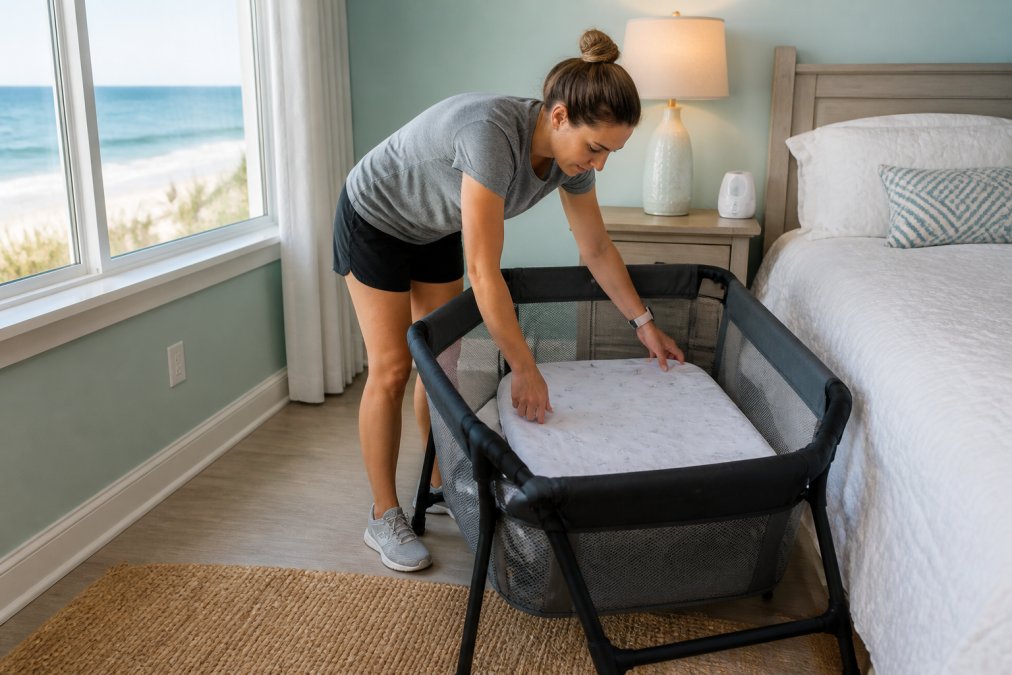
Your baby's sleep environment at home has consistent elements: a specific crib, certain blankets, maybe a nightlight. These aren't just comfort items, they're sleep cues. They signal to your baby's brain that sleep time is coming.
You can't replicate your entire home setup in a vacation rental, and you don't need to. But you can bring a few key items that smell and feel like home. A familiar sleep sack, a blanket that smells like your house, or a favorite stuffed animal creates continuity.
The room itself matters too. A dark, quiet room is ideal for sleep, but vacation rentals rarely deliver that. A portable blackout curtain transforms a bright, beachy bedroom into a dark sleep cave. White noise machines block out unfamiliar sounds, other guests, waves, traffic, birds, that would normally jolt your baby awake.
First Coast Baby Rentals delivers gear directly to your vacation rental in Saint Augustine, Jacksonville Beach, Amelia Island, Ponte Vedra, Fernandina, and surrounding areas. Having a high-quality travel crib, blackout curtain, and white noise machine already set up when you arrive removes so much stress. Everything is ready, sanitized, and positioned for sleep success.
Bright vacation rental bedrooms are one of the biggest sleep saboteurs during travel. Without darkness, your baby's body doesn't produce enough melatonin, and their circadian rhythm won't reset properly. A blackout curtain isn't optional, it's essential.
The Power of White Noise and Blackout Curtains
White noise is one of the most underrated travel sleep tools. It masks unfamiliar sounds that would normally wake your baby. At home, your baby sleeps through household sounds they've grown used to. On vacation, every new sound is a potential wake trigger.
White noise creates a consistent sound environment. Your baby's brain learns to ignore it, the same way you ignore the hum of your refrigerator. This actually helps them sleep deeper. The research on white noise for infant sleep shows that consistent background noise reduces sleep disruptions.
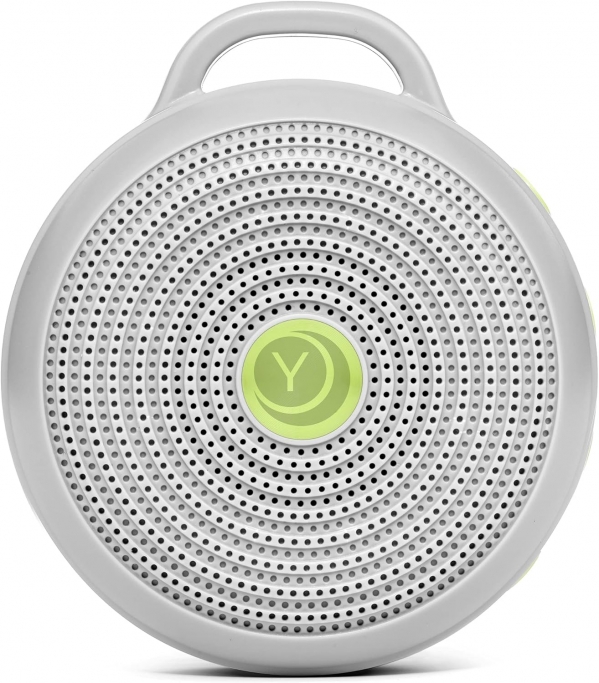
The Hatch Rest+ Baby Sound Machine offers white noise, nature sounds, and a gentle light that helps signal bedtime and wake time. The Yogasleep Hushh Portable White Noise Machine is smaller and battery-powered, perfect if you're moving between rooms.
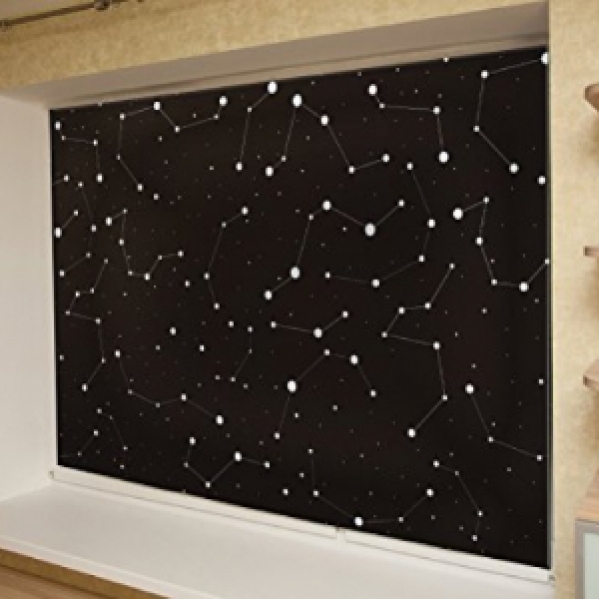
Blackout curtains work the same way, they create consistency. Your baby's brain recognizes the dark room as a sleep signal. Darkness also helps regulate melatonin production, which is critical for resetting the circadian rhythm in a new time zone.
A quality blackout curtain doesn't have to be permanent. Portable blackout curtains attach to existing curtain rods or stick to walls without damage.
Maintaining Bedtime Routines on Vacation
Your bedtime routine at home might include a bath, pajamas, a story, and cuddles. This routine signals to your baby's body that sleep is coming. During travel, maintain this routine as much as possible, even if the details look different.
The routine also protects your sleep time from vacation activities. If you're staying at a beach house in Saint Augustine or Vilano, it's tempting to let your baby stay up late. But a consistent bedtime, even on vacation, is what prevents sleep regression.
Keep the routine to 15-20 minutes. Short, consistent routines work just as well as long ones and are easier to maintain when you're traveling.
| Routine Element | At Home | On Vacation | Why It Matters |
|---|---|---|---|
| Bath/wash | Full bath | Quick wash-up | Signals wind-down |
| Pajamas | Specific sleepwear | Any comfortable clothes | Consistency matters |
| Story/cuddle | 10-15 minutes | 5-10 minutes | Shorter is fine |
| White noise | Home machine | Portable machine | Familiar sound helps sleep |
| Lights | Dimmed | Blackout curtain dark | Darkness triggers melatonin |
Baby Travel Essentials for Sleep Success
When you're packing for a family trip to Northeast Florida, sleep gear might not feel like a priority. But the right equipment makes sleep regressions less likely and easier to manage if they do happen.
Portable Gear That Makes a Real Difference
A quality travel crib is non-negotiable. Your baby needs a safe, familiar sleeping surface. Travel cribs designed for portability are lighter, sturdier, and often feel more like your baby's home crib.
The SlumberPod Privacy Pod with Portable Fan creates a dark, private sleep space that works in any room. It's especially helpful if your baby is sharing a room with you or siblings.
White noise machines come in different sizes and power levels. Portable machines are battery-powered or USB-charged and small enough to fit in a diaper bag. For a week-long vacation, having a reliable white noise machine at your destination eliminates one variable.
Blackout curtains deserve their own category because they're so effective. Even if your vacation rental has nice curtains, they rarely block enough light for optimal sleep.
Age-Specific Sleep Strategies for Infants and Toddlers
Newborns and young infants (0-4 months) are more adaptable to sleep environment changes than older babies. However, they need even more consistency in feeding and soothing routines.
Older infants (4-8 months) are more vulnerable to sleep regression during travel because they've just established strong sleep associations. Travel disrupts those associations, and they can't yet understand that the disruption is temporary.
Toddlers (9+ months) can handle more flexibility, but they also have stronger opinions about sleep. With toddlers, the key is introducing new sleep gear before the trip. Let them play with the travel crib at home. Play white noise from a new machine a few days before departure.
For all ages, maintaining consistent wake windows is more important than maintaining exact nap times. A baby who's been awake for three hours needs to sleep soon, regardless of what time it says on the clock. Protecting wake windows prevents overtiredness, which is the root cause of most sleep regressions during travel.
Managing Overtiredness Before You Leave Home
The best time to prevent travel sleep regressions is before you leave. A well-rested baby handles travel stress better than an already-tired baby. In the week before your trip, prioritize sleep.
Make sure your baby is getting full naps and sleeping through the night at home. If they're already sleep-deprived, travel will push them over the edge into overtiredness.
Avoid big schedule changes right before travel. If you're planning to adjust to a new time zone, start that adjustment 3-4 days before departure, not the day before.
Keep stimulation reasonable in the days before travel. Avoid overstimulating activities, late nights, or excessive excitement. A calm, well-rested baby is more resilient to travel disruption.
If your baby is going through a natural developmental sleep regression (the kind that happens at 4 months, 8 months, 18 months, etc.), consider postponing travel if possible. If you can't postpone, be extra prepared with gear and realistic expectations.
Getting Baby Sleep Back on Track After Vacation
The vacation is over. Your baby is home. But their sleep schedule is still off. Their circadian rhythm needs to readjust to home time, and their sleep associations need to re-establish.
The Post-Travel Decompression Period
Most parents expect their baby to snap back to the home schedule immediately after returning. That's not realistic. Your baby's circadian rhythm needs 3-7 days to fully readjust, depending on how many time zones you crossed and how long you were away.
During this decompression period, your baby will be grumpy. They might wake up at 5 a.m. or refuse to nap. This is normal. Their body is working to readjust.
Don't try to force the old schedule immediately. Instead, gradually shift back. If your baby is waking up too early, expose them to bright light in the morning to help anchor their circadian rhythm to home time. If they're fighting bedtime, dim lights earlier in the evening and use white noise to create familiar sleep cues.
The decompression period is temporary. By day 7-10, most babies are back to their normal sleep patterns.
Re-Establishing Consistency at Home
Once your baby is adjusted back to home time, re-establish the bedtime routine and sleep environment exactly as it was before you left. Your baby's brain needs to recognize that home sleep is the same as it was before vacation.
If your baby developed new sleep associations during travel (like needing white noise they didn't need before), decide whether to keep them or phase them out. If white noise helped them sleep better, keep using it. If it was just a travel necessity, gradually reduce it over a week or two.
Watch for any lingering sleep issues. Most post-travel sleep problems resolve within a week. If your baby is still struggling after 10 days, something else might be going on. Teething, illness, or a developmental regression could be overlapping with travel recovery.
Planning a family vacation to Saint Augustine, Jacksonville Beach, Amelia Island, or anywhere on the First Coast means preparing for sleep challenges. The good news is that understanding why baby sleep regressions happen during travel puts you in control. You can anticipate the disruption, pack the right gear, and manage your baby's sleep proactively instead of reactively. First Coast Baby Rentals makes this easier by delivering high-quality sleep equipment, travel cribs, blackout curtains, white noise machines, and privacy pods directly to your vacation rental in Saint Augustine, Jacksonville Airport, Jacksonville, Saint Augustine Beach, Vilano, Ponte Vedra, Fernandina, Amelia Island, Jacksonville Beach, and surrounding areas. Everything arrives clean, ready to use, and already set up so you can focus on your family. Book your gear today and take the stress out of traveling with a baby.
Frequently Asked Questions
Why do baby sleep regressions happen during travel?
Baby sleep regressions during travel occur because of disrupted circadian rhythms, unfamiliar sleep environments, and changes to daily routines. Travel introduces new sights, sounds, and sleep associations that confuse your baby's internal clock. Time zone changes, overtiredness from travel days, and the stress of a new setting all combine to trigger temporary sleep regression. Most babies bounce back once routines stabilize, typically within a few days to a week.
How long does a travel-related baby sleep regression typically last?
Most travel-related sleep regressions resolve within 3-7 days once your baby adjusts to the new environment and routine. Some babies recover faster if you maintain consistent bedtime routines and sleep cues. However, if sleep disruption persists beyond two weeks after returning home, it may indicate your baby needs extra time to readjust to your regular schedule. Patience and consistency are key to helping your baby's sleep consolidate again.
What baby travel essentials for sleep should I pack or rent?
Essential sleep items include a portable travel crib, white noise machine, blackout curtains, and familiar sleep cues like a comfort object or favorite blanket. A SlumberPod Privacy Pod or Hatch Rest+ Baby Sound Machine can recreate your home sleep environment anywhere. If flying to Northeast Florida destinations like St. Augustine, Jacksonville Beach, or Amelia Island, First Coast Baby Rentals delivers sanitized, brand-new equipment directly to your rental, saving luggage space and ensuring quality gear without the hassle of packing.
How do I adjust my baby to a new time zone while traveling?
Gradually shift your baby's sleep schedule 2-3 days before travel, moving bedtime 15-30 minutes closer to the destination's time. Once you arrive, expose your baby to natural light during local daytime and keep the room dark at night to reset their circadian rhythm. Maintain consistent wake windows and meal times in the new time zone. For most babies, adjustment takes 3-5 days. Avoid relying on sleep training methods during travel; focus instead on consistency and familiar sleep associations to ease the transition.